Soirée whisky japonais, un grand moment ! MERCI Christophe & Hiroko
Archive for 2010|Yearly archive page


Background Update (Blues for Yna Yna)
In Blues for Yna Yna on June 7, 2010 at 10:14 amBlues for Yna Yna : AA + 3 Chorus + the End
Here it is:
- BIAB (AA+3 Chorus+End)
- Midi
- mp3 (in the library)
Tous les backing tracks (in the library)
Background Update
In Bohemia After Dark, Cold Duck Time, The Sticks on June 1, 2010 at 1:11 pmHello, Quelques nouveaux background BIAB et Wikifafebook sont dans la boite.
- Cold Duck Time BIAB
- The Sticks BIAB
- Bohemia After Dark BIAB & Wikifakebook
Tous les autres background/accompagnements sont ici.
The Sticks (Cannonball Adderley) 1st Album
In The Sticks on May 21, 2010 at 3:30 pm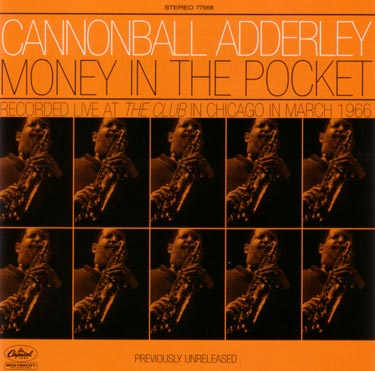 Released in 1966.
“Cannon’s Theme” and edited versions of “Money in the pocket” ,” Hear me Talking To Ya” and “The Sticks” were previously issued on Capitol single (P 6121 and P 6122). All other material were previously unreleased

The musicsheet and the mp3 are in the library.
JDL Quartet au Club Autour de Midi… et Minuit
In Others on May 19, 2010 at 9:24 am
De nouveau, le JDL Quartet, Jacques de Lignières, Bobby Few, Serge Lamboley & Hervé Czak au Club: Autour de Midi… et Minuit, le 28 Mai 2010
St Nom La Bretèche, Ethiopie, 8 Mai 2010
In Events, Live on May 18, 2010 at 3:54 pm
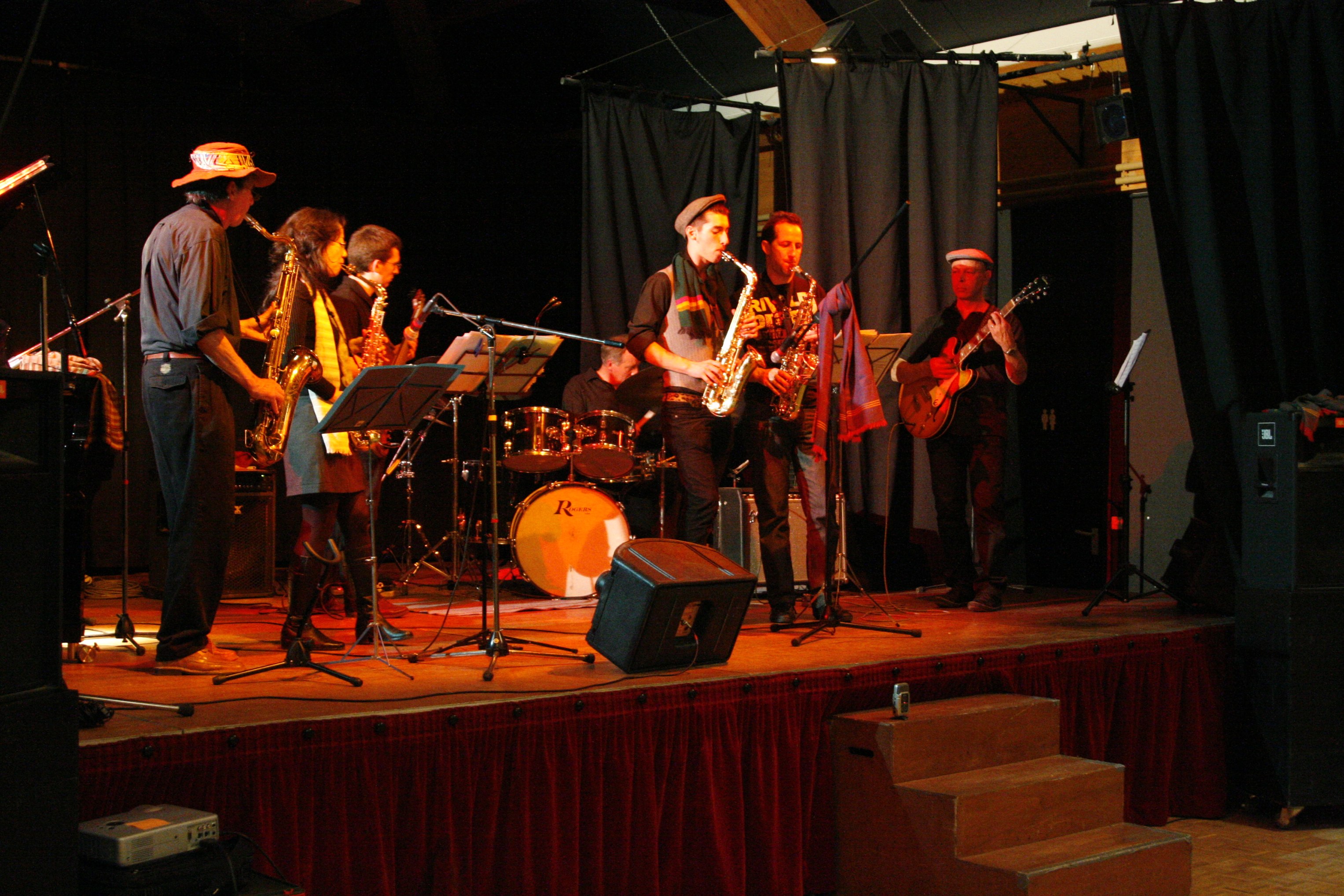
La bande sonore et quelques photos sont disponibles sur la page Soirée Ethiopie, accessible, soit par la page The Band, soit par le menu en bas, à droite.
Nous sommes très heureux d’avoir participé à cette chaleureuse soirée, placée sous le signe de la générosité. Les Remerciements de Grar Acacia.
Cannonball Adderley Biography
In Bio on May 1, 2010 at 3:39 pm
Julian Edwin "Cannonball" Adderley
TAMPA, Florida, 09/15/1928,
GARY, Indiana 08/08/1975
After his music studies in Tallahassee (1944/48) he became a high school band director at the Dillard High School/Fort Lauderdale (1948/50)in his native Florida, following in the footsteps of his educator-father(a trumpet player),before moving to New York in 1955. He initially planned to pursue graduate studies in Manhattan; but after sitting in with Oscar Pettiford‘s band at the Cafe Bohemia, the alto saxophonist became an instant sensation, hailed by many as the musician most likely to be the mantle of the late Charlie Parker. Despite misguided promotional efforts to christen him as “the new Bird,” Adderley clearly had his own approach to the horn, which drew on the inspiration of Benny Carter as well as Parker. He took advantage of his early notoriety, however, by forming his first quintet, which featured his younger brother Nat Adderley on cornet. While the group struggled economically, Cannonball did draw the attention of Miles Davis,who featured the alto saxophonist in the immortal Miles Davis sextet (alongside John Coltrane and either Red Garland, Bill Evans,or Wynton Kelly) for two years beginning in late 1957.
In September 1959, Cannonball left Davis and reunited with Nat in a new Cannonball Adderley quintet. Recorded live one month later at San Francisco’s Jazz Workshop, the band became an immediate success with their version of Bobby Timmons’s sanctified waltz “This Here” and a leading practitioner of what came to be called soul jazz. Numerous other hits followed over the next 16 years as the band occasionally swelled to sextet size (with the inclusion of Yusef Lateef or Charles Lloyd) and featured such important pianist/composers as Barry Harris, Victor Feldman, Joe Zawinul, George Duke, and Hal Galper. Sam Jones and Louis Hayes formed the original rhythm section, to be succeeded later by Victor Gaskin,Walter Booker, and Roy McCurdy. At the heart of the group’s success throughout its existence were Cannonball, one of the most impassioned alto (and, later, soprano) saxophonists in jazz history, and Nat,whose infectious compositions (including “Work Song” and “Jivesamba”) formed a critical part of the band’s book.
While a knack for interpreting funky crossover material such as Zawinul’s “Mercy, Mercy, Mercy” won the Adderley quintet one of the jazz world’s largest audiences, Cannonball’s personality also played a pivotal role in sustaining the band’s prominence among fans worldwide. He was the most articulate and engaging of musicians,and he invariably educated his listeners with wry commentary that illuminated the music. He was also a voracious listener and talent scout who introduced several prominent musicians through both employing them in his ensemble and serving as a studio record producer. Cannonball was the one who called Wes Montgomery to the attention of Riverside Records, produced the debut recording of Chuck Mangione, and collaborated so brilliantly with a young Nancy Wilson. The open, affirmative personality he displayed on stage was reflected in his music, which over time was touched by the subtle eloquence of his former boss Miles Davis and the exploratory intensity of his Davis colleague John Coltrane.
Adderley also served as a prominent spokesperson for jazz through extensive television work and residencies at several universities. Shortly before his death following a stroke, he had recorded his original music for “Big Man,” a “folk musical” based upon the life of John Henry.
source: Fantasy.com
Mulatu (Ethio Jazz Vol1, Mulatu Astatké)
In Album, Mulatu on March 30, 2010 at 2:59 pm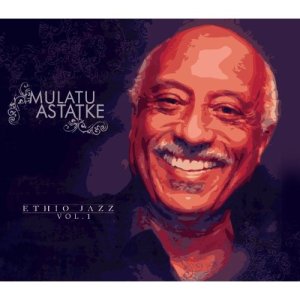
Nouveau morceau de Mulatu Astatké, tiré de l’album Ethio Jazz Vol. 1,
Record Label: AZMARI
Release Date: 2006
Ethio Jazz – Jazz and fusion with the Ethiopian five-tone scales.
Mulatu est dans la boite.
Pour la partition, tendez l’oreille…
Lady Soul – Hank Crawford
In Album, Lady Soul on March 12, 2010 at 4:58 pm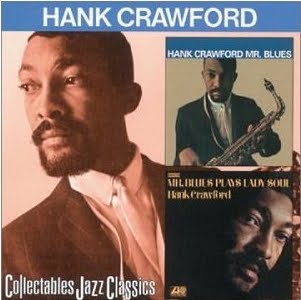 Hank Crawford’s “Mr. Blues Plays Lady Soul” on Atlantic from 1969. The groove is unreal, thanks to the great Bernard Purdie on drums, and the big band sound is killer thanks to the great arrangements of Arif Mardin. This is doubly fascinating because Hank was also a brilliant arranger who almost always wrote his own charts. Finally, the guitar chair is manned by the late, great Eric Gale, so business is handled 110% all the way ‘ round.”
Hank Crawford – Mr. Blues Plays Lady Soul (Atlantic Records)
Hank Crawford (as); David Newman (ts, fl); Paul Griffin (p, el-p); Eric Gale (g); Ron Carter (el-b); Bernard Purdie (d); Arif Mardin (arr, dir); Gene Orloff (strings cond); Bernie Glow, Joe Newman, Ernie Royal, Snooky Young (tp); Jimmy Cleveland, Benny Powell (tb); Frank Wess (as); Seldon Powell (ts); Pepper Adams (bars); unidentified strings.
Chaudement recommandé: Lady Soul
Hank Crawford Biography
In Bio, Lady Soul on March 12, 2010 at 4:39 pmBorn: December 21, 1934 | Died: January 29, 2009
Hank Crawford has been an alto sax sensation since he stepped out of the Ray Charles band back in 1963. A signature piercing, full bodied, blues, soul, and gospel drenched tone, sets him apart from the alto pack. He has an instantly recognizable voice, and his excellent choice of material suits his style perfectly. He is a bluesman turned preacher on the sax, and the sermon is always on time.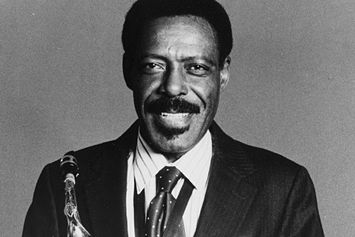
Bennie Ross Crawford Jr. was born in Memphis, Tennessee on December 21, 1934, began formal piano studies at age nine and was soon playing for his church choir. His father had brought an alto saxophone home from the service and when Hank entered high school, he took it up in order to join the band. He credits Charlie Parker, Louis Jordan, Earl Bostic and Johnny Hodges as early influences.
At school, he hung out with Phineas and Calvin Newborn, Booker Little, George Coleman, Frank Stozier and Harold Mabern–all of whom would go on to become important jazz figures. “We had a pretty good education just by being around each other,” Crawford says now.
Before he had finished high school, Hank was playing in bands led by Ben Branch, Tuff Green, Al Jackson, Sr. and Ike Turner. They were frequently called upon to back such up-and-coming blues singers as B. B. King, Bobby Bland, Junior Parker, Johnny Ace and Roscoe Gordon and the Palace Theatre, the Club Paradise and other Memphis venues.
In 1953, Crawford went away to Tennessee State College in Nashville where he developed his arranging skills as a leader of the school dance band, which included vocalist Leon Thomas. During the evening, he led a quartet called Little Hank and the Rhythm Kings. Discovered one night at the Subway Lounge by country producer Roy Hall, the group cut “The House of Pink Lights” and “Christine” for a local label with Crawford as featured vocalist.
His big break came in 1958 when Ray Charles passed through Nashville. Baritone saxophonist Leroy “Hog” Cooper had just left the band, and Charles offered Crawford the baritone chair. “I learned a lot about discipline and phrasing from Ray,” Crawford says. “He would keep me up a lot of nights and dictate arrangements to me. I learned how to voice and get that soulful sound. I think I kinda had it before, but being around him just helped that much more.”
“Sherry”, Hank’s first composition and arrangement for the Charles septet, was recorded for the Ray Charles At Newport album shortly after he joined the band. He also contributed three tunes and six arrangements to Fathead Newman’s debut albums later in 1958. Two years later, Charles expanded to full big band size and appointed Crawford musical director. (Crawford also switched to alto around this time.)
When Crawford left Ray Charles in 1963 to form his own septet, he had already established himself with several albums for Atlantic. From 1960 until 1970, he recorded twelve LPs for the label, many while balancing his earlier duties as Ray’s director. He released such pre-crossover hits as “Misty”, “The Pepper”, “Skunky Green”, and “Whispering Grass”.
After signing with Creed Taylor’s Kudo label in 1971, he cut one album a year over the next eight years. At Kudu, Crawford wasn’t allowed to write his own charts and was instead handed lavish arrangements in the then-fashionable CTI crossover mold. He still managed to come out with consistently quality work.
Crawford returned to classic form upon signing with Milestone Records in 1982, playing alto saxophone and often writing in the soulful manner that first made him famous. Some of his albums for the company–Midnight Ramble, (’82)Indigo Blue, (’83) Roadhouse Symphony, (’85) Night Beat, (’88) Groove Master,(’90) and South-Central. (’92).
In 1986, the saxophonist began working with blues-jazz organ master Jimmy McGriff. These are soul jazz played the way it should be, like going to school, it doesn’t get any better. They recorded four co-leader dates for Milestone–Soul Survivors, (’86) Steppin’ Up, (’87) On the Blue Side, (’89) and Road Tested, (’97) this duo also performed numerous club dates and concert dates in the U. S.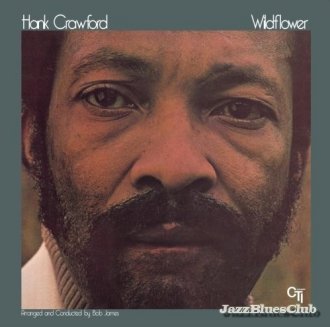
The new century found Hank Crawford, shifting gears and going for a more mainstream jazz set in his 2000 release “The World of Hank Crawford.” Though the songs are compositions from jazz masters as Ellington and Tadd Dameron, he delivers in that sanctified church sound that is his trademark.


 :>)azZClefs#