funics

Author Archive

Put It Where You Want It (1972) – The Crusaders

In Put It Where You Want It on October 18, 2012 at 11:07 pm

The Crusaders were one of the pioneers of Jazz-Funk music in the seventies and have made a number of visits to Montreux over the years. Founder members Joe Sample and Wilton Felder were joined in the line-up by long-standing friend Ray Parker Jr. on guitar and by the inimitable Randy Crawford on vocals. They delivered a set that spanned their career from early days up to their latest album capped with a stunning nine minute plus performance of their classic “Street Life”.

Larry Carlton – guitar; Rick Jackson – Keyboards; Chris Kent – bass; Moyes Lucas – drums. Plus guests Wilton Felder & Wayne Henderson

Stolen Moments

In Stolen Moments on October 6, 2012 at 1:22 pm

All parts, Score, solo in Concert, Bb and Eb of Stolen moments are in the boxes,

available from the library.

includes also the backing tracks

Stolen Moments – Solo from Oliver Nelson

In Stolen Moments on October 5, 2012 at 12:09 pm

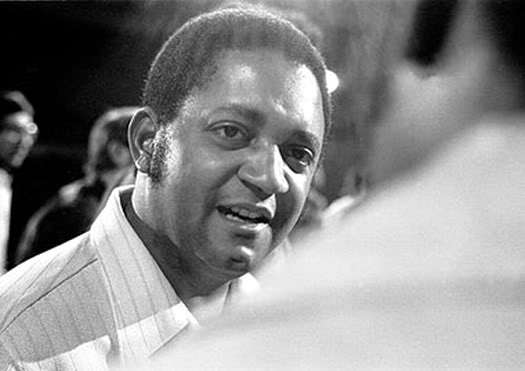
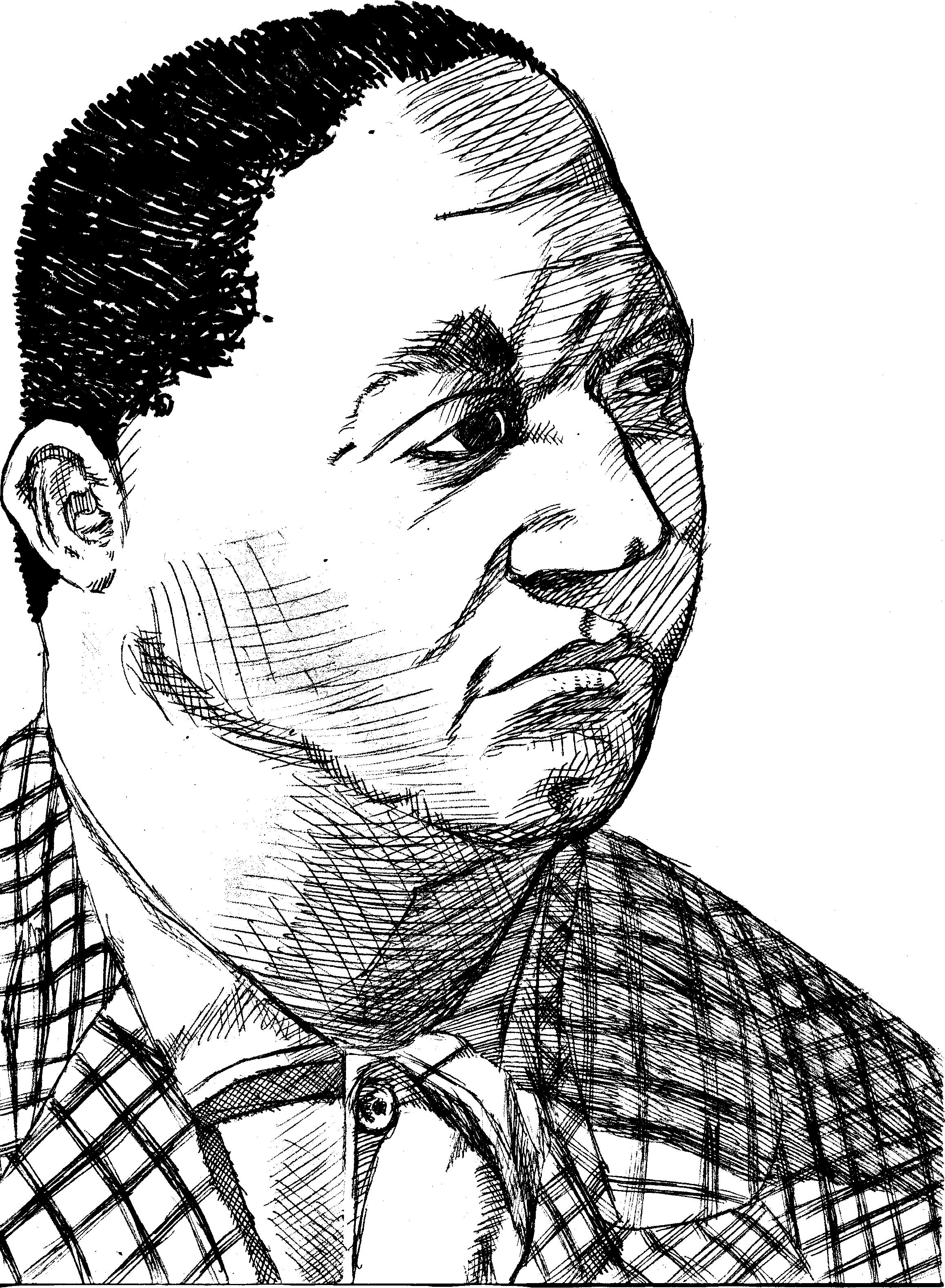
Oliver Nelson Biography

In Bio, Stolen Moments on October 5, 2012 at 9:15 am


Oliver Edward Nelson (June 4, 1932 in St.Louis, Missouri – Ocotober 28.01975) was an American jazz saxophonist, clarinetist, arranger and composer

Early life and career

Oliver Nelson’s family was musical: his brother was also a saxophonist who played with Cootie Williams in the 1940s, and his sister sang and played piano. Nelson began learning to play the piano when he was six, and started on the saxophone at eleven. From 1947 he played in “territory” bands around Saint Louis, before joining the Louis Jordan big band from 1950 to 1951, playing alto saxophone and arranging.

After military service in the Marines, Nelson returned to Missouri to study music composition and theory at Washington and Lincoln Universities, graduating in 1958. While back in his hometown of St. Louis, he met and married Eileen Mitchell; the couple had a son, Oliver Nelson Jr., but soon divorced. After graduation, Nelson married Audrey McEwen, a union which lasted until his death; they had a son, Nyles. Audrey was a native of St. Louis, Missouri.

Nelson moved to New York, playing with Erskine Hawkins and Wild Bill Davis, and working as the house arranger for the Apollo Theater in Harlem. He also played on the West Coast briefly with the Louie Bellson big band in 1959, and in the same year began recording as leader with small groups. From 1960 to 1961 he played tenor saxophone with Quincy Jones, both in the U.S. and on tour in Europe.

Breakthrough and afterwards

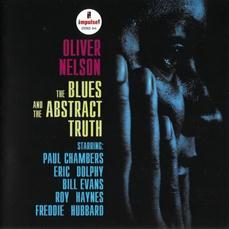
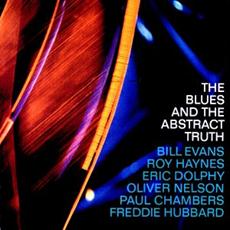
After six albums as leader between 1959 and 1961 for the Prestige label (with such musicians as Kenny Dorham, Johnny Hammond Smith, Eric Dolphy, Roy Haynes, King Curtis and Jimmy Forrest), Nelson’s big breakthrough came with The Blues and the Abstract Truth, on Impulse!, featuring the tune “Stolen Moments,” now considered a standard. This made his name as a composer and arranger, and he went on to record a number of big-band albums, as well as working as an arranger for Cannonball Adderley, Sonny Rollins, Eddie “Lockjaw” Davis, Johnny Hodges,Wes Montgomery, Buddy Rich, Jimmy Smith, Billy Taylor, Stanley Turrentine, Irene Reid, Gene Ammons and many others. He also led all-star big bands in various live performances between 1966 and 1975. Nelson continued to perform as a soloist during this period, though increasingly on soprano saxophone.

In 1967, Nelson moved to Los Angeles. Apart from his big-band appearances (in Berlin, Montreux, New York, and Los Angeles), he toured West Africa with a small group. He also spent a great deal of time composing music for television (Ironside, Night Gallery, Columbo, The Six Million Dollar Man and Longstreet) and films (Death of a Gunfighter and he arranged Gato Barbieri’s music for Last Tango in Paris). He produced and arranged for pop stars such as Nancy Wilson, James Brown, the Temptations, and Diana Ross. Less well-known is the fact that Nelson composed several symphonic works, and was also deeply involved in jazz education, returning to his alma mater, Washington University, in the summer of 1969 to lead a five-week long clinic that also featured such guest performers as Phil Woods, Mel Lewis, Thad Jones, Sir Roland Hanna, and Ron Carter. Nelson died of a heart attack on 28 October 1975, aged 43.

Discography

Prestige Records

  • 1959: Meet Oliver Nelson
  • 1960: Taking Care of Business
  • 1960: Images
  • 1960: Screamin’ the Blues
  • 1960: Soul Battle
  • 1960: Nocturne
  • 1961: Straight Ahead
  • 1961: Main Stem
  • 1962: Afro/American Sketches

Impulse! Records

  • 1961: The Blues and the Abstract Truth
  • 1964: More Blues and the Abstract Truth
  • 1966: Oliver Nelson Plays Michelle
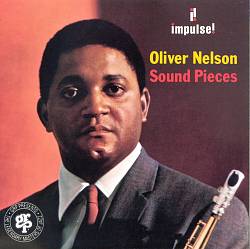
  • 1966: Sound Pieces
  • 1966: Happenings with Hank Jones
  • 1967: The Spirit of ’67 with Pee Wee Russell
  • 1967: The Kennedy Dream
  • 1967: Live from Los Angeles
  • 1968: Soulful Brass with Steve Allen
  • 197_: Three Dimensions (a compilation album)

Flying Dutchman Records

  • 1968: Soulful Brass No. 2
  • 1969: Black Brown and Beautiful
  • 1970: The Mayor and the People
  • 1970: Berlin Dialogue for Orchestra
  • 1970: Leon Thomas In Berlin with Oliver Nelson
  • 1971: Swiss Suite
  • 1974: In London with Oily Rags
  • 1975: Skull Session
  • 1976: A Dream Deferred

Other labels

  • 1962: Full Nelson (Verve)
  • 1962: Impressions of Phaedra (United Artists)
  • 1964: Fantabulous (Argo)
  • 1966: Leonard Feather’s Encyclopedia of Jazz (Verve)
  • 1966: Leonard Feather Presents the Sound of Feeling and the Sound of Oliver Nelson (Verve)
  • 1967: Jazzhattan Suite (Verve)
  • 1973: Fugue and Bossa
  • 1975: Stolen Moments (East Wind Records/Inner City Records)

As arranger

With Air Pocket

  • Fly On (1975, East Wind Records)

With Mel Brown

  • Chicken Fat (Impulse!, 1967)

With Ray Brown and Milt Jackson

  • Ray Brown / Milt Jackson (Verve, 1965)

With Eddie “Lockjaw” Davis

  • Trane Whistle (Prestige, 1960)

With Art Farmer

  • Listen to Art Farmer and the Orchestra (Mercury, 1962)

With Carmen McRae

  • Portrait of Carmen (Atlantic, 1967)

With Shirley Scott

  • For Members Only (Impulse!, 1963)
  • Great Scott!! (Impulse!, 1964)
  • Roll ‘Em: Shirley Scott Plays the Big Bands (Impulse!, 1966)

With Jimmy Smith

  • Bashin’: The Unpredictable Jimmy Smith (Verve, 1962)
  • Hobo Flats (Verve, 1963)
  • Who’s Afraid of Virginia Woolf? (Verve, 1964)
  • Monster (Verve, 1965)
  • Peter and the Wolf (Verve, 1966)

With Wes Montgomery

  • Goin’ Out of My Head (Verve, 1965)

With Count Basie

  • Afrique (Flying Dutchman, 1970)

As sideman

With Manny Albam

  • Jazz Goes to the Movies (Impulse!, 1962)

With Mundell Lowe

  • Satan in High Heels (soundtrack) (Charlie Parker, 1961)

With Quincy Jones

  • The Quintessence (Impulse!, 1961)

From Wikipedia, the free encyclopedia

Stolen Moments (Oliver Nelson)

In Stolen Moments on October 5, 2012 at 8:42 am


“Stolen Moments” is a jazz standard composed by Oliver Nelson. It is a sixteen-bar piece (in an eight-six-two pattern), though the solos are on a conventional minor key 12 bar blues structure.

The piece first appeared as “The Stolen Moment” on the 1960 album Trane Whistle by Eddie “Lockjaw” Davis, which was largely written and co-arranged by Oliver Nelson. It was not marked out as anything special, in fact the covernotes only mention that the trumpet solo is by Bob Bryant and that Eric Dolphy’s bass clarinet can be heard briefly on the closing. However, in the liner notes to Eric Dolphy: The Complete Prestige Recordings, Bill Kirchner states that this incorrectly credits Dolphy with playing what’s actually the baritone saxophone of George Barrow, with Dolphy’s contribution to the piece being the 2nd alto behind Nelson. Its first well-known recording was the version on Nelson’s own 1961 album The Blues and the Abstract Truth. Nelson’s solo on this version contains “possibly the most famous” use of the augmented scale in jazz.

Singer Mark Murphy wrote lyrics for his 1978 version.

Ann Fischer later wrote different lyrics to Nelson’s original melody. They were first recorded on the 1987 album The Carmen McRae-Betty Carter Duets. This vocal version of “Stolen Moments” was given the alternate title “You Belong to Her”

Recordings

Oliver Nelson, himself, used the song as an album title (Inner City Records – IC 6008) in 1975. “Stolen Moments” has been recorded numerous times. In 1994 the title was used for a compilation album in the Red Hot AIDS Benefit Series, which helped popularize this and other jazz standards among a wider audience.

Some recorded versions:

  • 1966 by Booker Ervin on the album Structurally Sound
  • 1968 by Phil Woods and his European Rhythm Machine on the album Americans Swinging in Paris
  • 1970 by Ahmad Jamal, album The Awakening
  • 1975 by Oliver Nelson, album Stolen Moments
  • 1978 by Mark Murphy, album Stolen Moments
  • 1979 by Jimmy Raney and Doug Raney, a father and son jazz guitar duo, album Stolen Moments
  • 1988 by Frank Zappa on the album Broadway the Hard Way (trumpet solo by Walt Fowler); after the trumpet solo, Zappa invites Sting to sit in with the band, and he sings a unique, modified version of the Police song “Murder by Numbers” over the “Stolen Moments” vamp. The band finishes by returning to the Nelson melody.
  • 1990 by Lee Ritenour, album Stolen Moments
  • 1991 by Stanley Jordan, album Stolen Moments
  • 1991 by New York Voices on the album Heart of Fire.
  • 1994 by United Future Organization on the compilation album Stolen Moments: Red Hot + Cool
  • 1996 by Jimmy Smith on the album Angel Eyes
  • 2002 by Kenny Burrell, album Stolen Moments
  • 2003 by Gap Mangione, album Stolen Moments
  • 2005 by Telefon Tel Aviv, album Remixes Compiled
  • 2009 by Brownman Electryc Trio, album Juggernaut

Other artists that have recorded the piece: Ray Brown, Caribbean Jazz Project, Betty Carter, Sonny Criss, Joyce DiCamillo, Booker Ervin, Freddie Hubbard, Milt Jackson, J. J. Johnson, Quincy Jones, Oliver Lake, Andy LaVerne, Lorne Lofsky, Herbie Mann, Jon Mayer, Carmen McRae, One for All, Hilton Ruiz, Andy Summers, Bill Taylor, Turtle Island String Quartet, Sadao Watanabe,Grover Washington, Jr., Snakefinger, Avi Lebovich & The Orchestra, Soil & “Pimp” Sessions, Fancie, Brownman Ali.

From Wikipedia, the free encyclopedia

Scale Substitution

In Scales on September 24, 2012 at 3:43 pm

From http://chananhanspal.com/scale-substitution


Scale substitution is an interesting way to superimpose certain tonalities over certain chords. Remember in the Major Scale Modes page where it is written that you should play the scale that immediately corresponds to the chord, C major chord/ C major Scale, C lydian chord/ C lydian Scale, well, in this page we are going to contradict and have a little look at scale substitution.


Let´s imagine a C minor 7 one chord vamp, here are some scale choices :

  • C Dorian
  • C Jazz Melodic Minor
  • C Harmonic Minor
  • C Natural Minor
  • C Minor Pentatonic


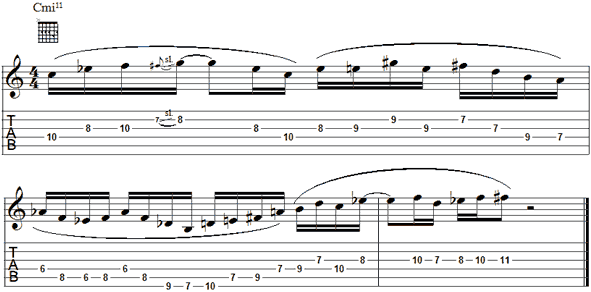
These are the more consonant choices, however, if you wanted to play less consonant and create some dissonance and play “outside” you could try playing a C minor pentatonic then move it down a semitone to B minor pentatonic, you have to be careful how you do this but here is an example using some chromatic notes:


The reason for moving down to the B minor pentatonic is to create tension. One could analyse the notes of the B minor pentatonic scale in relation to the C minor 11 chord and find some strange note/chord relationships but it would probably be best to think of the scale as a temporary side step from the home key centre. The other option is to side step upwards and play the C# minor pentatonic and then resolve back to C minor pentatonic. 


This type of playing was introduced by John Coltrane, it is an extension of the idea of chordal ambiguity whereby the overall quality of a chord is implicit rather than explicit giving the improviser more freedom to express multiple tonalities in the improvisation. For example, if you play a basic C minor 7 chord C Eb G Bb, the chord structure is well defined and has more stability than if you were to play C F Bb. The C F Bb voicing is a 3 note chord built on fourths, and is less stable because there is no 3rd, as a result of this you have a lot more options in choosing the tonality you want to imply. 

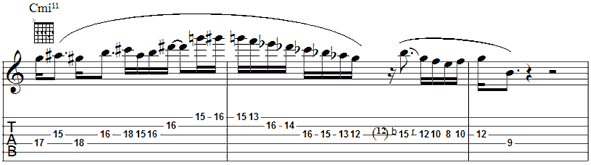
Another option for tension is to treat the C minor 7 as a I chord and play a G altered scale, as if there was a G altered V chord present, and resolve to a C minor scale of your choice, this device is less dissonant than the previous example, but can imply forward motion, in your solo:


If we take a C7 chord and look at the possible scale applications, we have the more consonant choices :


  • C Mixolydian (Dominant 7 Scale)
  • C Major Pentatonic
  • C Lydian Dominant
  • G Dorian Minor
  • G Minor Pentatonic


Some dissonant choices maybe the C half/whole step diminished, C altered or G altered.


Why?


The notes of the C h/w diminished scale in relation to the C mixolydian:


A#(Bb)

b7

A

13

G

PERFECT 5th

F#

AUGMENTED 4th

E

MAJOR 3rd

D#(Eb)

#9

C#

b9

C

ROOT (from the bottom up)


The implication is the altered sound over the regular C7. With the G altered you can think of the C7 as being the modified I chord in a II V Iand imply the V chord tonality over the C7; this application can really lift a solo giving yet again a kind of forward motion, but be careful how you resolve, remember there is no point of going outside if you don’t know how to come back in.


A quick note about modal jazz…

The type of jazz harmony that revolves around one or few chords is modal jazz. The concept of modal jazz is that you use one mode per chord, this can be challenging since you are restricted to the 7 different notes that make up one mode. A classic example of modal jazz is the album, ‘Kind of Blue’ by Miles Davis; you will notice the recordings illustrate modal playing, but in the solos, the temporal rule is broken, ie. the rule of one chord one mode, as many of the solos particularly by Coltrane will testify. This leads to the idea of bending the rules of modal jazz slightly and using the type of outside playing devices we have looked at.

Playing Over Minor Guitar Chords

In Scales on September 24, 2012 at 3:11 pm

In this tutorial we’ll have a look at the guitar scales, arpeggios and substitutions we can use to improvise over minor guitar chords, so we can make our guitar solos more interesting. Unless specified, we take a Dm chord as example. Here’s a roundup:

  1. The Dorian Scale

The 3 minor diatonic scales (Dorian, Phrygian, Aeolian) are the obvious choice for playing over minor chords. Which of the 3 scales you play depends on the harmonic setting and the function of the chords you are playing over.

The Dorian mode is played over II chords, like in a II V I chord progression.

We’ll take a 2 5 1 in C major as an example:

|Dm7          |G7           |Cmaj7        |%             |
|II           |V            |I            |              |          

Over the Dm7 we play the D Dorian scale:

D Dorian D     E     F      G      A     B      C
Over Dm7 1     9     b3     11     5     6      b7

Here’s the scale chart for D Dorian mode in its root position:
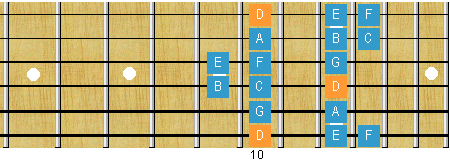

The Dorian scale is also used to play over minor chords in modal tunes, like So What.

  1. The Phrygian Scale

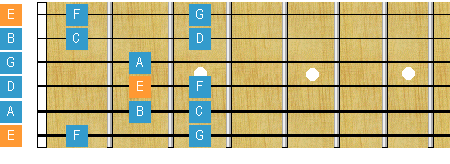
The Phrygian scale is used to play over minor chords that have the function of a III in a harmony. An example is the 3rd bar of a Rhythm Changes:

|Cmaj7  Am7   |Dm7    G7    |Em7    A7    |Dm7    G7     |
|I      VI    |II     V     |III    VI7   |II     V      |

On the Em7 in the 3rd bar we can play the E Phrygian mode. As a side note I want to point out that although you theoretically play the Phrygian mode on the Em7 in a rhythm changes, you don’t think about the Phrygian mode, just think C major (did that make sense, if not, give me a shout).

E Phrygian Scale E      F     G      A      B     C      D
Over Em7 1      b9    b3     11     5    b6      b7


The E Phrygian scale in its root position:


  1. The Aeolian Scale

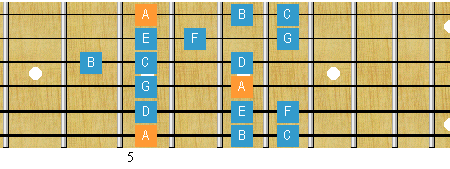
The Aeolian scale (aka relative minor scale) is used to play over minor chords that have a VI function or a I function in minor. An example of a VI is the second chord in a rhythm changes.

A Aeolian Mode A     B     C      D      E     F      G
Over Am7 1     9     b3     11     5     b6     b7

The chart for the A Aeolian scale in root position:

4) D Minor Pentatonic Scale or Blues Scale

It can’t get more obvious, very useful, also in a jazz context.

D Minor Pentatonic D     F     G      A      C
Over Dm7 1     b3    11     5      b7

5) A Minor Pentatonic Scale or Blues Scale

The A minor pentatonic scale sounds very nice over Dm7

A Minor Pentatonic A     C     D      E      G
Over Dm7 5     b7    1      9      11


6) E minor Pentatonic Scale

The E minor pentatonic works nice if you alternate it with D minor pentatonic (on modal tunes). It creates a tension/release kind of thing (see point 10 on this page)

E Minor Pentatonic E     G     A      B      D
Over Dm7 9     11    5      6      1

7) D Minor Arpeggio

Surprisingly the Dm7 arpeggio works very well over Dm7. See also: Arpeggio 101 

8) Fmaj7 Arpeggio

An Fmaj7 arpeggio over Dm adds the 9: nice sound.

Fmaj7 Arpeggio F   A   C    E
Over Dm7 b3  5   b7   9

9) Am7 Arpeggio

One step further is Am7, it adds the 11 to the sound.

Am7 Arpeggio A   C   E    G
Over Dm7 5   b7  9    11

10) Em7 Arpeggio

Em7 sounds a little more distant over Dm, but works fine if you alternate it with a Dm arpeggio. 

D   F   A   C   +   E   G   B   D = D Dorian Scale

Examples: Triads Over Minor Chords

Em7 Arpeggio E     G     B      D
Over Dm7 9     11    6      1

11) Dm6 or Bm7b5 Arpeggio

Emphasizing the 6 of a minor chord works nice if the minor chord has a tonic function and not a sub-tonic function (like in a II V). In other words, the minor chord should be the I, not the II. In other words, the minor chord should not be followed by the V (Dm7 should not be followed by G7).

Example of a minor chord with a tonic function:

| Dm7          | Em7b5    A7  |
| Im7           | IIm7b5   V    |

12) G7 Arpeggio

G7 sounds ok over Dm, especially when it has the tonic function. If you use it in a 2 5 1, you can make the b (6) on Dm7 go to #9 and b9 on G7, to the 5 of Cmaj7.

G7 Arpeggio G     B     D      F
Over Dm7 11    6     1      b3

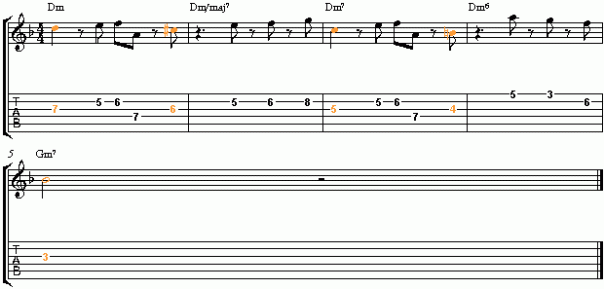
13) The Line ClichéIn tunes where the minor chord spans a couple of bars, like in a minor blues, you can use this little device called the line cliché. This technique is as old as the street and is frequently used by gypsy jazz guitarists. The line cliché is a descending line going chromatically from the 1 of a minor chord to its 6:

1 » 7  » b7 » 6
d » c# » c  » b

From: http://www.jazzguitar.be/minor_guitar_chords.html
Missing parts added

In Psychedelic Sally on September 24, 2012 at 1:43 pm

Hello, Several missing parts in Eb and Bb, and also

Psychedelic Sally partitions (and more) were added in the Library boxes,

ask for password, if you lost it.

Cheers,

The Horace SILVER Quintet “Psychedelic Sally” (1968)

In Psychedelic Sally on September 21, 2012 at 3:17 pm

From the album ” Serenade to a soul sister”. Horace Silver (piano), Charles Tolliver (tpt), Stanley Turrentine (T sax), Bob Cranshaw (db), Mickey Roker (dr).

Serenade to a Soul Sister (Horace Silver)

In Psychedelic Sally on September 21, 2012 at 2:59 pm

From Wikipedia, the free encyclopedia

Serenade to a Soul Sister is an album by jazz pianist Horace Silver released on the Blue Note label in 1968, featuring performances by Silver with Charles Tolliver, Stanley Turrentine, Bennie Maupin, Bob Cranshaw, John Williams, Mickey Roker and Billy Cobham The Allmusic review by Steve Huey awarded the album 4½ stars and calls it “One of the last great Horace Silver albums for Blue Note, Serenade to a Soul Sister is also one of the pianist’s most infectiously cheerful, good-humored outings.

Track listing

All compositions by Horace Silver

  1. Psychedelic Sally” – 7:14
  2. “Serenade to a Soul Sister” – 6:19
  3. “Rain Dance” – 6:21
  4. “Jungle Juice” – 6:46
  5. “Kindred Spirits” – 5:55
  6. “Next Time I Fall in Love” – 5:19

Recorded February 23 (tracks 1-3) and March 29 (tracks 4-6), 1968.

Personnel

  • Horace Silver – piano
  • Charles Tolliver – trumpet
  • Stanley Turrentine – tenor saxophone (tracks 1-3)
  • Bennie Maupin – tenor saxophone (tracks 4-6)
  • Bob Cranshaw – bass, electric bass (tracks 1-3)
  • John Williams – bass (tracks 4-6)
  • Mickey Roker – drums (tracks 1-3)
  • Billy Cobham – drums (tracks 4-6)

Production

  • Alfred Lion – producer
  • Reid Miles – design
  • Rudy Van Gelder – engineer
  • Billy Cobham (Cover), Francis Wolff (Interior) – photography