funics

Author Archive

OpenMind à Versailles, Freejazz Revival et renaisssance

In Events on December 9, 2010 at 8:54 am

Exceptionnelle représentation d’OpenMind le 11 décembre à Versailles, 3 rue des Missionnaires.

Mohand Mezzache, François Camin, Ugo Maggio, Jacques de Lignières et Bobby Few vous invitent à prendre le Continental Jazz Express, à l’espace C3M, 3 rue des Missionnaires, 78000 Versailles, réservation au 01 39 51 01 27.

Une soirée exceptionnelle aux confins des racines du freejazz avec Bobby Few (piano), et des toutes dernières tendances jazz d’aujourd’hui développées par un ensemble homogène de grands routiers du jazz contemporain, Jacques de Lignières, saxophone ténor, Mohand Mezzache, saxophoniste réputé pour sa générosité et son ouverture musicale, François Camin (contrebasse) et Ugo Maggio.

Bobby Few, Transcontinental Jazz Express

The thing about clichés is that they often start with what was once a good line, an apt description which through overuse eventually is, or should be, stripped from the language. Which is a shame, because sometimes a writer wants to be able to say something like “contains the entire tradition of jazz in his keyboard,” but can’t. Ain’t good writin’.

Bobby Few powerfully and pristinely plays, wraps and overlays the history of jazz without codification or cliché so a small debt of less-than-hackneyed writing is owed him. But what he demonstrates on Transcontinental Jazz Express is pure jazz, in all its energy, introspection and exuberance. It is fast, strong and slick. It’s clever and familiar. It’s good piano playing.

The Cleveland-born Few recorded with Albert Ayler and Archie Shepp, and has performed with Sunny Murray, Steve Lacy, Alan Silva and Noah Howard, among others. But this recording, a live solo set from the 2000 Vision Festival, is not strictly speaking an avant outing. Like Dave Burrell, (another Shepp alum) Few is able to stay within the tradition while referencing outside streams and creating something new in the process. He plays hard and all over the keyboard, dropping barrelhouse basslines, gliding arpeggio and Ellingtonian Jumps for Joy phrases. It’s the kind of thing that, in the 21st Century, you’d better do damn well if you’re going to do at all.

The extended suite covers a lot of ground, musically and also figuratively by way of the structure. The framework, a train ride through Africa and Asia, is pretty incidental to the music, which is for the better. The African leg of the journey is reminiscent of similar Randy Weston projects, and Few even announces the stops in short, simple verses. Pan Africanism is something of a throwback in jazz, as are trains for that matter, but the devices only punctuate the performance, stopping short of defining it.

Bobby Few discographie:

More Or Less Few (LP, Album)
Center Of The World
1973

Bobby Few / Alan Silva / Frank Wright – Solos & Duets (LP, Album)
Center Of The World
1975

Few Coming Thru (LP, Album)
Sun Records
1977

Cheikh Tidiane Fall / Bobby Few / Jo Maka – Diom Futa (LP, Album)
Free Lance
1979

Continental Jazz Express (LP, Album)
Disques Vogue
1979

Steve Lacy Feat. Bobby Few And Dennis Charles* – The Flame (LP, Album)

Do you like Bebop’s licks? Try BopLand!

In Licks on November 12, 2010 at 6:29 pm

BopLand

Mr. Scruff – Get a Move on (vj mix) revisits Bird’s Lament (Moondog)

In Bird's Lament on November 11, 2010 at 6:05 pm

Mr. Scruff (de son vrai nom Andy Carthy) est un DJ anglais.

Il commence sa carrière de DJ dès 1994. Il est vite remarqué pour ses longs sets ainsi que pour ses dessins animés qu’il réalise lui-même et qu’il projette durant ses prestations. Il signe un premier album sur un petit label puis signe sur le label Ninja Tune les albums Keep it unreal et Trouser Jazz. En 1999 son morceau Get a move on (paru sur l’album Keep it unreal), reprise d’un morceau de Moondog intitulé Bird’s Lament, rencontre un succès impressionnant et lui permet d’acquérir une notoriété au-delà des frontières britanniques (ce morceau fut abondamment exploité dans plusieurs publicités).

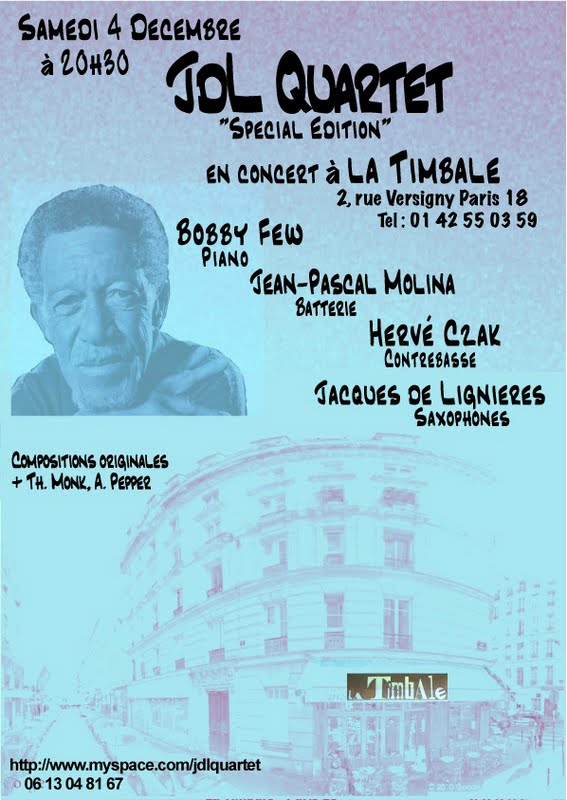
JDL Quartet “Special edition” en Concert à la Timbale

In Events on November 11, 2010 at 4:19 pm

Jdl Quartet Special Edition

en concert à la Timbale, 2 rue Versigny, 75018 Paris.

Avec:  Bobby Few (piano), Jean Pascal Molina (batterie), Hervé Czak (Contrebasse) et Jacques de Lignières (Saxophones).

Pour les amoureux d’Art Pepper et de Thélonious Monk (entre autres)

Samedi 4 décembre 2010, à 20h30

Horace Silver playing Senõr Blues

In Senõr Blues on November 6, 2010 at 5:41 pm

Senõr Blues

In Senõr Blues on November 6, 2010 at 2:58 pm

Update:

  • The lyrics
  • A version recorded by Anita O’Day
  • The original version from Horace Silver
  • A background version (mp3) from Aebersold
  • The partition in Ut

They all are in the box

Good jam

Horace Silver, Le père fondateur du piano Jazz Funky

In Bio, Senõr Blues, The Jody Grind on November 5, 2010 at 3:07 pm

Style Funky

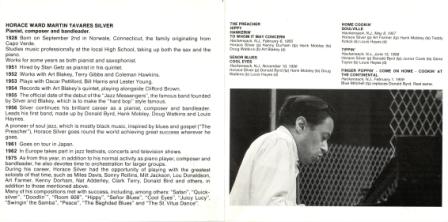
Horace Silver révolutionne l’approche du piano jazz par son jeu extrêmement ” percussif “. Son style pianistique n’est pas sans rappeler le boogie-woogie ou le shuffle. Horace Silver est le pianiste le plus représentatif du mouvement hard-bop. Son jeu pianistique est très percussif et si son sens du swing inouï en font l’un des fondateurs du jazz “funky”, derrière la gaieté et la sophistication de ses thèmes se cache souvent un artiste possédant une intense mélancolie teinté de nostalgie. Horace Silver est le compositeur de nombreux standards de jazz, tels : Song for my Father, Sister Sadie, Soulville ou Senor Blues.

Les dates importantes de la vie de Horace Silver

  • 1928 – Horace Silver est né à Norwalk, dans le Connecticut, le 2 septembre 1928. Il étudie la musique et joue du saxophone et du piano à l’église.
  • 1950 – Dans un club de Hartford, Stan Getz (sax) le remarque. Il est engagé dans son quartette et commence à enregistrer ses premiers disques.
  • 1951 – Horace Silver s’installe à New York et travaille avec Terry Gibbs (vib), Coleman Hawkins (sax), Oscar Pettiford (b), J. J. Johnson (tb), etc. Il enregistre également avec de grands noms tels que Miles Davis (tp) et Sonny Rollins (sax).
  • 1954 – Il devient directeur musical des premiers Jazz Messengers et à partir de 1956, Horace Silver forme un quintette avec lequel il enregistre fréquemment pour Blue Note. C’est sous cette étiquette que l’on trouve l’essentiel de sa production.
  • 1980 – Horace Silver crée sa propre compagnie : Silveto Records mais celle-ci devient rapidement un échec.
  • 1993 – Il signe chez Columbia où il enregistre 2 disques
  • 1994 – Horace Silver se produit au New Orleans Jazz & Heritage Festival et joue avec le Silver-Brass Ensemble.
  • 1996 – De 1996 à 1999, il enregistre trois disques pour Impulse.

Un Style reconnaissable

Le fait d’avoir choisi de transposer le jeu d’instrument à vent pour bâtir son style, lui a donné une articulaton piquée et détachée. Excellent bluesman, Horace Silver possède un jeu de main gauche très fourni et très rythmique qui suffit à le faire reconnaître aisément des autres pianistes. Son jeu excitant est de ceux qui “poussent” les autres solistes.

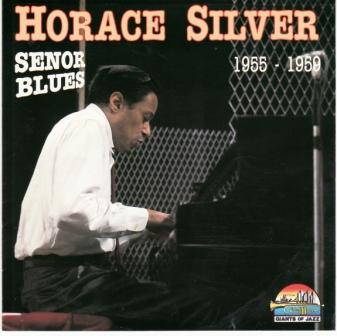
Senõr Blues – Horace Silver

In Senõr Blues on November 5, 2010 at 2:17 pm

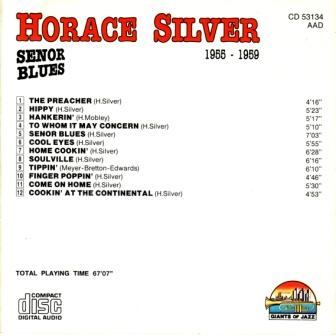
One of the major Lps recorded by Horace Silver in 1959

Senor Blues – Horace Silver (piano) & composer

Live at Newport ’58 (Blue Note 98070)

first release date: 1963 08 31, Label Blue Note

Musicians:

Horace Silver (piano), Junior Cook (tenor sax), Louis Smith(trumpet), Gene Taylor (bass), Louis Hayes (drums), Composed by Horace Silver

  1. Preacher
  2. Hippy
  3. Hankerin’
  4. To Whom It May Concern
  5. Señor Blues
  6. Cool Eyes
  7. Home Cookin’
  8. Soulville
  9. Tippin
  10. Finger Poppin’
  11. Come on Home
  12. Cookin’ at the Continental

Tone Matrix and audiotools (André Michelle’s lab)

In Others on November 2, 2010 at 6:23 pm

Simple sinewave synthesizer triggered by an ordinary 16step sequencer. Each triggered step causes a force on the underlaying wave-map, which makes it more cute. Based on the AudioTool engine thus no sources,

ToneMatrix

Also check all available audiotools from André Michelle’s lab here

audiotools

St. Thomas by Barney Kessel

In St Thomas on October 29, 2010 at 10:33 am

St. Thomas chords played by Barney Kessel

Structure AAB
C6 – Em7b5 A7 – Dm7 G7 -C6
Em7b5 – A7 – Dm7 -G7
C C7 – F F#dim – C/G Gsus7-C