funics

Author Archive

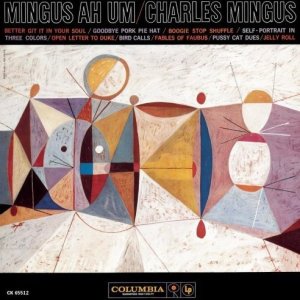
Charles Mingus – Ah Um – Goodbye Pork Pie Hat

In Album, Good Bye Pork Pie Hat on February 10, 2009 at 9:41 pm

Mingus Ah Um est un album de jazz signé Charles Mingus mis sur le marché en 1959. 

albumcovercharlesmingus-mingusahum

Il est le prolongement du mouvement

 d’évolution vers le bebop, puis le free-jazz, entammé avec Pithecanthropus Erectus 3 ans auparavant. Produit par Atlantic Records, cet album reste l’un des plus importants de Charles Mingus, et aura une influence majeure sur les artistes qui suivront.

Musiciens 

  • Contrebasse : Charles Mingus
  • Saxophone : Booker Ervin and John Handy
  • Trombone : Willie Dennis and Jimmy Knepper
  • Piano : Horace Parlan
  • Batterie : Dannie Richmond

Titres 

  • 1. Better git it in your soul
  • 2. Goodbye pork pie hat. (Hommage à Lester Young)
  • 3. Boogie stop shuffle
  • 4. Self-Portrait in three colors
  • 5. Open letter to duke
  • 6. Bird calls
  • 7. Fables of faubus
  • 8. Pussy cat dues
  • 9. Jelly roll
  • 10. Pedal point blues
  • 11. GG train
  • 12. Girl of my dreams

——————————————————————–

Autre label: Read the rest of this entry »

Thelonious Monk Blue Note Sessions (Well you Needn’t)

In Album, Well You Needn't on February 10, 2009 at 11:07 am

Jazz pianist Thelonious Monk’s first sessions as a bandleader were recorded between 1947 and 1952, and released on Blue Note records as a series of 78 RPM singles. These singles were then compiled in later years–with additional performances from the sessions–into long-playing album formats. As Monk’s reputation and fame grew, the sessions were recompiled again and again into more complete configurations. This article details various releases of these sessions.

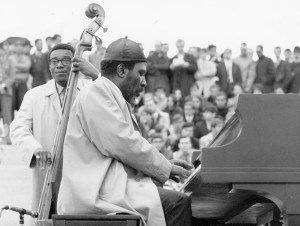
monk_1967

Thelonious Monk, foreground, performing at Expo 67in Montreal. (Credit: Library and Archives Canada)

The Sessions

The Blue Note recordings were made over the course of six different sessions. “Versions” refers only to the number of eventually-released performances; other takes may have been recorded.

All compositions by Thelonious Monk unless otherwise noted.

Session 1: October 15, 1947

1. Humph
2. Evonce (Idrees Sulieman – Ike Quebec) [2 versions]
3. Suburban Eyes (Ike Quebec) [2 versions]
4. Thelonious

Session 2: October 24, 1947

5. Nice Work If You Can Get It (G. Gershwin, I. Gershwin) [2 versions]
6. Ruby My Dear [2 versions]
7. Well You Needn’t [2 versions]
8. April In Paris (Vernon Duke – E. Y. Harburg) [2 versions]
9. Off Minor
10. Introspection

Session 3: November 21, 1947

11. In Walked Bud
12. Monk’s Mood
13. Who Knows? [2 versions]
14. ‘Round Midnight

Session 4: July 2, 1948

15. Evidence
16. Misterioso [2 versions]
17. Epistrophy (T. Monk – Kenny Clarke)
18. I Mean You
19. All The Things You Are (Jerome Kern – Oscar Hammerstein)
20. I Should Care (Cahn – Stordahl – Weston)[2 versions]

Session 5: July 23, 1951

21. Four in One [2 versions]
22. Criss Cross [2 versions]
23. Eronel (Monk – Sulieman – Hakim)
24. Straight, No Chaser
25. Ask Me Now [2 versions]
26. Willow Weep For Me (Ann Ronnell)


Session 6: May 30, 1952

27. Skippy [2 versions]
28. Hornin’ In [2 versions]
29. Sixteen [2 versions]
30. Carolina Moon (B. Davis – J. Burke)
31. Let’s Cool One
32. I’ll Follow You (R. Turk – F. Ahlert)

Personnel

  • Thelonious Monk – piano
  • Art Blakey – drums (sessions 1, 2, 3, 5)
  • Shadow Wilson – drums (session 4)
  • Max Roach – drums (session 6)
  • Gene Ramey – bass (session 1, 2)
  • Bob Paige – bass (session 3)
  • John Simmons – bass (session 4)
  • Al McKibbon – bass (session 5)
  • Nelson Boyd – bass (session 6)
  • Milt Jackson – vibraphone (4, 5)
  • Idrees Sulieman – trumpet (session 1)
  • George Taitt – trumpet (session 3)
  • Kenny Dorham – trumpet (session 6)
  • Danny Quebec West – alto saxophone (session 1)
  • Sahib Shihab – alto saxophone (sessions 3, 5)
  • Lou Donaldson – alto saxophone (session 6)
  • Billy Smith – tenor saxophone (session 1)
  • Lucky Thompson – tenor saxophone (session 6)
  • Kenny “Pancho” Hagood – vocal (session 4, songs 19 & 20)

Singles

Blue Note 78 rpm series (12 inch 78 rpm)

BN 543 Well, You Needn’t (BN314-0)/ ‘Round About Midnight (BN321-1) 


Thought of the Week

In Others on February 10, 2009 at 10:10 am

Go confidently in the direction of your dreams! Live the life you’ve imagined. As you simplify your life, the laws of the universe will be simpler. — Henry David Thoreau

Jazzed in Cleveland – Pianist Bobby Few

In Bio on February 6, 2009 at 10:34 pm

Jazzed in Cleveland – Pianist Bobby Few

Story filed January 28, 2004

He was one of Cleveland’s leading jazz pianists in the 1950s and ‘60s, and later, Bobby Few became one of the most respected and busiest pianists in Europe. After moving to Paris in the late 1960s, Few has performed on more than 50 jazz albums.

via Jazzed in Cleveland – Part 82 – Pianist Bobby Few.

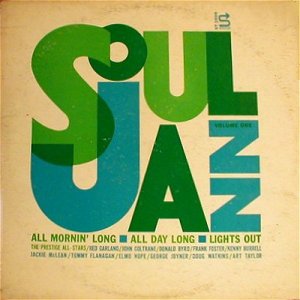
Did you said Soul Jazz?

In Bio on January 26, 2009 at 11:01 am

jazzsoulSoul jazz was a development of hard bop which incorporated strong influences from blues, gospel and rhythm and blues in music for small groups, often the organ trio which featured the Hammond organ. Important soul jazz organists included Bill Doggett, Charles Earland, Richard “Groove” Holmes, Les McCann, “Brother” Jack McDuff, Jimmy McGriff, Lonnie Smith, Big John Patton, Don Patterson, Shirley Scott, Hank Marr, Reuben Wilson, Jimmy Smith and Johnny Hammond Smith.

Tenor saxophone and guitar were also important in soul jazz; soul jazz tenors include Gene Ammons, Eddie “Lockjaw” Davis, Eddie Harris, Houston Person, and Stanley Turrentine; guitarists include Grant Green and George Benson. Other important contributors were Alto saxophonists Lou Donaldson and Hank Crawford, trumpeter Blue Mitchell, and drummer Idris Muhammed (ne Leo Morris). Unlike hard bop, soul jazz generally emphasized repetitive grooves, melodies, and melodic hooks.

Soul jazz was developed in the late 1950s, reaching public awareness with the release of The Cannonball Adderley Quintet in San Francisco, and was perhaps most popular in the mid-to-late 1960s, though many soul jazz performers, and elements of the music, remain popular. Although the term “soul jazz” contains the word “soul,” soul jazz is only a distant cousin to soul music, in that soul developed from gospel and R&B rather than from jazz.

souljazzindustrySome well-known soul jazz recordings are Lee Morgan’s The Sidewinder (1963), Herbie Hancock’s Cantaloupe Island (1964) (which was popularized further when sampled by US3 on Cantaloop), Horace Silver’s Song for My Father (1964) (which was musically alluded to by Steely Dan with Rikki Don’t Lose That Number), Ramsey Lewis’sThe In Crowd (1965), and Cannonball Adderley’s Mercy, Mercy, Mercy (1966) (also popularized further when covered as a top 40 pop song by The Buckinghams).

The Soul Jazz vernacular was a major contributer to the evolution of Jazz-Funk in the 1970s.

Soul jazz  

  • Origins: hard bop, rhythm and blues, blues, gospel
  • Cultural origins: 1950s
  • Typical instruments:
    • Hammond organ, piano, saxophone, guitar, 
    • double bass, electric bass, drums
  • Mainstream popularity: 1950s to 1970s
  • Subgenres: Jazz-funk

List of Soul Jazz musiciens

  • Cannonball Adderley – sax
  • Nat Adderley – cornet
  • Gene Ammons – sax
  • Curtis Amy – sax
  • Roy Ayers – vibraphone
  • Joe Beck – guitar
  • George Benson – guitar, vocals
  • Lou Blackburn – trombone
  • Billy Butler (guitarist)
  • Earl Bostic – sax
  • George Braith – sax
  • Zachary Breaux – guitar
  • Bobby Broom – guitar
  • Norman Brown (guitarist) – guitar
  • Ray Bryant – piano
  • Rusty Bryant
  • Kenny Burrell – guitar
  • Billy Butler (guitarist) – guitar
  • Arnett Cobb – sax
  • Sonny Cox – sax
  • Hank Crawford – sax
  • The Crusaders
  • King Curtis
  • Eddie Davis (saxophonist) – sax
  • Joey DeFrancesco – organ, trumpet
  • Monica Dillon
  • Bill Doggett
  • Lou Donaldson – sax
  • Cornell Dupree
  • Charles Earland
  • İlhan Erşahin – sax
  • Wilton Felder
  • Ronnie Foster
  • George Freeman
  • Funk, Inc.
  • Maynard Ferguson – trumpet
  • Grant Green – guitar
  • Jabari Grover – Vocals
  • Herbie Hancock
  • Eddie Harris
  • Gene Harris
  • Bill Heid
  • Wayne Henderson (musician)
  • Red Holloway – saxophone
  • Ron Holloway – tenor saxophone
  • Richard Holmes (organist) – organ
  • Stix Hooper
  • Freddie Hubbard – trumpet
  • Bobbi Humphrey – flute
  • Fred Jackson (saxophonist) – sax
  • Willis Jackson (saxophonist) – sax
  • The J.B.’s
  • Henry Johnson (guitarist)
  • Plas Johnson
  • Wayne Johnson – guitar
  • Ivan “Boogaloo Joe” Jones – guitar
  • Ronny Jordan – guitar
  • Rahsaan Roland Kirk
  • Earl Klugh – guitar
  • Charles Kynard
  • Ramsey Lewis – piano
  • Bobby Lyle – piano
  • Johnny Lytle
  • Harold Mabern – piano
  • Junior Mance – piano
  • Herbie Mann – sax, flute
  • Hank Marr – organ
  • Pat Martino – guitar
  • Hugh Masekela – trumpet
  • Les McCann – piano
  • Big Jay McNeely sax
  • Wes Montgomery – guitar
  • Dick Morrissey – tenor/soprano sax
  • Ronald Muldrow – guitar
  • Jack McDuff – organ
  • Jimmy McGriff – organ
  • Lee Morgan – trumpet
  • Idris Muhammad – drums
  • Ronald Muldrow – guitar
  • Oliver Nelson – sax
  • David Newman (jazz musician) – sax
  • Johnny O’Neal
  • Maceo Parker – sax
  • John Patton (musician) – organ
  • Duke Pearson – piano
  • Houston Person – sax
  • Sonny Phillips
  • Trudy Pitts
  • Jimmy Ponder
  • Seldon Powell – sax, flute
  • Pucho & His Latin Soul Brothers
  • Bernard Purdie
  • Ike Quebec – sax
  • Chuck Rainey
  • Joshua Redman – sax
  • Freddie Roach (organist) – organ
  • Joe Sample – piano
  • Marlon Saunders – vocals
  • Rhoda Scott – organ
  • Shirley Scott – organ
  • Horace Silver – piano
  • Nina Simone – vocals
  • Dr. Lonnie Smith – organ
  • Jimmy Smith (musician) – organ
  • Johnny “Hammond” Smith – organ
  • Melvin Sparks – guitar
  • Leon Spencer – organ
  • B.B. Reed – sax
  • Grady Tate – drums
  • Billy Taylor – piano
  • The Three Souls
  • The Three Sounds
  • Bobby Timmons – piano
  • Stanley Turrentine – sax
  • James Ulmer
  • Harold Vick – sax, flute
  • Jr. Walker & the All Stars
  • Winston Walls
  • Grover Washington, Jr. – sax
  • Mark Whitfield – guitar
  • Don Wilkerson
  • Baby Face Willette – organ
  • Jack Wilson (jazz pianist) – piano
  • Reuben Wilson
  • John Wright – piano
  • Larry Young (jazz) – organ
  • Joe Zawinul – keyboards


The Electrifying Eddie Harris (Album review) Listen Here

In Album, Listen Here on January 25, 2009 at 3:32 pm

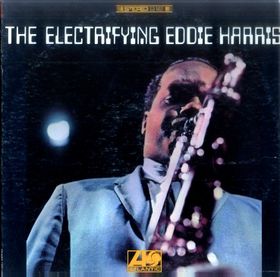
harriselec

THE ELECTRIFYING EDDIE HARRIS:

Recorded in New York, New York on March 14-15, 1968.

Recorded at Atlantic Recording Studios, New York, New York on April 20, 1967. Includes original release liner notes by Ray Allen, this LP is one of tenor saxophonist Eddie Harris’s most significant albums. Rolling Stone called Eddie’s hit single Listen Here a space funk classic with it’s inventive use of electronic effects also features the groovy Sham Time and the incredible Theme In Search Of A Movie New exclusive liner notes by Mitch Myers audiophile Re mastering from the original master tapes 80 gram HQ vinyl & original artwork”


2 LPs
on 1 CD: THE ELECTRIFYING EDDIE HARRIS (1967)/PLUG ME IN.

Personnel:

Eddie Harris (tenor saxophone, electric saxophone); King Curtis, David Newman (tenor saxophone); Haywood Henry (baritone saxophone); Melvin Lastie, Joe Newman (trumpet); Jodie Christian (piano); Melvin Jackson (bass); Richard Smith (drums); Ray Barretto, Joe Wohletz (percussion).

Producer: Arif Mardin.
Engineer: Phil Iehle.

Personnel: Eddie Harris (electric tenor saxophone); Haywood Henry (baritone saxophone); Melvin Lastie, Jimmy Owens, Joe Newman, James Bossy (trumpet); Tom McIntosh, Garnet Brown (trombone); Jodie Christian (piano); Melvin Jackson, Ron Carter (bass); Chuck Rainey (electric bass); Richard Smith, Grady Tate (drums).

Producer: Joel Dorn.

Tracks:

  • Theme In Search Of A Movie
  • Listen Here
  • Judie’s Theme
  • Sham Time
  • Spanish Bull
  • I Don’t Want No One But You

Oscar Pettiford Bio

In Bio, Blues In The Closet, Bohemia After Dark on January 25, 2009 at 12:39 pm
  • Born: September 30, 1922, Okmulgee, OK

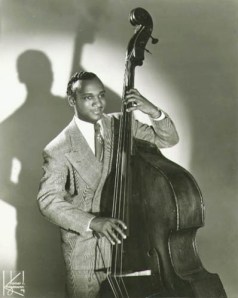
    Oscar Pettiford

    Oscar Pettiford

  • Died: September 08, 1960, Copenhagen, Denmark
  • Active: ’40s, ’50s
  • Instrument: Bass, Cello
  • Representative Albums: “Deep Passion,” “Vienna Blues: The Complete Sessions,” “The New Oscar Pettiford Sextet”
  • Representative Songs: “Bohemia After Dark,” “Little Niles,” “Laverne Walk”

Biography

Oscar Pettiford was (along with Charles Mingus) the top bassist of the 1945-1960 period, and the successor to the late Jimmy Blanton. In addition, he was the first major jazz soloist on the cello.

A bop pioneer, it would have been very interesting to hear what Pettiford would have done during the avant-garde ’60s if he had not died unexpectedly in 1960. After starting on piano, Pettiford switched to bass when he was 14 and played in a family band.

He played with Charlie Barnet’s band in 1942 as one of two bassists (the other was Chubby Jackson) and then hit the big time in 1943, participating on Coleman Hawkins’ famous “The Man I Love” session; he also recorded with Earl Hines and Ben Webster during this period. Pettiford co-led an early bop group with Dizzy Gillespie in 1944, and in 1945 went with Coleman Hawkins to the West Coast, appearing on one song in the film The Crimson Canary with Hawkins and Howard McGhee. Pettiford was part of Duke Ellington’s orchestra during much of 1945-1948 (fulfilling his role as the next step beyond Jimmy Blanton), and worked with Woody Hermanin 1949.

Throughout the 1950s, he mostly worked as a leader (on bass and occasional cello), although he appeared on many records both as a sideman and a leader, including with Thelonious Monk in 1955-1956. After going to Europe in 1958, he settled in Copenhagen where he worked with local musicians, plus Stan Getz, Bud Powell, and Kenny Clarke. Among Pettiford’s better-known compositions are “Tricotism,” “Laverne Walk,” “Bohemia After Dark,” and “Swingin’ Till the Girls Come Home.” ~ Scott Yanow.

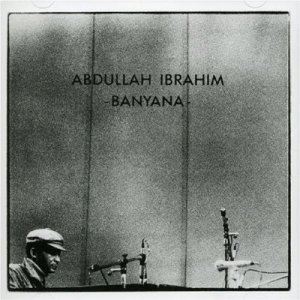
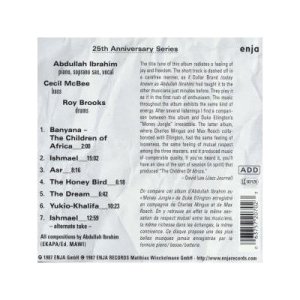
Dollar Brand (Abdullah Ibrahim) Banyana Children of Africa – Ishmael

In Album, Bio, Ishmael on January 20, 2009 at 10:53 pm

Abdullah Ibrahim (born 9 October 1934 in Cape Town, South Africa), formerly known as Adolph Johannes Brand, and as Dollar Brand, is a South African pianist and composer. His music reflects many of the musical influences of his childhood in the multicultural port areas of Cape Town, ranging from traditional African songs to the gospel of the AME Church and ragas, to more modern jazz and other Western styles. Within jazz, his music particularly reflects the influence of Thelonious Monk and Duke Ellington.

He first received piano lessons at the age of seven, was an avid consumer of jazz records brought by American sailors, and was playing jazz professionally by 1949. In 1959 and 1960, he played alongside Kippie Moeketsi with The Jazz Epistles in Sophiatown before joining the European tour of the musical King Kong.

Children of Africa  


Banyana - Children of Africa

Banyana - Children of Africa

  • Label: Enja Records
  • Catalog#: enja 2070
  • Format: Vinyl, LP
  • Country: US
  • Released: 1976
  • Style: Free Jazz, Soul-Jazz

Credits: 

  • Bass – Cecil McBee 
  • Drums – Roy Brooks 
  • Piano, Saxophone [Soprano], Vocal – Dollar Brand 
  • Producer – Horst Weber , Matthias Winckelmann


Tracklisting:banyanaback

  • Banyana – The Children of Africa (1:59)
  • Asr (8:14)
  • Ishmael (12:14)
  • The Honey-Bird (6:19)
  • The Dream (6:40)
  • Yukio-Khalifa (10:20)

Dizzy Gillespie Quintet – An Electrifying Evening With The Dizzy Gillespie Quintet – Night in Tunisia

In A Night In Tunisia, Album on January 20, 2009 at 10:33 pm

Dizzy Gillespie Quintet – An Electrifying Evening With The Dizzy Gillespie Quintet

  • Label: Verve Recordsnight
  • Catalog#: V6-8401
  • Format: Vinyl, LP, Album
  • Country: US
  • Released: 1961
  • Style: Bop, Soul-Jazz, Latin Jazz

Credits:


  • Bass – Bob Cunningham 
  • Drums – Chuck Lampkin 
  • Piano – Lalo Schifrin 
  • Saxophone, Flute – Leo Wright 
  • Trumpet – Dizzy Gillespie

Notes: Recorded in concert at The Museum Of Modern Art, NYC, February 9, 1961

Tracklisting:

  • Kush (10:32)
  • Salt Peanuts (7:02)
  • Night In Tunisia (6:40)
  • 11:32 (11:32)


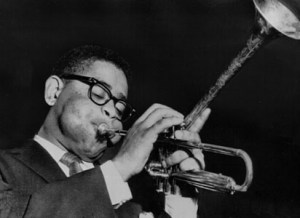
Dizzy Gillespie

In A Night In Tunisia, Bio on January 20, 2009 at 10:22 pm

John Birks « Dizzy » Gillespie, né à Cheraw en Caroline du Sud le 21 octobre 1917, mort le 6 janvier 1993, était un trompettiste, compositeur et chef d’orchestre de jazz américain.

Avec Miles Davis et Louis Armstrong, il est l’un des trois plus importants trompettistes de l’histoire du jazz, ayant participé à la création du style Bebop et contribué à introduire les rythmes latino-américains dans le jazz.

Dizzy Gillespie

Dizzy Gillespie


Dizzy Gillespie se distinguait en particulier par sa trompette au pavillon incliné vers le haut,il bouchait sa trompette d’un bouchon. Ses joues gonflées à bloc comme celles d’un crapaud, ainsi que sa joie de vivre et son humour ravageur qui sont pour beaucoup dans sa popularité auprès du public. En tant que musicien, il avait une technique époustouflante et une vitesse de jeu impressionnante.

Il joue avec Charlie Parker dans des clubs de jazz tels que Minton’s Playhouse et Monroe’s Uptown House ( le berceau du bebop ). Ses compositions (“Groovin’ High”, “Woody n’ You”, “Anthropology”, “Salt Peanuts”, and “A Night in Tunisia”) sonnent radicalement différemment du Swing de l’époque. Un de leurs premiers concerts (au New York’s Town Hall le 22 juin 1945) est seulement sorti en 2005. Gillespie enseigne le nouveau style à de jeunes musiciens de la 52e rue, parmi eux … Miles Davis et Max Roach.

Le groupe se sépare, après un séjour au Billy Berg Club à Los Angeles où le bebop reçoit un accueil mitigé.

Contrairement à Parker, qui aime jouer dans des petites formations et occasionnellement en tant que soliste dans des big bands, Dizzy Gillespie préfère diriger un big band; il tente l’expérience pour la première fois en 1945, mais le succès n’est pas trop au rendez-vous.

Après ses travaux avec Charlie Parker, Gillespie mène d’autres petites formations avec des musiciens tels que Milt Jackson, John Coltrane, Lalo Schifrin. Il apparaît également fréquemment en tant que soliste au Jazz at the Philharmonic sous la direction de Norman Granz.

Le 11 mars 1952, Gillespie quitte les États-Unis pour la France. Il est invité par Charles Delaunay pour jouer au Salon du Jazz. [1] Gillespie qui n’a pas d’autre engagement à Paris en profite pour créer son troisième big band. Grâce à ses succès, il peut enregistrer dans les lieux les plus prisés de Paris (comme au Théâtre des Champs-Élysées). En 1953, il revient aux États-Unis après une série de concerts et d’enregistrements.