Avant-garde jazz (also known as avant-jazz) is a style of music and improvisation that combines avant-garde art music and composition with jazz. Avant-jazz often sounds very similar to free jazz, but differs in that, despite its distinct departure from traditional harmony, it has a predetermined structure over which improvisation may take place. This structure may be composed note for note in advance, partially or even completely.
History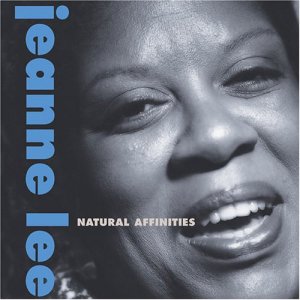
1950s
The origins of avant-garde jazz are in the innovations of the immediate stylistic successors of Charlie Parker. Based in New York City, musicians such as Charles Mingus, Miles Davis, and John Coltrane introduced modal improvisation and experimented with atonality anddissonance. Sun Ra, Cecil Taylor, and Ornette Coleman became controversial jazz innovators, outside the range of what many fans considered listenable.
1960s
John Coltrane’s increasingly experimental work, and the Impulse! label became the flagbearers of the avant-garde jazz scene. Musicians associated with this high-volume variety of avant-garde jazz (sometimes referred to as “fire music”) included Archie Shepp, Albert Ayler, McCoy Tyner, Don Cherry, Pharaoh Sanders, and Alice Coltrane. Some of these musicians also began to take on an oppositional relationship to the mainstream music industry, preferring to release records themselves through independent labels such as ESP-Disk. This wing of avant-garde jazz was taken as emblematic of the Black Power movement, and also sometimes had mystical intentions.
Musicians who incorporated the innovations of free and avant-garde jazz, but remained within a more conventional framework, recorded forBlue Note Records. Miles Davis’s second quintet (Wayne Shorter, Herbie Hancock, Ron Carter, and Tony Williams), as well as others such as Eric Dolphy and Andrew Hill, are the best-remembered representatives of this style.
Meanwhile, in Chicago, the Association for the Advancement of Creative Musicians began pursuing their own variety of avant-garde jazz, sometimes described as “postmodern” jazz. The AACM musicians (Muhal Richard Abrams, Anthony Braxton, Roscoe Mitchell, Hamid Drake, and the Art Ensemble of Chicago) tended towards eclecticism, and incorporated developments in 20th century classical music (particularly Karlheinz Stockhausen and John Cage) as well as funk and ska, in addition to Dixieland and other elements of jazz history. Rahsaan Roland Kirk also made use of pastiche.
1970s
The 1970s saw the development of jazz fusion. It is questionable whether this can be considered a form of avant-garde jazz, though Miles Davis’s recordings of this period, in particular, appear quite innovative and take inspiration from serialism and aleatoric music, just as theAACM did. In any case, hardcore jazz fans tended to regard early jazz fusion as a commercial sell-out move. However, by the early-to-mid-’70s, many free jazz icons, such as Albert Ayler, Archie Shepp, and Ornette Coleman were experimenting with rock and funk. Coleman would eventually develop the free funk style, which would be further explored by the M-Base musicians in the 1980s.
Jazz also became considerably more international in the 1970s, as saxophonists Gato Barbieri (Argentine), Kaoru Abe (Japanese), Peter Brötzmann (German), and pianists Sergey Kuryokhin (Russian), Egberto Gismonti and Hermeto Pascoal (Brazil) attest. European free jazz, in particular, began to develop. Evan Parker and Derek Bailey were pioneers of the new non-idiomatic style. Some veteran avant-garde jazz musicians (Charlie Haden), and much of the new blood, including a number who had played with Miles Davis in the 1970s (Dave Holland, Keith Jarrett, Chick Corea) and several Europeans (Jan Garbarek, among them), began to record for the ECM label. The ECM sound, invariably recorded by Manfred Eicher, tended towards an elegant, refined, polished style that owed a great deal to the history of classical music. ECM also released recordings of minimalist and medieval music, and work by the Art Ensemble of Chicago (who were considerably messier than the ECM stereotype would indicate). A number of the AACM and ECM musicians would collaborate with one another, for example in the group Circle.
Many of the AACM musicians moved to New York City, where they provided the nucleus of the loft jazz scene. The World Saxophone Quartet also emerged from this milieu.
1980s
The 1980s saw the pre-eminence of Wynton Marsalis and his classicist approach, and a resulting diminution of the visibility of the avant-garde. However, as avant-garde jazz was a prime influence on no wave, New York City became the center of a new crop of aggressive improvisors: John Zorn, Borbetomagus, the Lounge Lizards, James Chance, James Blood Ulmer, Sonny Sharrock, Diamanda Galás, Bill Laswell (who also worked on Herbie Hancock’s funk and electro recordings) and Bill Frisell (who had also recorded with the ECM musicians) among them. This development is referred to as punk jazz.
John Zorn, in particular, became an iconic figure in the “downtown” music scene, performing in free jazz, free improvisation, and a variety ofrock and extreme music styles. Many of these musicians actually resided in Brooklyn; Tim Berne is a prominent representative.
1990s
The 1990s saw a return in visibility to the Chicago jazz scene, including players with links to the AACM. Most prominent are David Boykin, Aaron Getsug, Nicole Mitchell and Karl E. H. Seigfried – all of whom came up through Fred Anderson’s Velvet Lounge. Other players includeKen Vandermark, Jeff Parker, and Kevin Drumm; these musicians had connections to the post-rock or noise rock scenes.
Likewise, there was an increase in vitality in the remnants of the loft jazz scene in New York, centered around David S. Ware. Matthew Shipp, Susie Ibarra, and William Parker practised a more traditional variety of avant-garde jazz than the punk jazz-inflected downtown musicians, though some collaboration did occur between the two camps. Matthew Shipp eventually collaborated with illbient and alternative hip hop musicians (DJ Spooky, Anti-Pop Consortium, El-P), and moved towards a distinctive brand of nu jazz comparable to that of Craig Taborn.
Notable avant-jazz musicians
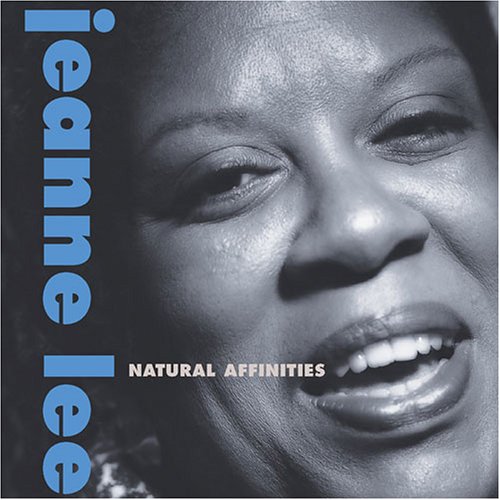
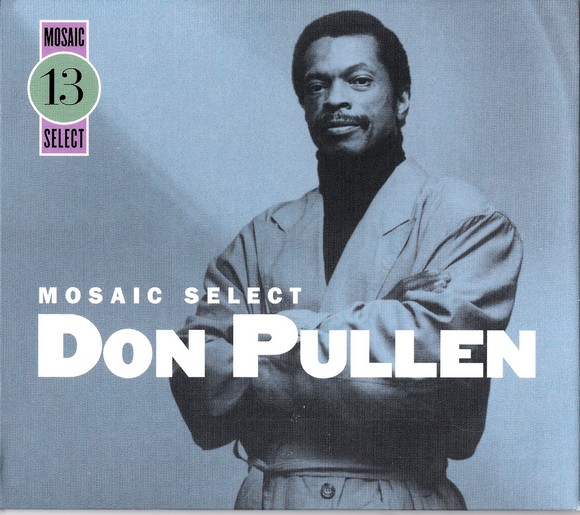
- George Adams, The Bad Plus, Django Bates, Han Bennink, Ed Blackwell, Ernest Dawkins, Scott Fields, Mike Garson, Globe Unity Orchestra, Joe Harriott, Roy Haynes, Theo Jörgensmann, Jeanne Lee, Joe McPhee, Medeski, Martin, & Wood, Misha Mengelberg, Kenny Millions, Don Pullen, Sam Rivers, Arto Tunçboyacıyan, Alexander von Schlippenbach




 :>)azZClefs#