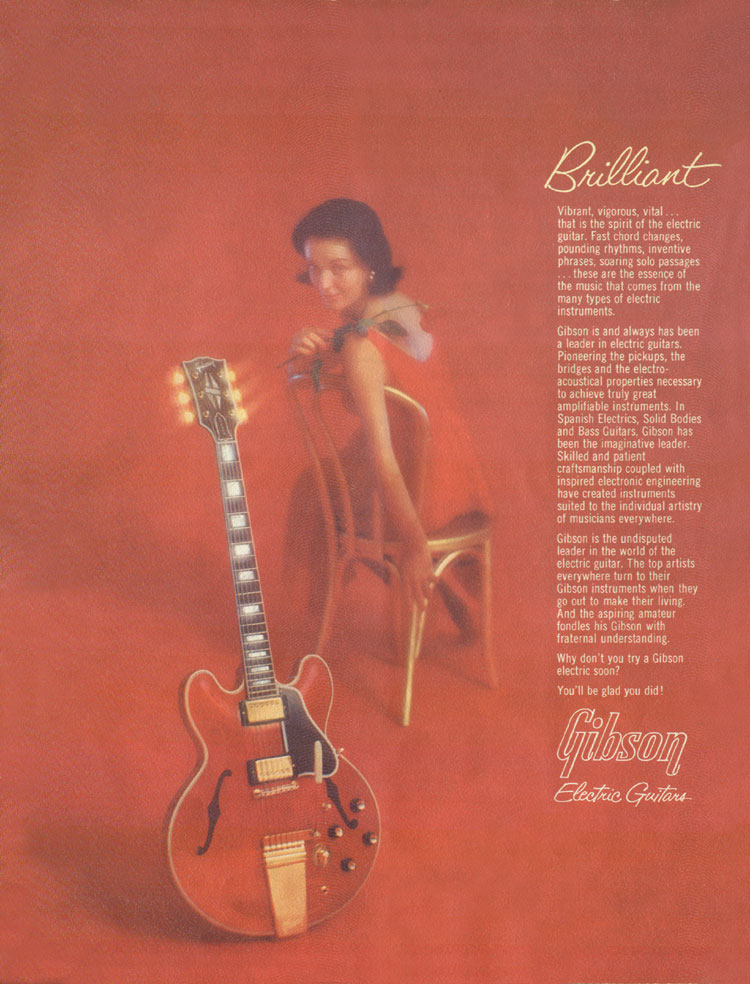
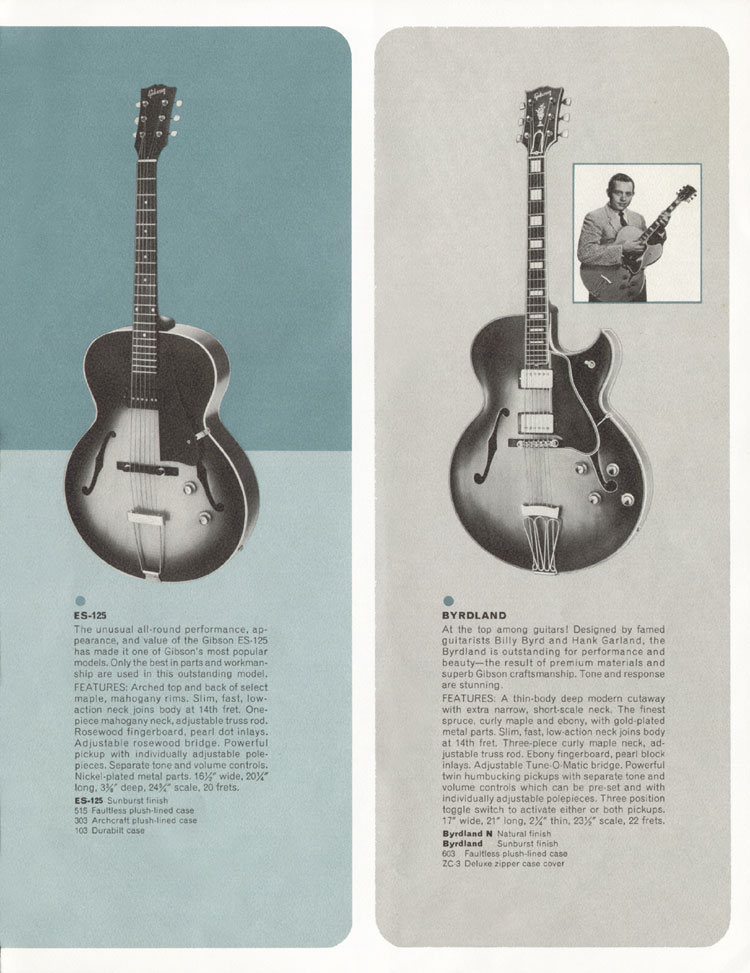
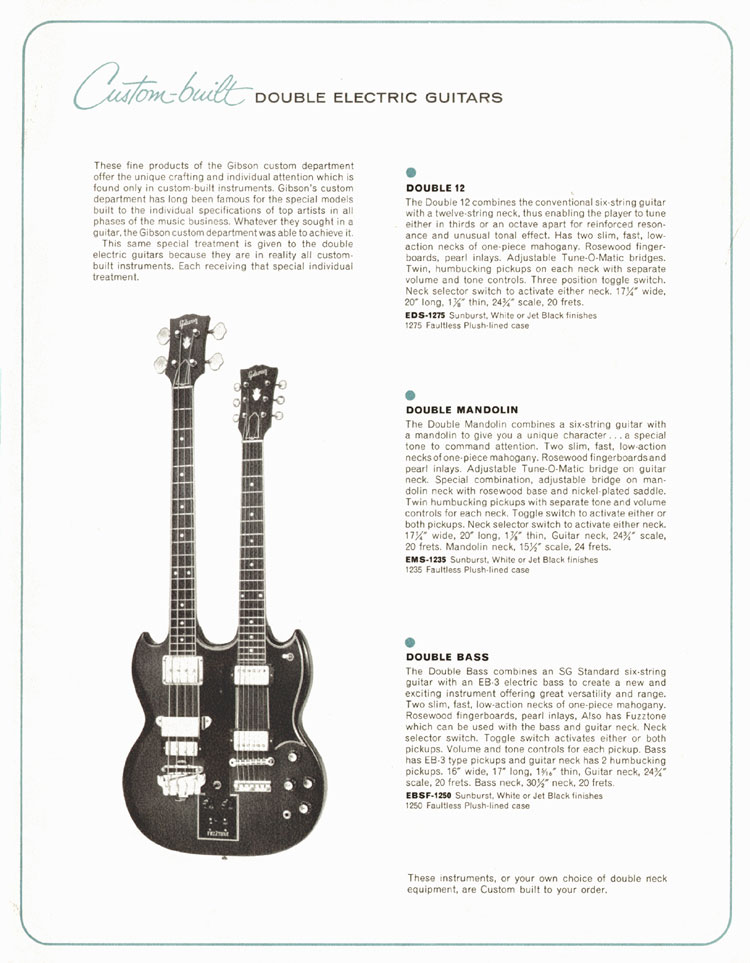
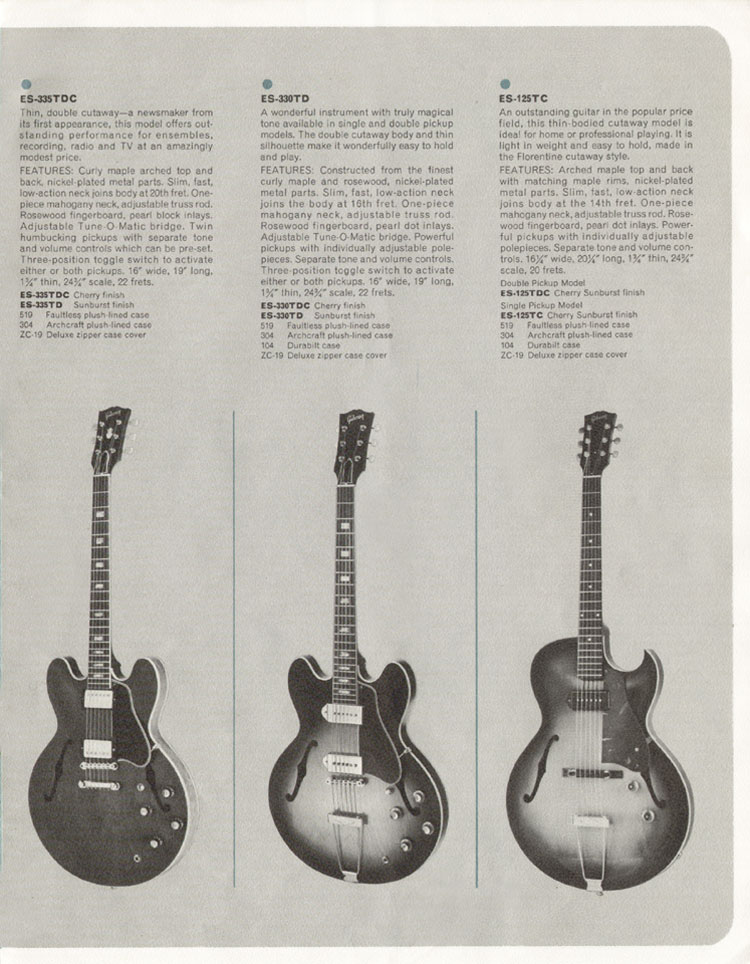
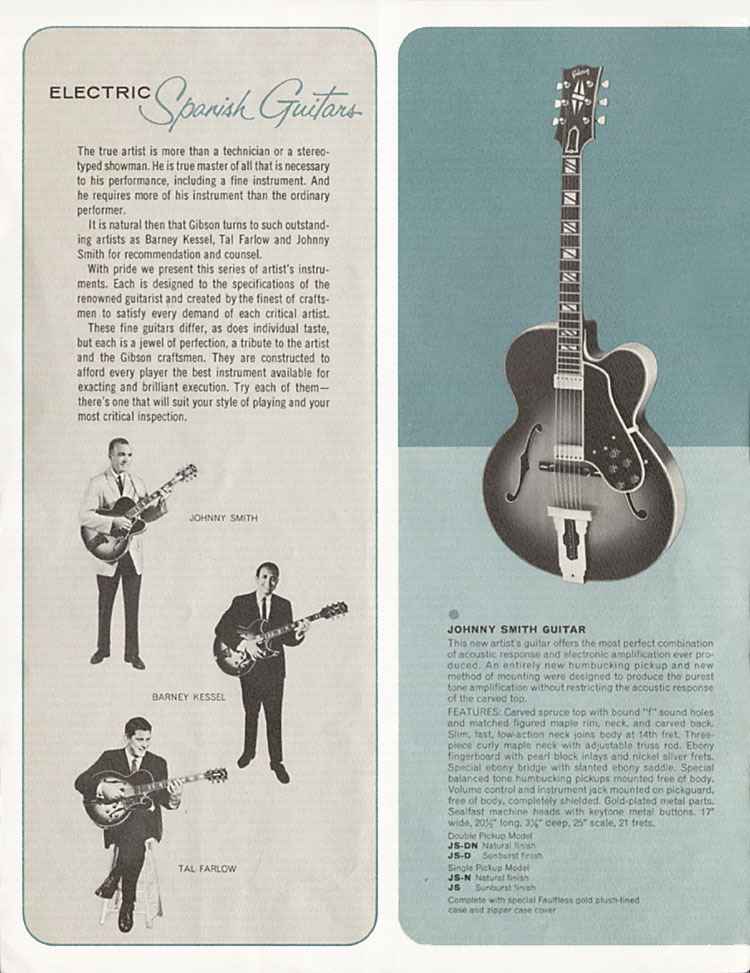
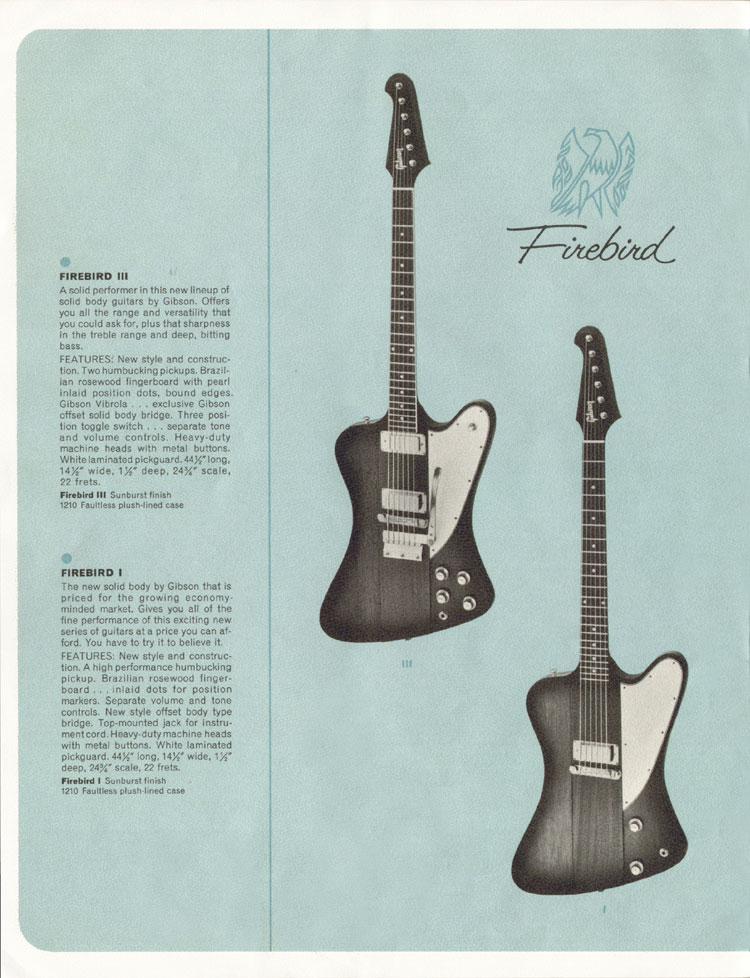
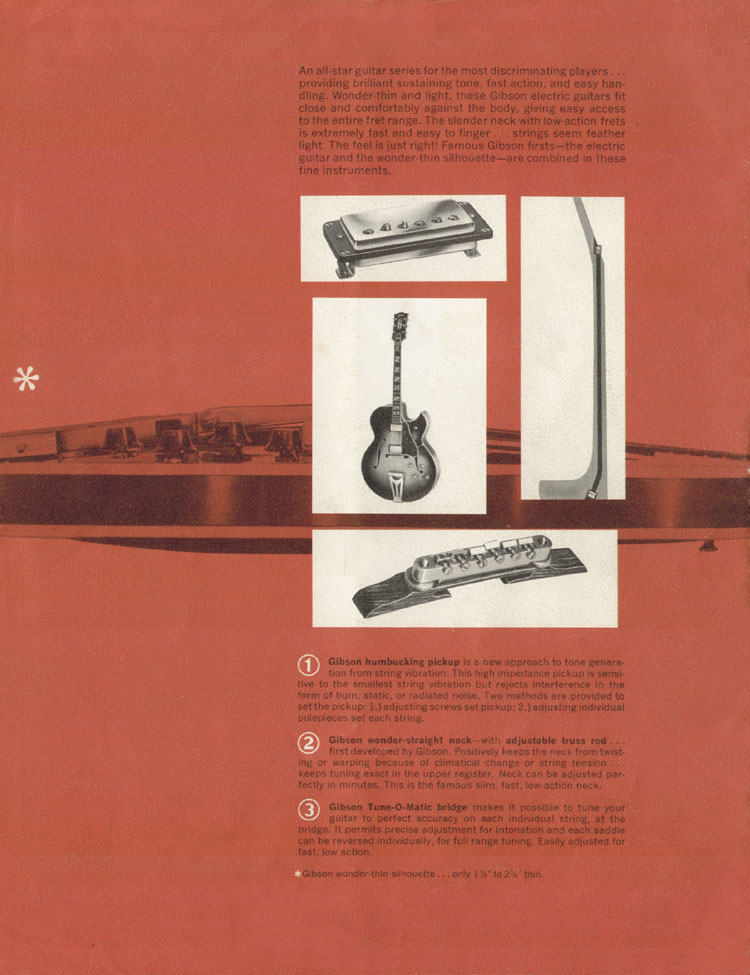
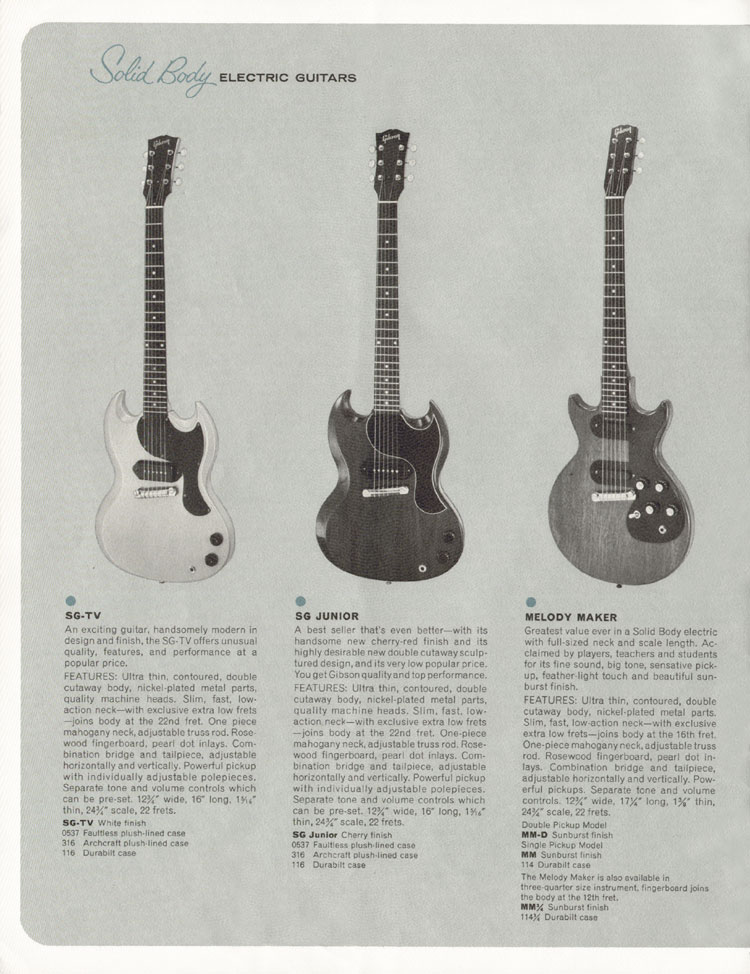
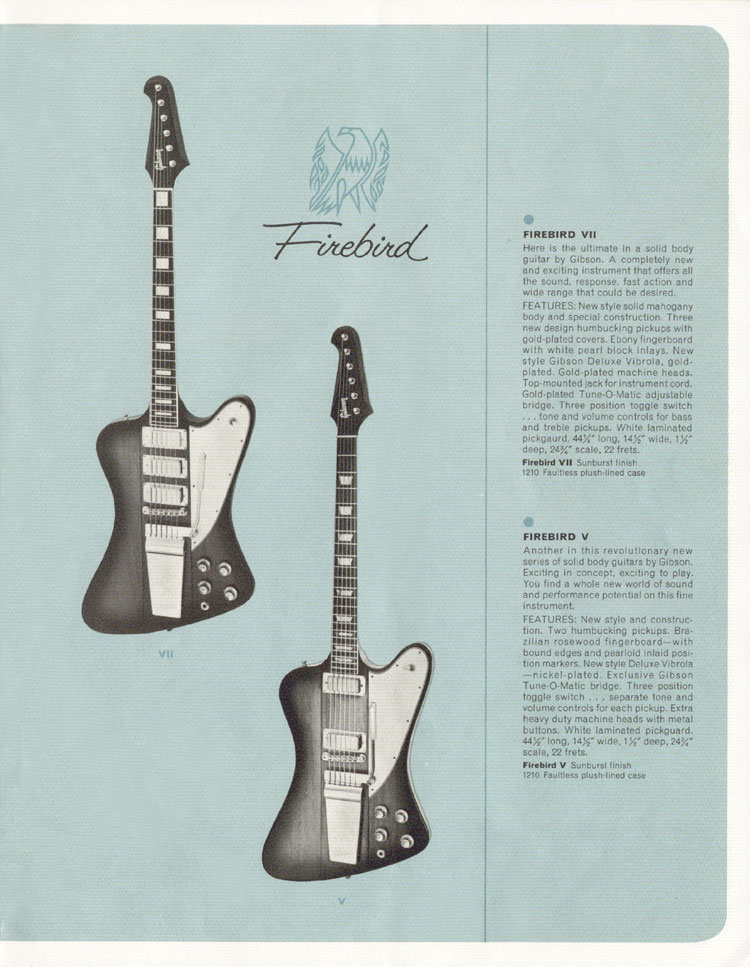
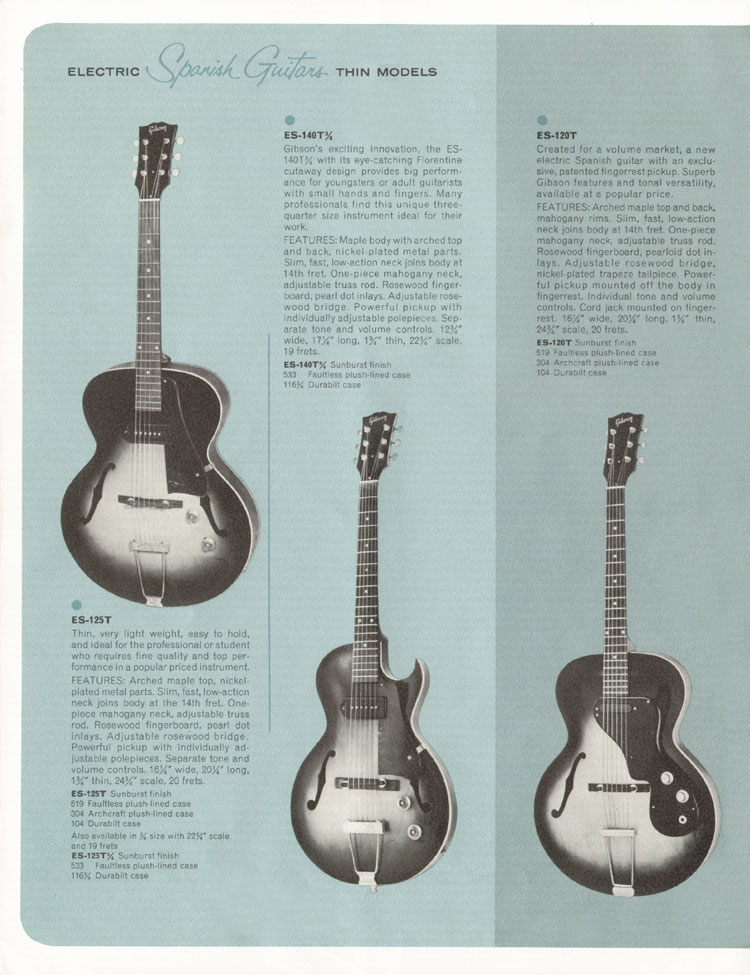
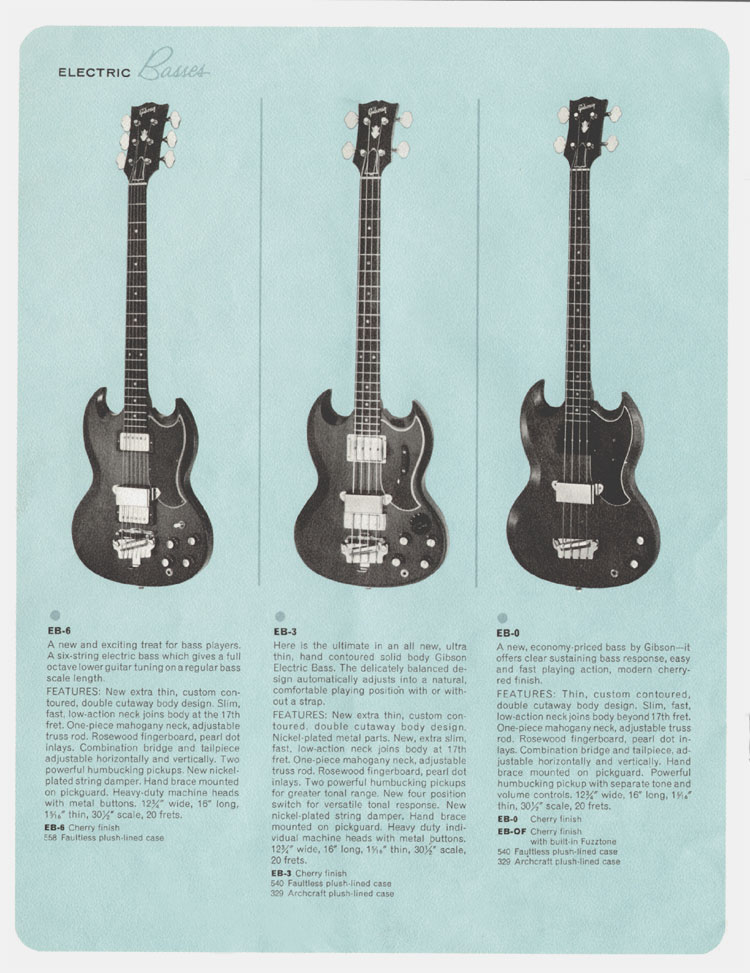
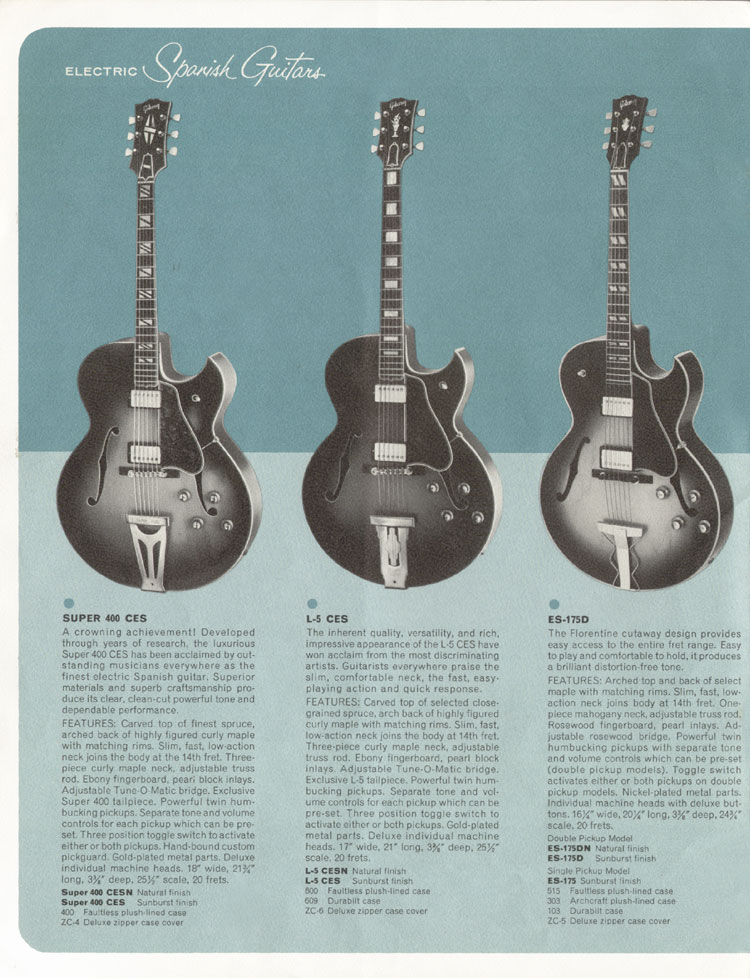
The Original Gibson Electric Guitar Catalog (1963)
-

- Gibson Catalog 1963
The Original Gibson Electric Guitar Catalog (1963)


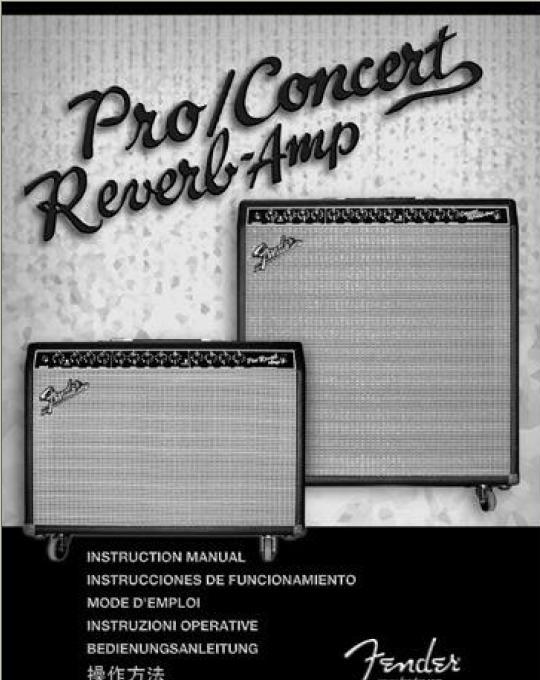
Fender ProReverb Amp Instruction Manual
Just click the link to download.

Look inside the amp (but don’t stick you hand in there, even after being unplugged the amp may retain a dangerous electrical charge), there should be a tube chart on most amps. On this chart there is a hand stamped date code consisting of 2 letters. For example AD would be April 1990 and DG would be July 1954.
|
Fender Amp Date Codes |
|||
|
Letter Code |
Vintage Year |
Reissue Year |
Month |
|
A |
– |
1990 |
January |
|
B |
– |
1991 |
February |
|
C |
1953 |
1992 |
March |
|
D |
1954 |
1993 |
April |
|
E |
1955 |
1994 |
May |
|
F |
1956 |
1995 |
June |
|
G |
1957 |
1996 |
July |
|
H |
1958 |
1997 |
August |
|
I |
1959 |
1998 |
September |
|
J |
1960 |
1999 |
October |
|
K |
1961 |
– |
November |
|
L |
1962 |
– |
December |
|
M |
1963 |
– |
– |
|
N |
1964 |
– |
– |
|
O |
1965 |
– |
– |
|
P |
1966 |
– |
– |
|
Q |
1967 |
– |
– |
The above association applies to any note of our musical system.
When we play the C for example as a C7 chord it in turn becomes unstable, it assumes to our ear the role of Overtone No.3, and resolves to its Fundamental tone a perfect fifth down, the F.

The F in turn as an F7 chord resolves a fifth down to Bb.
Bb7 resolves a fifth down to Eb, and so on.
Continuing this process from chord to chord we eventually return back to our starting point.
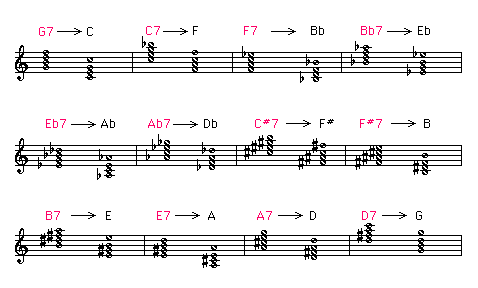
This circle is called the Circle of Fifths.

The Circle of Fifths is sometimes also referred to as the Circle of Fourths.
For moving a perfect 5th downwards (from G down to the C below) is the same as moving a perfect 4th upwards (from G up a 4th to the C above).
Just about every Jazz Standard, exhibits the same principle.
Here a few examples :
Fools Rush In All of Me Heart and Soul
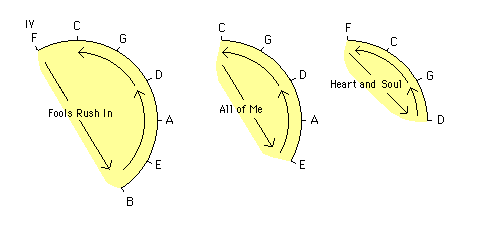
Fmaj7 – Bm7b5 – Em7 – Am7 – Dm7 – G7 – Cmaj7 –
Cmaj7 – E7 – A7 – Dm7 – G7 –
F – Dm – Gm – C – F – Dm – Gm – C –
Blues in F : V = C , I = F , IV = Bb
Blues in A : V = E , I = A , IV = D
etc.
Source: JazClass from Michael Furstner, who developped a very comprehensive Jazz Class course. Thanks to him.

Here the C whole-tone scale.
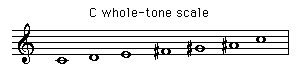 Any of the above notes can form the tonic of the whole-tone scale using the same six notes.
| Scale | Notes |
| C whole-tone scale | C D E F# G# A# C |
| D whole-tone scale | D E F# G# A# C D |
| E whole-tone scale | E F# G# A# C D E |
| F# whole-tone scale | F# G# A# C D E F# |
| G# whole-tone scale | G# A# C D E F# G# |
| A# whole-tone scale | A# C D E F# G# A# |
Jazz improvisers were quick to take up this new sound for improvisation over augmented triads and augmented 7th chords (+7 or 7aug).
Other symmetric scales can be formed by alternating note spacings of tones and semitones. There are two possibilities.
8-note Dominant scale (semitone – tone – semitone – tone -)
This scale starts with a semitone between the tonic and 2nd note, then a tone between the 2nd and 3rd notes, again a semitone between the 3rd and 4th note, and so on.
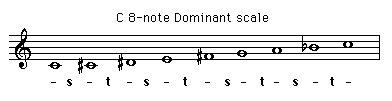
In Jazz this scale is used as an alternative choice for improvisation over dominant 7th and altered dominant 7th chords .
8-note Diminished scale (tone – semitone – tone – semitone – )
This scale starts with a tone between the tonic and 2nd note, then a semitone between the 2nd and 3rd notes, again a tone between the 3rd and 4th note, and so on.
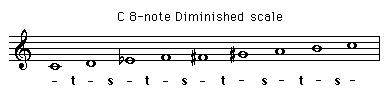
In Jazz this scale is used for improvisation over diminished chords
While a couple of other New Orleans bands had passed through New York City slightly earlier, they were part of Vaudeville acts. The O.D.J.B., (Original Dixieland Jazz Band) on the other hand, played for dancing and were hence the first “jass” band to get a following of fans in New York, and then record at a time when the USA’s recording industry was almost entirely centered in New York and New Jersey.
Shortly after arriving in New York they were offered a chance per a letter dated January 29, 1917 to audition for the Columbia Graphaphone Company which took place on Wednesday, January 31, 1917. Nothing came of this audition.
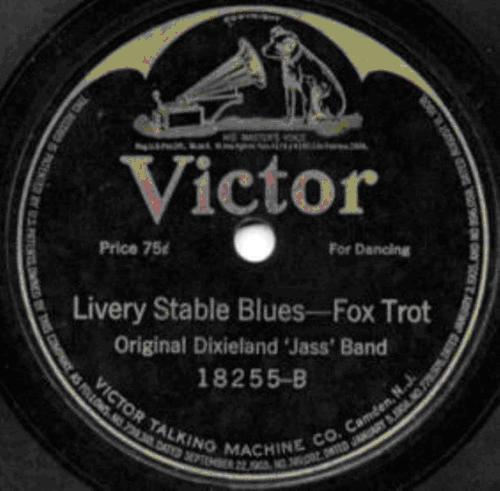
They then recorded two sides (“Livery Stable Blues” and “Dixie Jass Band One Step”) on February 26, 1917 for the Victor Talking Machine Company. The record with these titles came out the following month. The ODJB’s records, first marketed simply as a novelty, were a surprise hit, and gave many Americans their first taste of jazz.
L’ODJB first members were: Larry Shields (clarinet), Eddie Edwards (trombone), Henry Ragas (piano), Tony Sbarbaro (drums) e Nick LaRocca (cornet).



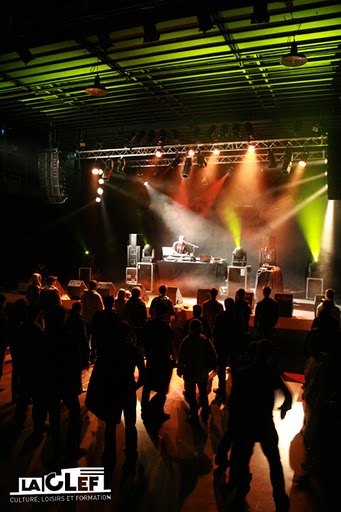


La Clef
46 rue de Mareil78100 Saint-Germain-en-Laye
Tel : 01.39.21.54.90
La Clef est une association unique dans les environs de Saint-Germain-en-Laye qui ‘décline des ensembles d’activités en donnant la priorité à la dimension culturelle de celles-ci et en conjuguant les temps d’apprentissage et de présentation au public’. C’est ainsi une cinquantaine d’activités de loisirs et de formations qu’elle propose chaque année, parmi lesquelles sports (arts martiaux, gymnastique, tennis, yoga, danse et plus récemment jonglage), cours de musique, de langues (français, anglais et italien, dispensés par des enseignants professionnels), concerts (avec l’Eclipse, sa salle de 300 places). Les concerts sont l’activité principale de l’association, qui reçoit 15.000 spectateurs amateurs de musiques amplifiées et actuelles par saison. La programmation fait une large place aux jeunes talents ; d’ailleurs la Clef leur propose un accompagnement artistique, en mettant à disposition des studios de répétition et d’enregistrement accessibles à moindre coût et un maximum de moyens (matériel, conseils) au service des groupes. Inventive et omniprésente, la Clef a soufflé ses vingt bougies en 2004 sans prendre une ride grâce à une équipe engagée et passionnée.
Un atelier de Soul Jazz/ Hard bop mené par Jacques de Lignières.
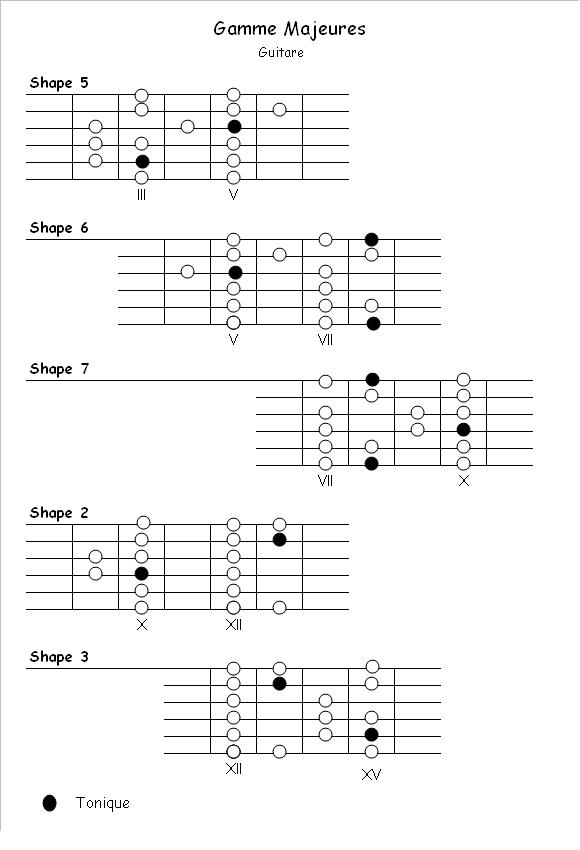
Simple Shapes/patterns to learn and exercise major scales using the five guitar patterns
in C Major
pdf here: The Five Shapes


 | Listen Here –… on The Electrifying Eddie Harris… |
| LA Kizer on Bobby Few biographie | |
| Pork Pie Hats: Histo… on Pork Pie Hat | |
 | Salainen on Sonorisation d’un Concer… |
 | Heervee on Bobby Few biographie |
 :>)azZClefs#