 A link to the label Tru thoughts is now in the links list, nice web radio to listen from the Brighton ‘s studio, near the UK coast, and of course , the Nostalgia 77 label. Several pretty good jazzy stuff overthere!
Archive for 2010|Yearly archive page
Tru Thoughts label (Brighton)
In Desert Fairy Princess, Media on October 27, 2010 at 9:55 pmNostalgia 77, aka Ben Lamdin’s bio
In Bio, Desert Fairy Princess on October 27, 2010 at 3:50 pmBen Lamdin’s creations range from heavy funk, to hip-hop based beats mixed with dusty old jazz, obscuro funk and psych bits and pieces.
Nostalgia 77, aka Ben Lamdin, first burst onto the scene with his heavy, new funk based sound in 2002. His hard work and prolific creation process has led to the release of many outstandingly high quality albums in a relatively short amount of time, containing a diverse and varied fusion of styles and influences from more mellow, solemn, moody yet beautiful offerings to more upbeat, heavy funk, hip-hop based beats mixed with dusty old jazz, obscuro funk and psych bits and pieces. This driven sound spectrum of audio offerings led to the development into the full 2007 nu-jazz orchestrated release of ‘Everything Under The Sun’ in March 2007. This hard work ethic, gifted writing talent and dedication to his music contributed towards Ben winning the ‘Jazz Album of the Year’ award at the ‘Gilles Peterson BBC Worldwide Awards’ in 2006.
The success of this release led Lamdin to a style he describes as “a combination of soul and jazz composition with computer based production techniques”. Coming from producing hip hop style beats he had always heard snippets of jazz tracks he loved, so the fuller musical expression of actually making his own jazz music was inevitable.
His cover version of The White Stripes’ “Seven Nation Army” with Alice Russell has also helped bring his mission to a wider audience. Aiming for an edgy sound whilst continuing to search for a more personal expression, Nostalgia 77’s influences include free and spiritual jazz as well as 60’s funk and soul and Afro sounds.
2008 saw the release of Nostalgia 77’s One Offs, Remixes & B Sides album – an eclectic and stunning collection spanning jazz, hip hop, electronica, funk and more – which has gained dazzling reviews. A host of inspired collaborations on this double CD include guest vocals by eminent jazz diva Beth Rowley and remixes from the likes of Bonobo. Nostalgia 77 recorded a Maida Vale session for Gilles Peterson’s Radio 1 Worldwide show in May. His collaborative work last year extended to producing the debut album by new Tru Thoughts signing Lizzy Parks, entitled ‘Raise The Roof’. A heady combination of jazz, soul and cinematic soundscapes, Lamdin’s production on this album perfectly complements Lizzy’s unique talent as a singer songwriter.
The latest project from Nostalgia 77 is an intriguing collaboration with bona fide legends of contemporary jazz and avant-garde experimental music, Keith and Julie Tippett. Entitled ‘Nostalgia 77 Sessions featuring Keith And Julie Tippett’, the album came out in April 2009; it is a collection of beautiful original material that spans blues, jazz and soul music, threaded through with experimental flourishes, and represents a journey of musical discovery for all the artists involved.
Photography by Adam Van Bunnens – www.Bunnens.com
Nostalgia 77 – Desert Fairy Princess (One-Offs, Remixes and B-Sides)
In Album, Desert Fairy Princess on October 27, 2010 at 1:44 pmNostalgia 77 – One-Offs, Remixes & B-Sides
(2xCD) Tru Thoughts TRUCD146, 2008-03-07
Want to discover more? Check out the podcast Tru Thoughts Podcast. Not to miss it, the song is in the box!
Tracklisting CD1 :
01. Nostalgia 77 – Quiet Dawn ( Example of Twelves Remix)
02. TM Juke feat. Alice Russell – Knee Deep (Nostalgia 77 Remix)
03. Nostalgia 77 – Little Steps (Instrumental Version)
04. Dirty Diggers feat. Nostalgia 77 – So Grown Up
05. Natural Self – Solomon (Nostalgia 77 Remix)
06. Kinny & Horne – Forgetting to Remember (Nostalgia 77 Remix)
07. Nostalgia 77 – Conventical (TM Juke Remix)
08. Nostalgia 77 – Sad Thing
09. Bonobo – In Between The Lines (Nostalgia 77 Remix) (Alternate Unreleased Mix )
10. The New Mastersounds – Your Love Is Mine feat. Corinne Bailey Rae (Nostalgia 77 Remix)
11. Elizabeth Shepherd – Reversed (Nostalgia 77 Remix)
12. Nostalgia 77 – Wildflower (Povo Remix)
13. Nostalgia 77 – Quiet Dawn (Bonobo remix)
14. Nostalgia 77 Octet – Freedom (Zombie Dance Mix) (Parts 1&2)
15. Nostalgia 77 feat. Alice Russell – Seven Nation Army (Grant Phabao Remix)
Tracklisting CD2 :
01. Nostalgia 77 Octet – The Hope Suite (Live)
02. Nostalgia 77 Octet – Nativeland (Performed live at The Independent Mix Cargo November 2005)
03. Nostalgia 77 Octet – Desert Fairy Princess (Alternative Take)
04. Natural Self – The Love Theme (Nostalgia 77 version)
05. Nostalgia 77 feat. Capstone & Lizzy Parks – The Moon
06. Nostalgia 77 – Eastwind (Instrumental)
07. Nostalgia 77 Octet – The Grass Harp
08. Nostalgia 77 – Stop To Make A Change (Instrumental)
09. Nostalgia 77 Octet – The Impossible Equation
Links :
nostalgia77.com
myspace.com/nostalgia77
grantphabao.com
myspace.com/grantphabao
tru-thoughts.co.uk/artists/nostalgia-77
Press Release :
Nostalgia 77’s “One Offs, Remixes and B-Sides” is Benedic Lamdin‘s 9th full length release on Tru Thoughts – testament to his acute and original musical talent and prolific and inspired creativity. Having already garnered critical acclaim from the likes of Gilles Peterson (Radio 1) and the Guardian, he continues to raise his game.
This generous double CD is a diverse collection of rare gems, complete with an impressive roll-call of collaborators, which displays Lamdin’s flair as producer, remixer, composer and more. Sit back for the perfect collision – between a host of instrumental pieces and a dazzling array of songs that show Lamdin’s more recent move towards lyrical work – drawing on the stellar performances of eminent vocalists including Corinne Bailey Rae, Bajka and new Tru Thoughts signing Lizzy Parks.
Disc 1 opens with the mesmeric “Quiet Dawn” (Examples of Twelves Remix) featuring sultry vocals from Beth Rowley. The Nostalgia 77 remix of “Knee Deep” by TM Juke is another atmospheric proposition, but on the other end of the mood spectrum, cranking up a palpable tension with layer upon layer of creaky strings. All is then blown away on the breeze that is the exclusive instrumental version of Nostalgia 77’s Little Steps, which floats along next to carry you up to that familiar Nostalgia 77 plain somewhere above the clouds. Wake up though, for Dirty Diggers featuring Nostalgia 77 with “So Grown Up”, Nostalgia composition and Diggers lyrics making a great couple, each adding a new depth to the other.
Continuing to demonstrate the strength in depth among the talent on the Tru Thoughts roster, “Solomon” by Natural Self (Nostalgia 77 Remix) takes another refreshing course. This instrumental is catchy, cheeky, idiosyncratic and irresistible.
The Nostalgia 77 remix of Kinny & Horne’s “Forgetting to Remember” sports a gravelly beat that crunches through the verse like sturdy steps on a stately driveway… spine-tingling stuff. Kinny’s jazzy and exquisite vocal and the deep double bass from Rian Vosloo add to the dazzling effect of this killer song that is left enhanced but mercifully intact by the remix from Nostalgia 77.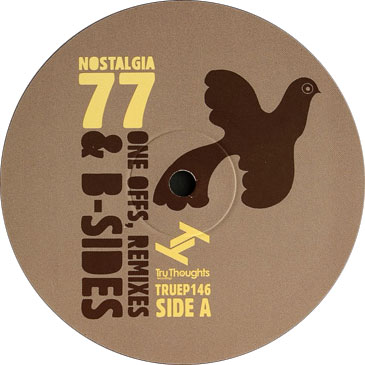
The previously unreleased Nostalgia 77 remix of “In Between The Lines” by Bonobo boasts sizzling drums from Graham Fox, Bajka’s bluesy vocals and the bassiest of sax lines. This gritty, stomping tone and a soaring counter-melody, with vocal harmonies towards the tail end of the track, give rich, intertwining layers. Next, The New Mastersounds’ “Your Love is Mine” featuring Corinne Bailey-Rae (Nostalgia 77 Remix). The vocal from Bailey-Rae is characteristically lush and, amid touches of Funk & Jazz innovation, subtly underpinned by the earthiness of an old time Jazz Standard.
Elizabeth Shepherd’s (Do Right Music) “Reversed” (Nostalgia 77 Remix) adds yet another twist to the tale. Wildflower, by Nostalgia 77 featuring a stunning vocal performance from Lizzy Parks, appeared previously as the B side to the next track here, a remix of “Quiet Dawn”, provided this time by Bonobo. The countless positive reactions to this as a single were only to be expected from the joining of such maestros.
The exclusive Grant Phabao remix of Nostalgia 77’s take on “Seven Nation Army” featuring the mighty vocals of Alice Russell is given a reggae makeover yet retains its irresistible appeal to those bluesy jazz enthusiasts who went wild for this cover version “first” time around.
Disc 2 of this set visits a selection of the finest Nostalgia 77 and Octet material, including live recordings of “The Hope Suite” and the previously unreleased “Nativeland”.
“The Moon” by Nostalgia 77 featuring Capstone and Lizzy Parks opens with dreamy keys from Capstone (Wah Wah 45s, Ninja Tune) that conjure up evocative harmonies with the jazzy vocals of new Tru Thoughts signing Lizzy Parks. The bass simmering just under the surface all the way through this track gives it a smoky haze that pays homage to the Jazz classics of years gone by.
“The Grass Harp” by Nostalgia 77 Octet is another previously unreleased number and The Octet’s “Impossible Equation” receives its first and well-deserved CD release, having featured previously on a vinyl only. CD2 also boasts beautiful instrumental versions of Nostalgia 77’s “Eastwind” and “Stop To Make A Change”.
The Sticks
In The Sticks on October 18, 2010 at 3:55 pm Ci-dessous, une belle intro sur Deezer, (merci Jacques), les partitions sont dans la boite.
de JazzxChange, Walk Tall – Tribute to Joe Zawinul

The Sticks
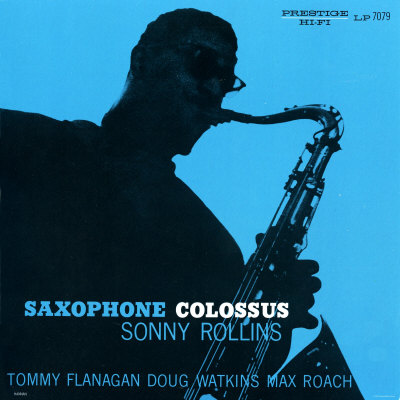
St. Thomas (Sonny Rollins)
In St Thomas on October 18, 2010 at 3:43 pmDe nouvelles partitions et les solo en (Ut) et (Eb) de Saint Thomas sont dans la boite.
Il y a également quelques vidéos Youtube sur le site, postées précedemment, faire une recherche.
…In 1956, Sonny began recording the first of a series of landmark recordings issued under his own name: Valse Hot introduced the practice, now common, of playing bop in 3/4 meter; St. Thomas initiated his explorations of calypso patterns; and Blue 7 was hailed by Gunther Schuller as demonstrating a new manner of “thematic improvisation,” in which the soloist develops motifs extracted from his theme….
Tous les Arpèges
In Technics, Theorie on October 18, 2010 at 1:37 pmTravailles tes arpèges, dans tous les sens, de haut en bas et de gauche à droite! Voici donc la recommendation de la semaine.
les Arpèges des gammes Majeures (partition)
en attendant, bonne semaine!
Music 2.0 logos, an infinite source of inspiration
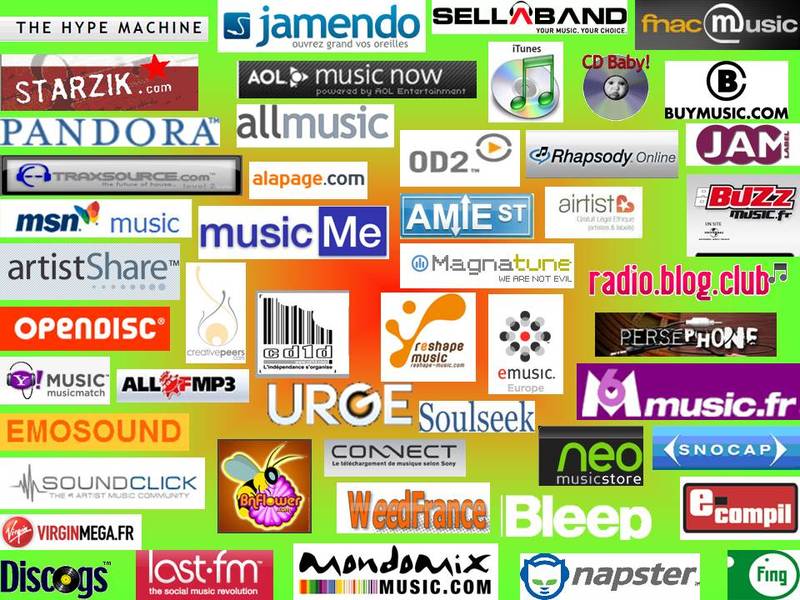
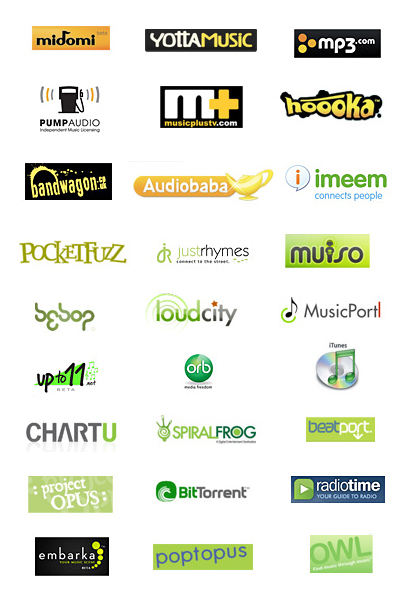
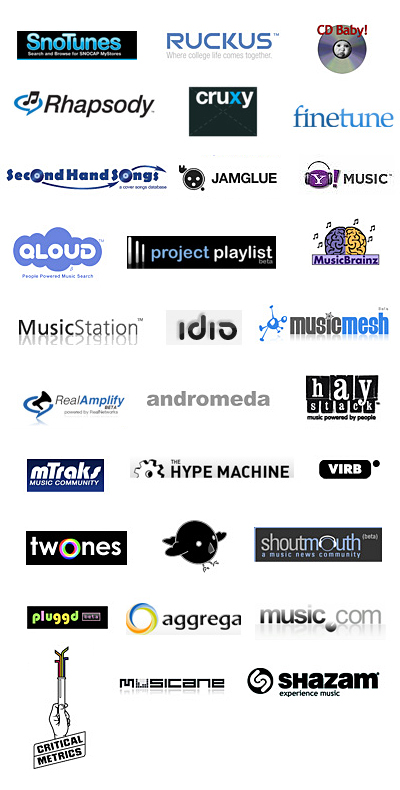
In Fun, Media, Others on October 8, 2010 at 9:12 amWhether they are for big bands, rock bands, editors, institutions, manufacturers, music salers, radios… Music is an infinite source of inspiration for the logo designers. Here is a selection of music logos. Several were classified as the top ten logo in terms of identification to the band (The Who, The Beatles, ABBA…). Several of them are part of our life and it seemed we know them since history. How did they influenced us? and created an immediate recognition of the band or radio is a good question. Some others are logo projects created by design studio.
Since the event of the 2.0 web, you do not need to get in touch with prestigious and inaccessible designer, or let’s say that the contact is greatly facilitated with top quality designers through their web sites or web agency. Almost everyone now can have access to creativity.
So, since music logos seems to be of a strong interest to you, you’ll find here under several links of Logo designers studios, and a smart collection of music logo gathered from these sites and elsewhere which help us to realize the importance of the design which is a key factor of identification and recognition … see you.
from intuitive design…
 The Who. Designed by Brian Pike, 1964
This logo was originally designed by Brian Pike for the promotion of the band’s debut at London’s the Marquee Club on the 24th, November, 1964. The show was publicized by the new band’s manager Lambert & Stamp, who made these special black and white posters and concession cards get printed under the tagline of “Maximum R&B”. This poster has remained as one of the most classic images in the history of rock music. Curiously, this logo was never used on any of the band’s albums but has remained their most famous identity.
The Who poster, 1964
This logo shows a clever way of how to turn a normal bold lettering into an original identity with just a couple of adjustments. First, by merging the letter “H” from both names, creating a feeling of unity and a nice balance on the whole wording. Also, by merging the letters “T” and “H” to enforce this same feeling of unity. The addition of the arrow to the letter “O” provides the logo with an uplifting, powerful and dynamic strength, and closes the whole wording at the same time. This arrow also ads the mod image that the band’s managers decided to project at the time, being the arrows an important icon in mod and pop art. This logo also symbolizes the freshness and wildness of The Who’s music in the early 60’s perfectly.
Grateful Dead. Designed by Bob Thomas, 1969
 This Grateful Dead logo is just one of the different versions that the artist Bob Thomas did for the band throughout their career. The logotype was originally commissioned to Bob Thomas by the band in 1969. It was a version of a former logo that had been designed with the purpose of marking the flight-cases of the band in order to identify them easily during their tours. The original logo only featured the blue, red and white circle with the ray, and was usually sprayed on the flight-cases. This way, Thomas added the skull image to it. The logo was not used on an album cover until the release of “Steal Your Face” in 1976. It was also used later in a couple of compilations, it still remains as the main identity for the band. In 1992, a year before his death, Bob Thomas revisited the logo to produce 50 signed, numbered and hand colored prints as a hardwood block engraving…. more at… intuitive design
- Intuitive Design
- DesignCrowd
- The Logomix
- Logo Design Work
- The Pro+ Designer
- Google music logo search
- Logo Design NZ
- Logo Design Guru






















Crossover Jazz
In History on October 2, 2010 at 3:45 pmLe “Crossover Jazz” désigne un élargissement du jazz aux influences Pop, Rock & Rhythm & Blues à partir des années 1970.
Ce phénomène, qui a permis de fédérer à nouveau un vaste public autour du jazz, est représenté par de nombreux artistes contemporains.
On peut citer : Wes Montgomery, Al Jarreau, Grover Washington, George Benson, David Sanborn, Boney James, Spyro Gyra, The Yellowjackets, David Benoit, Pat Metheny, Chuck Loeb, Kenny G, Kirk Whalum, Dave Koz, The Rippingtons, Claude Bolling, Bob James, Earl Klugh, etc.


Vocalese Jazz
In History on October 1, 2010 at 3:19 pmVocalese is a style or genre of jazz singing wherein lyrics are written for melodies that were originally part of an all-instrumental composition or improvisation. Whereas scat singing uses improvised nonsense syllables, such as “bap ba dee dot bwee dee” in solos, vocalese uses lyrics, either improvised or set to pre-existing instrumental solos. The word “vocalese” is a play on the musical term “vocalise” and the suffix “-ese”, meant to indicate a sort of language.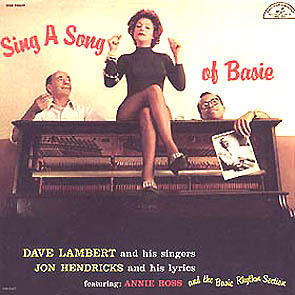
The inventor and most prolific practitioner of vocalese was Eddie Jefferson, whose rendition of Coleman Hawkins’s “Body and Soul” became a hit on its own. Pioneers of vocalese include King Pleasure and Babs Gonzales, Jefferson’s former dance partner.
The best-known practitioners are probably Lambert, Hendricks and Ross, which was made up of Jon Hendricks, Dave Lambert and Annie Ross. Ross’s 1952 lyrics for the song “Twisted”, a blues improvisation by saxophonist Wardell Gray, are considered a classic of the genre. Other performers known for vocalese include Bob Dorough, Giacomo Gates, Kurt Elling, Al Jarreau, Mark Murphy, Roger Miller and The Manhattan Transfer, with their Grammy-winning version of Weather Report’s “Birdland” set to lyrics by Jon Hendricks.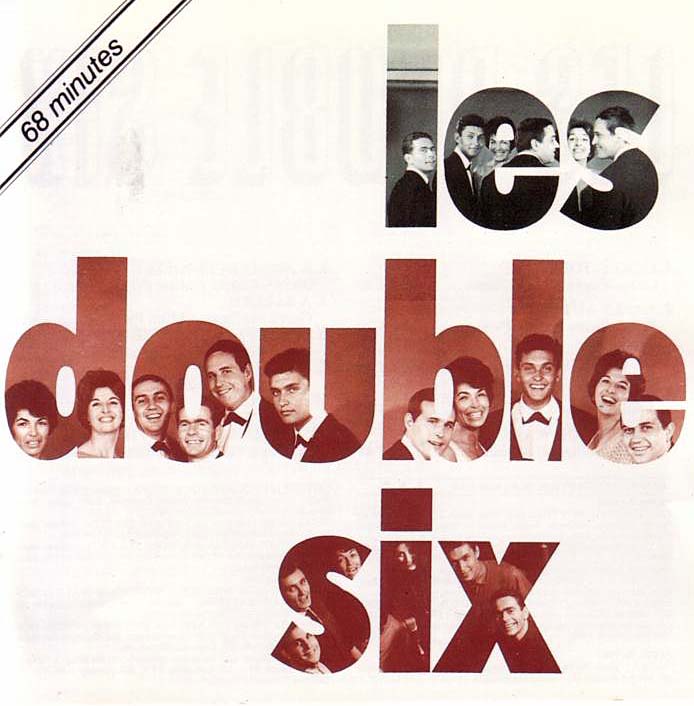
Some performers, notably Slim Gaillard, Harry Gibson, Cab Calloway, and Leo Watson, combine vocalese improvisations with scat singing.
Most vocalese lyrics are entirely syllabic, as opposed to melismatic. This may lead to the use of many words sung quickly in a given phrase, especially in the case of bebop.
Avant-garde Jazz
In History on October 1, 2010 at 1:54 pmAvant-garde jazz (also known as avant-jazz) is a style of music and improvisation that combines avant-garde art music and composition with jazz. Avant-jazz often sounds very similar to free jazz, but differs in that, despite its distinct departure from traditional harmony, it has a predetermined structure over which improvisation may take place. This structure may be composed note for note in advance, partially or even completely.
History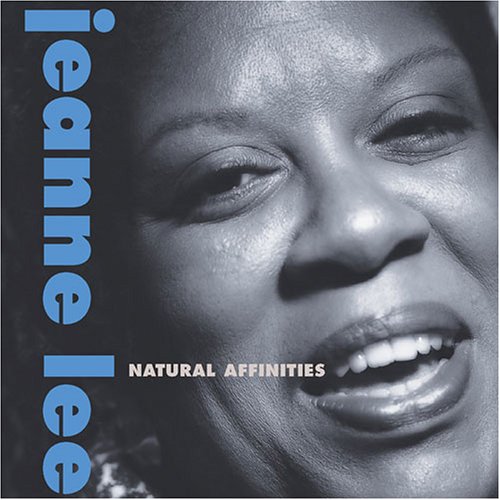
1950s
The origins of avant-garde jazz are in the innovations of the immediate stylistic successors of Charlie Parker. Based in New York City, musicians such as Charles Mingus, Miles Davis, and John Coltrane introduced modal improvisation and experimented with atonality anddissonance. Sun Ra, Cecil Taylor, and Ornette Coleman became controversial jazz innovators, outside the range of what many fans considered listenable.
1960s
John Coltrane’s increasingly experimental work, and the Impulse! label became the flagbearers of the avant-garde jazz scene. Musicians associated with this high-volume variety of avant-garde jazz (sometimes referred to as “fire music”) included Archie Shepp, Albert Ayler, McCoy Tyner, Don Cherry, Pharaoh Sanders, and Alice Coltrane. Some of these musicians also began to take on an oppositional relationship to the mainstream music industry, preferring to release records themselves through independent labels such as ESP-Disk. This wing of avant-garde jazz was taken as emblematic of the Black Power movement, and also sometimes had mystical intentions.
Musicians who incorporated the innovations of free and avant-garde jazz, but remained within a more conventional framework, recorded forBlue Note Records. Miles Davis’s second quintet (Wayne Shorter, Herbie Hancock, Ron Carter, and Tony Williams), as well as others such as Eric Dolphy and Andrew Hill, are the best-remembered representatives of this style.
Meanwhile, in Chicago, the Association for the Advancement of Creative Musicians began pursuing their own variety of avant-garde jazz, sometimes described as “postmodern” jazz. The AACM musicians (Muhal Richard Abrams, Anthony Braxton, Roscoe Mitchell, Hamid Drake, and the Art Ensemble of Chicago) tended towards eclecticism, and incorporated developments in 20th century classical music (particularly Karlheinz Stockhausen and John Cage) as well as funk and ska, in addition to Dixieland and other elements of jazz history. Rahsaan Roland Kirk also made use of pastiche.
1970s
The 1970s saw the development of jazz fusion. It is questionable whether this can be considered a form of avant-garde jazz, though Miles Davis’s recordings of this period, in particular, appear quite innovative and take inspiration from serialism and aleatoric music, just as theAACM did. In any case, hardcore jazz fans tended to regard early jazz fusion as a commercial sell-out move. However, by the early-to-mid-’70s, many free jazz icons, such as Albert Ayler, Archie Shepp, and Ornette Coleman were experimenting with rock and funk. Coleman would eventually develop the free funk style, which would be further explored by the M-Base musicians in the 1980s.
Jazz also became considerably more international in the 1970s, as saxophonists Gato Barbieri (Argentine), Kaoru Abe (Japanese), Peter Brötzmann (German), and pianists Sergey Kuryokhin (Russian), Egberto Gismonti and Hermeto Pascoal (Brazil) attest. European free jazz, in particular, began to develop. Evan Parker and Derek Bailey were pioneers of the new non-idiomatic style. Some veteran avant-garde jazz musicians (Charlie Haden), and much of the new blood, including a number who had played with Miles Davis in the 1970s (Dave Holland, Keith Jarrett, Chick Corea) and several Europeans (Jan Garbarek, among them), began to record for the ECM label. The ECM sound, invariably recorded by Manfred Eicher, tended towards an elegant, refined, polished style that owed a great deal to the history of classical music. ECM also released recordings of minimalist and medieval music, and work by the Art Ensemble of Chicago (who were considerably messier than the ECM stereotype would indicate). A number of the AACM and ECM musicians would collaborate with one another, for example in the group Circle.
Many of the AACM musicians moved to New York City, where they provided the nucleus of the loft jazz scene. The World Saxophone Quartet also emerged from this milieu.
1980s
The 1980s saw the pre-eminence of Wynton Marsalis and his classicist approach, and a resulting diminution of the visibility of the avant-garde. However, as avant-garde jazz was a prime influence on no wave, New York City became the center of a new crop of aggressive improvisors: John Zorn, Borbetomagus, the Lounge Lizards, James Chance, James Blood Ulmer, Sonny Sharrock, Diamanda Galás, Bill Laswell (who also worked on Herbie Hancock’s funk and electro recordings) and Bill Frisell (who had also recorded with the ECM musicians) among them. This development is referred to as punk jazz.
John Zorn, in particular, became an iconic figure in the “downtown” music scene, performing in free jazz, free improvisation, and a variety ofrock and extreme music styles. Many of these musicians actually resided in Brooklyn; Tim Berne is a prominent representative.
1990s
The 1990s saw a return in visibility to the Chicago jazz scene, including players with links to the AACM. Most prominent are David Boykin, Aaron Getsug, Nicole Mitchell and Karl E. H. Seigfried – all of whom came up through Fred Anderson’s Velvet Lounge. Other players includeKen Vandermark, Jeff Parker, and Kevin Drumm; these musicians had connections to the post-rock or noise rock scenes.
Likewise, there was an increase in vitality in the remnants of the loft jazz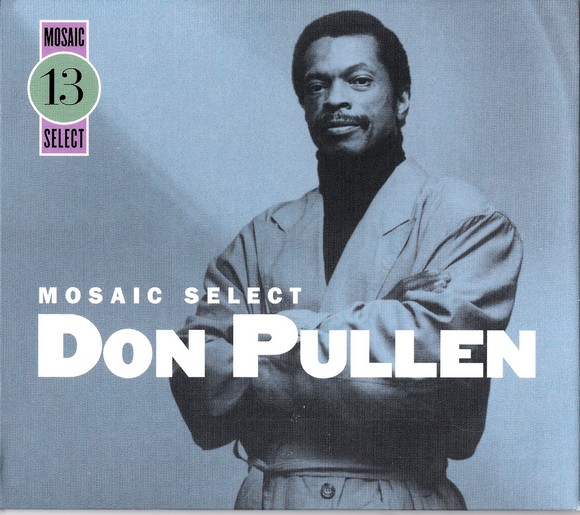 scene in New York, centered around David S. Ware. Matthew Shipp, Susie Ibarra, and William Parker practised a more traditional variety of avant-garde jazz than the punk jazz-inflected downtown musicians, though some collaboration did occur between the two camps. Matthew Shipp eventually collaborated with illbient and alternative hip hop musicians (DJ Spooky, Anti-Pop Consortium, El-P), and moved towards a distinctive brand of nu jazz comparable to that of Craig Taborn.
Notable avant-jazz musicians
- George Adams, The Bad Plus, Django Bates, Han Bennink, Ed Blackwell, Ernest Dawkins, Scott Fields, Mike Garson, Globe Unity Orchestra, Joe Harriott, Roy Haynes, Theo Jörgensmann, Jeanne Lee, Joe McPhee, Medeski, Martin, & Wood, Misha Mengelberg, Kenny Millions, Don Pullen, Sam Rivers, Arto Tunçboyacıyan, Alexander von Schlippenbach


 :>)azZClefs#