funics

Author Archive

Cannonball Adderley Biography

In Bio on May 1, 2010 at 3:39 pm

Julian Edwin "Cannonball" Adderley


TAMPA, Florida, 09/15/1928,

GARY, Indiana 08/08/1975

After his music studies in Tallahassee (1944/48) he became a high school band director at the Dillard High School/Fort Lauderdale (1948/50)in his native Florida, following in the footsteps of his educator-father(a trumpet player),before moving to New York in 1955. He initially planned to pursue graduate studies in Manhattan; but after sitting in with Oscar Pettiford‘s band at the Cafe Bohemia, the alto saxophonist became an instant sensation, hailed by many as the musician most likely to be the mantle of the late Charlie Parker. Despite misguided promotional efforts to christen him as “the new Bird,” Adderley clearly had his own approach to the horn, which drew on the inspiration of Benny Carter as well as Parker. He took advantage of his early notoriety, however, by forming his first quintet, which featured his younger brother Nat Adderley on cornet. While the group struggled economically, Cannonball did draw the attention of Miles Davis,who featured the alto saxophonist in the immortal Miles Davis sextet (alongside John Coltrane and either Red Garland, Bill Evans,or Wynton Kelly) for two years beginning in late 1957.

In September 1959, Cannonball left Davis and reunited with Nat in a new Cannonball Adderley quintet. Recorded live one month later at San Francisco’s Jazz Workshop, the band became an immediate success with their version of Bobby Timmons’s sanctified waltz “This Here” and a leading practitioner of what came to be called soul jazz. Numerous other hits followed over the next 16 years as the band occasionally swelled to sextet size (with the inclusion of Yusef Lateef or Charles Lloyd) and featured such important pianist/composers as Barry Harris, Victor Feldman, Joe Zawinul, George Duke, and Hal Galper. Sam Jones and Louis Hayes formed the original rhythm section, to be succeeded later by Victor Gaskin,Walter Booker, and Roy McCurdy. At the heart of the group’s success throughout its existence were Cannonball, one of the most impassioned alto (and, later, soprano) saxophonists in jazz history, and Nat,whose infectious compositions (including “Work Song” and “Jivesamba”) formed a critical part of the band’s book.
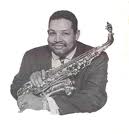
While a knack for interpreting funky crossover material such as Zawinul’s “Mercy, Mercy, Mercy” won the Adderley quintet one of the jazz world’s largest audiences, Cannonball’s personality also played a pivotal role in sustaining the band’s prominence among fans worldwide. He was the most articulate and engaging of musicians,and he invariably educated his listeners with wry commentary that illuminated the music. He was also a voracious listener and talent scout who introduced several prominent musicians through both employing them in his ensemble and serving as a studio record producer. Cannonball was the one who called Wes Montgomery to the attention of Riverside Records, produced the debut recording of Chuck Mangione, and collaborated so brilliantly with a young Nancy Wilson. The open, affirmative personality he displayed on stage was reflected in his music, which over time was touched by the subtle eloquence of his former boss Miles Davis and the exploratory intensity of his Davis colleague John Coltrane.

Adderley also served as a prominent spokesperson for jazz through extensive television work and residencies at several universities. Shortly before his death following a stroke, he had recorded his original music for “Big Man,” a “folk musical” based upon the life of John Henry.

source: Fantasy.com
Cannonball Adderley site

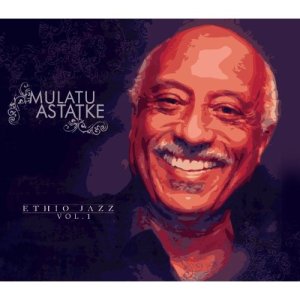
Mulatu (Ethio Jazz Vol1, Mulatu Astatké)

In Album, Mulatu on March 30, 2010 at 2:59 pm

Nouveau morceau de Mulatu Astatké, tiré de l’album Ethio Jazz Vol. 1,

Record Label: AZMARI

Release Date: 2006

Ethio Jazz – Jazz and fusion with the Ethiopian five-tone scales.

Mulatu est dans la boite.

Pour la partition, tendez l’oreille…


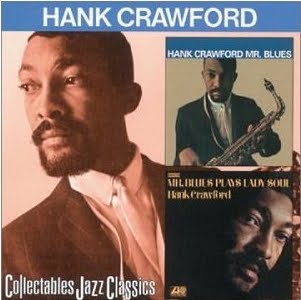
Lady Soul – Hank Crawford

In Album, Lady Soul on March 12, 2010 at 4:58 pm

Hank Crawford’s “Mr. Blues Plays Lady Soul” on Atlantic from 1969. The groove is unreal, thanks to the great Bernard Purdie on drums, and the big band sound is killer thanks to the great arrangements of Arif Mardin. This is doubly fascinating because Hank was also a brilliant arranger who almost always wrote his own charts. Finally, the guitar chair is manned by the late, great Eric Gale, so business is handled 110% all the way ‘ round.”

Hank Crawford – Mr. Blues Plays Lady Soul (Atlantic Records)
Hank Crawford (as); David Newman (ts, fl); Paul Griffin (p, el-p); Eric Gale (g); Ron Carter (el-b); Bernard Purdie (d); Arif Mardin (arr, dir); Gene Orloff (strings cond); Bernie Glow, Joe Newman, Ernie Royal, Snooky Young (tp); Jimmy Cleveland, Benny Powell (tb); Frank Wess (as); Seldon Powell (ts); Pepper Adams (bars); unidentified strings.

Chaudement recommandé: Lady Soul

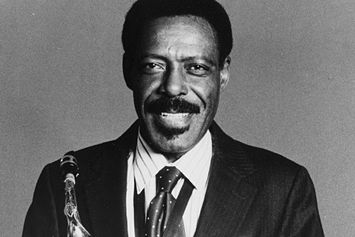
Hank Crawford Biography

In Bio, Lady Soul on March 12, 2010 at 4:39 pm

Born: December 21, 1934 | Died: January 29, 2009

Hank Crawford has been an alto sax sensation since he stepped out of the Ray Charles band back in 1963. A signature piercing, full bodied, blues, soul, and gospel drenched tone, sets him apart from the alto pack. He has an instantly recognizable voice, and his excellent choice of material suits his style perfectly. He is a bluesman turned preacher on the sax, and the sermon is always on time.

Bennie Ross Crawford Jr. was born in Memphis, Tennessee on December 21, 1934, began formal piano studies at age nine and was soon playing for his church choir. His father had brought an alto saxophone home from the service and when Hank entered high school, he took it up in order to join the band. He credits Charlie Parker, Louis Jordan, Earl Bostic and Johnny Hodges as early influences.

At school, he hung out with Phineas and Calvin Newborn, Booker Little, George Coleman, Frank Stozier and Harold Mabern–all of whom would go on to become important jazz figures. “We had a pretty good education just by being around each other,” Crawford says now.

Before he had finished high school, Hank was playing in bands led by Ben Branch, Tuff Green, Al Jackson, Sr. and Ike Turner. They were frequently called upon to back such up-and-coming blues singers as B. B. King, Bobby Bland, Junior Parker, Johnny Ace and Roscoe Gordon and the Palace Theatre, the Club Paradise and other Memphis venues.

In 1953, Crawford went away to Tennessee State College in Nashville where he developed his arranging skills as a leader of the school dance band, which included vocalist Leon Thomas. During the evening, he led a quartet called Little Hank and the Rhythm Kings. Discovered one night at the Subway Lounge by country producer Roy Hall, the group cut “The House of Pink Lights” and “Christine” for a local label with Crawford as featured vocalist.

His big break came in 1958 when Ray Charles passed through Nashville. Baritone saxophonist Leroy “Hog” Cooper had just left the band, and Charles offered Crawford the baritone chair. “I learned a lot about discipline and phrasing from Ray,” Crawford says. “He would keep me up a lot of nights and dictate arrangements to me. I learned how to voice and get that soulful sound. I think I kinda had it before, but being around him just helped that much more.”

“Sherry”, Hank’s first composition and arrangement for the Charles septet, was recorded for the Ray Charles At Newport album shortly after he joined the band. He also contributed three tunes and six arrangements to Fathead Newman’s debut albums later in 1958. Two years later, Charles expanded to full big band size and appointed Crawford musical director. (Crawford also switched to alto around this time.)

When Crawford left Ray Charles in 1963 to form his own septet, he had already established himself with several albums for Atlantic. From 1960 until 1970, he recorded twelve LPs for the label, many while balancing his earlier duties as Ray’s director. He released such pre-crossover hits as “Misty”, “The Pepper”, “Skunky Green”, and “Whispering Grass”.

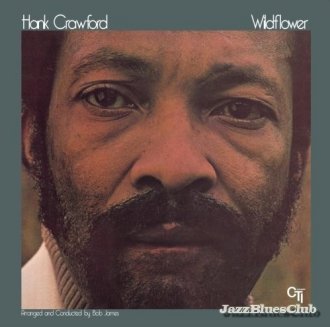
After signing with Creed Taylor’s Kudo label in 1971, he cut one album a year over the next eight years. At Kudu, Crawford wasn’t allowed to write his own charts and was instead handed lavish arrangements in the then-fashionable CTI crossover mold. He still managed to come out with consistently quality work.

Crawford returned to classic form upon signing with Milestone Records in 1982, playing alto saxophone and often writing in the soulful manner that first made him famous. Some of his albums for the company–Midnight Ramble, (’82)Indigo Blue, (’83) Roadhouse Symphony, (’85) Night Beat, (’88) Groove Master,(’90) and South-Central. (’92).

In 1986, the saxophonist began working with blues-jazz organ master Jimmy McGriff. These are soul jazz played the way it should be, like going to school, it doesn’t get any better. They recorded four co-leader dates for Milestone–Soul Survivors, (’86) Steppin’ Up, (’87) On the Blue Side, (’89) and Road Tested, (’97) this duo also performed numerous club dates and concert dates in the U. S.

The new century found Hank Crawford, shifting gears and going for a more mainstream jazz set in his 2000 release “The World of Hank Crawford.” Though the songs are compositions from jazz masters as Ellington and Tadd Dameron, he delivers in that sanctified church sound that is his trademark.

Boeuf à la clef….

In Events on March 11, 2010 at 3:45 pm

le 16 mars…………

Correction MP3

In Others on March 10, 2010 at 5:17 pm

Il y avait une petite erreur dans la librairie avec l’icone MP3’s Songs, c’est corrigé, maintenant en cliquant sur cette icone, vous accédez à tous les MP3s figurant dans la librairie.

ciao

Blues Improvisation

In Blues, Scales, Technics, Theorie on March 10, 2010 at 3:30 pm

Blues Improvisation – it’s all in the wrist – wrong!

Blues Improvisation = pentatonic scale – wrong!

Blues Improvisation = bending notes – wrong!

It’s all about the pause man… THE PAUSE!>

What pause? What this some kind of sex technique?… Well, to tell the truth. maybe.. it’s no secret blues improvisation turns people on.. is there anyone that hasn’t made love to some cool guitar solo?

And like sex, playing the blues is a contact sport.. You have to take off your robe…  get in the ring and take your chances.. Like a prize fighter, you got to know when to punch, when to duck and… when you smell blood, how to bring your solo to its climax!!! and get the hell out of there!

The master is, was and always will be B.B. King… listen to the album “Live at the Regal”, the B.B. King’s blues guitar solo throws you off balance, gets you leaning one way and then POW!!! Right in the gut man..

OK, so where does the PAUSE come in? Take a guess… Right at the start of most blues guitar licks… instead of playing a note on the beat.. you leave a rest – an eigth note or sixteenth note rest depending on the tempo…  and POW!!! You’re guitar solo’s are going to get noticed!!

It may not seem like such a big deal, but “the pause” separates the men from the boys. It make take you a long time to figure this out.. but once you do, you’re on your way…  Once again… the trick is to catch the listener’s ear with a quick note that’s more like a “pick up” than an eighth note.. or to start your blues licks with a rest instead of a note…  Just listen to all the greats BB. King, SRV, Eric Clapton, Robert Cray and Albert Collins, my main man..

Good luck and funky blues.. Johnny Mayer.

from BluesforPeace

Basics of Blues Progressions

In Blues, Theorie on March 10, 2010 at 3:25 pm

Learn these blues chords and basic blues progressions to play with any blues band in the world… practice 12 bar blues, “quick’ change, blues turn arounds, 8 bar blues, minor blues, bridge, etc. until you can play them in your sleep… For example, “Sweet Home Chicago”, the 2nd song below… good luck and funky blues…

The 12 Bar Blues

The name 12 Bar Blues comes from the number of measures or bars in most blues songs – twelve. Here’s the basic 12 bar blues (Chicago blues) in the key of A.

Further On Up the Road – basic 12 bar blues

/ A7 /A7  /A7  /A7 / D7 / D7 /A7 / A7 / E7 / D7 / A7 / E7 /

The ‘Quick Change’

A quick change is just that, changing chords in the 2nd measure and then back the the first chord.

Sweet Home Chicago Chords

/ A7 / D7 /A7  /A7 / D7 / D7 /A7 / A7 / E7 / D7 / A7 / E7 /

Chord – Number Systesm

Blues musicians often refer to chord changes by Roman numerals after the steps of the scale. Below are the scale steps in the key of A and the chords associated with them.

I A (the key of the song)
II Bmi
III C#mi
IV D
V E
VI F#mi
VII G#dim

Blues and the I, IV, V Chords

Many blues songs have just three chords, the I, IV and V chords. In the key of A, that’s A, D and E. Here’s Further On Up the Road by chord name and Roman numerals.

/ A7 / A7  /A7  /A7 / D7 / D7 /A7 / A7 / E7 / D7 / A7 / E7 /

/  I   /  I   /  I   /  I   / IV / IV /  I   /  I   / V   / IV   /  I   /  V  /

And the quick change in Sweet Home Chicago? It’s to the …. IV chord …. Right!

/ A7 / D7 /A7  /A7 / D7 / D7 /A7 / A7 / E7 / D7 / A7 / E7 /

/  I /  IV /  I   /  I   / IV / IV /  I   /  I   / V   / IV   /  I   /  V  /

The Turnaround

1) The last 2 bars of the song are called the turnaround. The basic turnaround is

… / A7 / E7 /

2) There are many varations of the turn around. Here’s a common one

/ A7 D7 / A7 E7 /

Eight Bar Blues

Key to the Highway – uses the turnaround variation (#2 above)

/ A7 / E7  / D7 / D7 / A7 /  E7 / A7 D7 / A7 E7 /

/  I   /  V   / IV / IV  /  I   /  V   /  I  IV   /   I   V  /

Minor Blues

/ Am / Am / Am / Am / Dm / Dm / Am / Am / Em / Dm / Am /  –  /

/  I / I   /   I   /   I   /  IV  /  IV  /   I   /   I   /  V  /  IV /   I   /   /

A minor 12 bar blues usually has a repeated rhythm pattern and no chord in the 12 measure.

Take It Down From The Fifth

The chord number system comes in handy on a gig. If the band leader says “take it down from the fifth”, that means start the song from V chord in the 9th measure.

… / E7 / D7 / A7 / E7 /

… /  V / IV  /   I   /  V  /

And if someone points at you and holds up 4 fingers, it means play the IV chord now!

Bridge (B part of song)
Some blues songs have a “B” part or bridge. You’ll find this one in many songs.

/ D7 / A7  / D7 / A7 / D7 / A7 / B7 / E7 /

/  IV /  I   /  IV /  I   /  IV  /  I   /  II  /  V  /

The ‘unexpected’ “IV” chord (instead of the I chord) creates tension and interest. Usual format – AABA.

Stormy Monday

Allman Bros. style layed back triplets
G9 / C9 / G9 G#9 / G9 /
C9 / C9 / G9 Ami7 / Bmi7 A#mi7 /
Ami7 / Cmi7 / G9 C9 / G9 D+ /

Rock – Blues Compared!

The Blues had a baby and they called it Rock N Roll. A comparison of the two styles that may open up your ears and improve your playing.

#1 Tempo / 8th Notes

Blues is usually slower – medium shuffle – played with dotted eight notes
Rock is usually uptempo – played with even eight notes.

#2 Changing Chords / Beat

Blues chords ususally change on the 1st beat of a measure
Rock chords change on the ‘&’ of the 4th beat in the previous measure – gives rock incredible drive.

#1 Rhythm Guitar / 1 Note or 2?

Blues- the rhythm guitar usually plays two notes together.
Rock- the rhythm guitar alternates between playing two notes together and a single ‘bass’ note

By & from Johnny Mayer (BluesforPeace)

Origin of the solfège syllables

In Theorie on February 19, 2010 at 9:45 am

The use of a seven-note diatonic musical scale is ancient, though originally it was played in descending order.
In the eleventh century, the music theorist Guido of Arezzo developed a six-note ascending scale that went as follows: ut, re, mi, fa, sol, and la. A seventh note, “si” was added shortly after. The names were taken from the first verse of the Latin hymn Ut queant laxis, where the syllables fall on their corresponding scale degree.

Sheet Music for Ut Queant Laxis

Ut queant laxis resonāre fibris
Mira gestorum famuli tuorum,
Solve polluti labii reatum,
Sancte Iohannes.

The hymn (The Hymn of St. John) was written by Paulus Diaconus in the 8th century. It translates as:
So that these your servants can, with all their voice, sing your wonderful feats, clean the blemish of our spotted lips, O Saint John!


“Ut” was changed much later in Italy to the open syllable Do, and Si was added to complete the diatonic scale. In Anglo-Saxon countries, “si” was changed to “ti” by Sarah Glover in the nineteenth century so that every syllable might begin with a different letter. “Ti” is used in tonic sol-fa and in the song “Do-Re-Mi”.
In the Elizabethan era, England and its related territories used only four of the syllables: mi, fa, sol, and la. “Mi” stood for modern ti, “fa” for modern do or ut, “sol” for modern re, and “la” for modern mi. Then, fa, sol and la would be repeated to also stand for their modern counterparts, resulting in the scale being fa, sol, la, fa, sol, la, mi, fa. This was eventually eliminated by the 19th century, but it was (and still is in a few rare circumstances) used in the shape note system, which gives each solfège syllable a diffferent shape.

la Gamme Ethiopienne

In Mulatu, Scales, Tezetaye Antchi Lidj, Yekermo Sew on February 11, 2010 at 3:11 pm

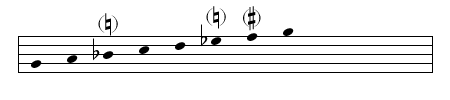
The Ethiopian scale consists of 7 different notes. Notice how that when you ascend the scale Bb, Eb, and F natural notes are played, and when you descend the scale F#, E natural, and B natural notes are played. This concept is also seen in the Melodic Minor Scale.
Formula: WS, HS, WS, WS, HS, WS, WS