Merci à tous pour vos visites, la fréquentation du site augmente régulièrement et sûrement, pour preuve, le nombre de visites mensuel ci-dessous.

Visites venant du monde entier.
 Encore merci
Merci à tous pour vos visites, la fréquentation du site augmente régulièrement et sûrement, pour preuve, le nombre de visites mensuel ci-dessous.
Visites venant du monde entier.
Encore merci
Well You Need’nt avec Jimmy Smith au Piano et Kenny Burrell à la guitare
venant de l’album Second Coming de Jimmy Smith.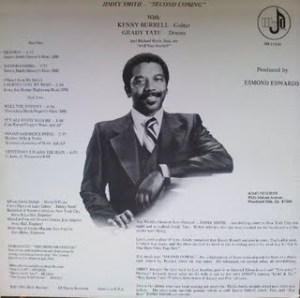
Leon’s first major songwriting hit came in 1970 when legendary artist, Joe Cocker recorded his song, “Delta Lady,” and Leon became the organizer of Cocker’s Mad Dogs and Englishmen Tour. Also in 1970, Leon released a self-titled solo album that included his haunting number, “A Song for You.” One fan who heard Leon’s album was a young arranger named Richard Carpenter. “A Song for You” became the title cut of the Carpenters 1972 recording — one of the strongest albums of their star-studded career. Richard later commented:
I heard this song on Leon Russell’s debut album and thought immediately it would be a good vehicle not only for Karen’s lead, but for our overdubbed “choral” sound as well.1
But how, you might wonder, did Richard Carpenter even know enough about Leon Russell to seek out and listen to his debut album? The answer is that this was not the first time the Carpenters had struck gold with a Leon Russell song. Their self-titled third album released in 1971, had also included a unique and mystical Russell masterpiece called “Superstar.” Richard recalls:
Karen and I came home from the studio relatively early one evening in early ’71. She went to bed, but I tuned in The Tonight Show. The host, Johnny Carson, was championing a then relatively unknown performer named Bette Midler. One of the songs she sang was “Superstar.” It was quite a bit different than what my arrangement turned out to be, but I knew it could be a hit. As the lyric never mentions the word “Superstar,” I had to quiz a few people about it to find out its name in order to get a lead sheet or recording. It turned out that Leon Russell and Bonnie Blamlett had written it for Rita Coolidge and the Joe Cocker Mad Dogs and Englishmen recording and tour. The album was on A&M and I owned a copy of it, but never got around to playing it. I opened the album, familiarized myself with the piece and constructed my arrangement; a perfect song for Karen and the Carpenters’ sound.2
The rest — as they say — is history! The Carpenters’ version of “Superstar” went to #2 on the Billboard Charts and propelled the brother-sister duo into Grammy history as Best Pop Vocal Group in 1971. “Superstar” has since been covered by a plethora of artists including Luther Vandross, Joe Cocker and Ruben Studdard. (It is, incidentally, one of the only successful songs in history that does not contain the title anywhere in the song!)
The vulnerable lyrics and delicately crafted melodic structure of Leon’s songs make them an arranger’s dream — adaptable to any genre and timeless in their musical and lyrical impact. Let’s look at one more Russell masterpiece…the song entitled, “This Masquerade” which also, by the way, became a Carpenters hit in 1973. (Did Richard know a great songwriter when he found one, or what?)
“This Masquerade” is another intricate tapestry of words, melody, harmony and rhythm that has been recorded by artists of every genre. The Carpenters were not the only ones to score with this song. George Benson won Record of the Year at the 1976 Grammys with his version. Artists as varied as Vic Damone, Robert Goulet, David Sanborn, Doc Severnsen — and even Cybill Shepherd — have recorded their own renditions.
 The musical depth and craftsmanship of “This Masquerade” is stunning! If you visit a digital Internet download site like iTunes, you will even find classical arrangements of this song. Music theorists have Internet discussions about musicality employed by the composer. Like a ten-carat diamond, it is exquisite from every facet.
If you are an aspiring songwriter who has never studied the work of Leon Russell, you are definitely missing out! Take time to discover and examine the panorama of styles and techniques in his amazing songs. Leon has set the bar very high for all who come after him and his songs remind us why we wanted to become songwriters in the first place.
Now in his sixties with a flowing mane of white hair, Leon still travels the country with his incredible band. Check out his website at leonrussell.com and make note of his tour schedule. If he comes within a hundred miles of you, don’t miss the chance to hear this genius musician live. His like will not pass this way again.
This Masquerade – Guitar Solo from George Benson, as played by Georgie in Breezin’ is posted in the library as well as the song.
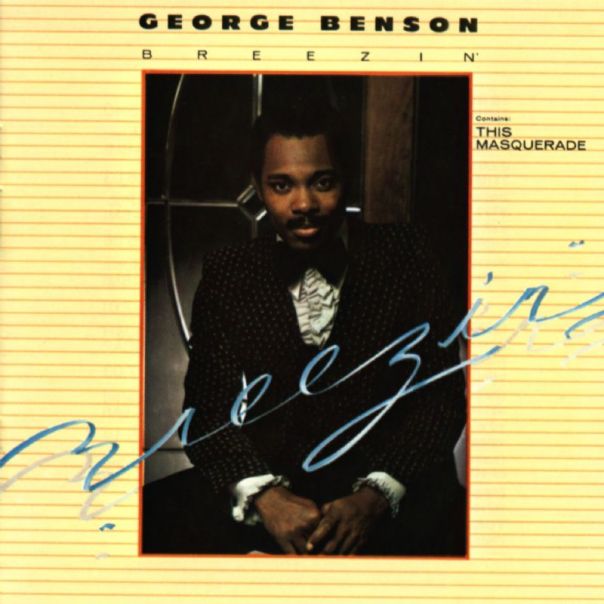
Breezin’ George Benson
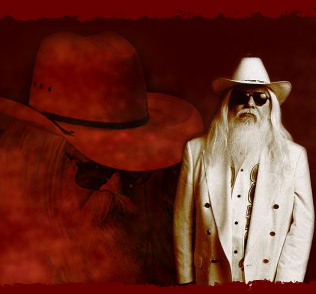 Il est l’un des plus grands artistes cultes de l’histoire de la musique. Excellent musicien de studio et ami intime, entre autres, de J.J. Cale et de George Harrison, il partagea en 1970 avec plus de 40 musiciens et choristes sur scéne la tournée americaine de Joe Cocker [MAD DOGS AND ENGLISHMEN ]; il participa en1971 au célèbre Concert for Bangladesh et sollicita l’aide de George pour ses chansons “Hummingbird” et “Shoot Out The Plantation” pour son disque “Leon Russell”, sorti le 24 avril 1970.
Il a fondé à Tulsa son propre studio d’enregistrement baptisé “the Church Recording Studio” repris depuis par Steve Ripley, son ancien ingénieur du son et fondateur du groupe country

Leon Russell
“the Tractors”.
| “This Masquerade” | |||||
|---|---|---|---|---|---|
| Single by George Benson | |||||
| from the album Breezin’ | |||||
| B-side | “Lady” | ||||
| Released | 1976 | ||||
| Format | 7″ single | ||||
| Genre | R&B/Jazz | ||||
| Length | 3:18 | ||||
| Label | Warner | ||||
| Writer(s) | Leon Russell | ||||
| Producer | Tommy LiPuma | ||||
| George Benson singles chronology | |||||
|
|||||
The Carpenters version was released on their album Now & Then (1973), and performed on TV withElla Fitzgerald, the medley in which it was sung was subsequently released on the compilation album As Time Goes By.
The song has also been recorded by many other artists. The Carpentersrecorded a version of the song and released it on their 1973 Now & Then album, as well as on the B-side of “Please Mr. Postman” in 1974. Shirley Bassey has also recorded this song, first released on her 1982 albumAll By Myself. Other artists to perform it include Sergio Mendes & Brasil ’77, No Mercy, Robert Goulet, Helen Reddy, Bob Berg and Kenny Rogers. The song was also a top-ten pop and R&B hit for jazz guitarist/vocalistGeorge Benson, who recorded it on his 1976 signature album Breezin’. It reached number ten on the Billboard Hot 100 and number three on the Hot Soul Singles chart. Benson won the Grammy Award for Record of the Year with his version of the song. SaxophonistDavid Sanbornalso recorded the song on his 1995 “Pearls” project.Leon Russell‘s version is part of the soundtrack for the Exorcist director William Friedkin‘s psychological thriller film Bug. The Bug Soundtrack is released on May 22, 2007. It also appeared in the movie The Pursuit of HappynessXX
Are we really happy with this lonely game we play
Looking for words to say
Searching but not finding understanding anyway
We’re lost in this masquerade
Both afraid to say we’re just too far away
From being close together from the start
We tried to talk it over but the words got in the way
We’re lost inside this lonely game we play
Thoughts of leaving disappear
every time I see your eyes
No matter how hard I try
To understand the reason why
we carry on this way
We’re lost in a masquerade
We could just start over
but it’s oh so hard to do
When you’re lost in a masquerade
© 1998-2008 Blues for Peace Corporation. All rights reserved.
Poème Symphonique For 100 Metronomes
Le Poème symphonique pour 100 métronomes est une œuvre musicale du compositeur hongrois György Ligeti composée en 1962.
Le morceau nécessite un chef d’orchestre, et dix exécutants afin d’opérer une préparation manuelle minutieuse. Chacun des cent métronomes est placé sur la scène, remonté et ajusté à une certaine vitesse. Une fois qu’ils sont tous remontés, ils sont lancés aussi simultanément que possible. Les exécutants sortent de la salle, et alors seulement le public peut rentrer ; il s’installe alors que les métronomes battent la mesure. Les métronomes s’arrêtent les uns après les autres et laissent percevoir de plus en plus nettement la périodicité des battements. Ensuite, seuls quelques-uns battent ; ce sont ceux qui ont été réglés aux vitesses les plus lentes. La pièce se termine après que le dernier métronome a battu seul quelque temps. La pièce dure un peu moins d’une vingtaine de minutes.
Ligeti ne répéta pas ce type d’expérience, mais plusieurs de ses pièces instrumentales qui ont suivi ont exploité cette modification lente d’un paysage sonore.
La pièce a été créée à Hilversum, aux Pays-Bas, en 1963, et a été un énorme scandale. Le concert filmé par la télévision hollandaise ne fut jamais diffusé, remplacé par un match de football. La pièce a été très rarement jouée en public depuis, principalement à cause de sa difficulté de réalisation. Elle a en revanche été enregistrée à plusieurs reprises.
En 1995, le sculpteur Gilles Lacombe invente un dispositif qui facilite considérablement son exécution, puisque la pièce peut être jouée automatiquement, sans l’intervention d’exécutants.

Jim Hall’s amplifier and speaker rig for his gig at the Blue Note March, 9 1993
Walter Woods Mi 100 amp
Harry Kolbe ported speaker cabinet
Alesis Microverb
Digitech Whammy WH1
Pour s’accorder avec les instruments en Do (piano, flûte…),
Il faut jouer 2 demi-tons au dessus.
Par exemple pour le Blues en Do, il faut jouer en Ré.
Pour le Blues in Fa, il faut jouer en Sol.
Pour s’accorder avec les instruments en Do (piano, flûte…),
Il faut jouer 2 demi-tons en dessous.
Par exemple pour le Blues en Do, il faut jouer en La.
Pour le Blues in Fa, il faut jouer en Ré.


 :>)azZClefs#