funics

Author Archive

Cold Duck time

In Cold Duck Time, Live on October 10, 2008 at 10:40 pm

Cold Duck is the name of a sparkling wine made in the United States.

The wine was invented by Harold Borgman, the owner of Pontchartrain Wine Cellars in Detroit, in 1937. The recipe was based on a traditional German custom of mixing all the dregs of unfinished wine bottles with champagne. The wine he produced was given the name Kaltes Ende (“cold end” in German), until it was humorously altered to the similar sounding term Kalte Ente meaning “cold duck” .

A jazz standard named “Cold Duck Time” by Eddie Harris has been performed by many jazz musicians, including Jeff Golub and Al Jarreau.

With Larry Carlton…………………. video in the Box

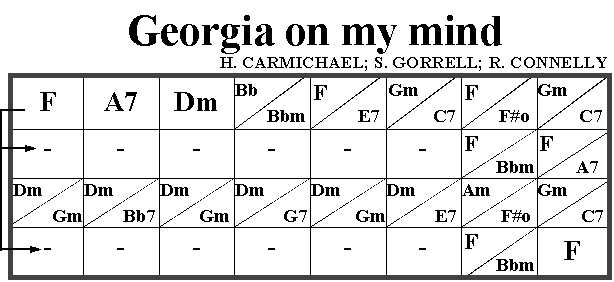
Georgia on my mind

In Partitions on October 6, 2008 at 10:57 pm
Georgia on my mind

Georgia on my mind

Blue Drag (Django)

In Partitions, Scales on October 6, 2008 at 10:32 pm

| Dm/ Dm-C/ | Dm-B/ Bb7/ | Dm/ Dm-C/ | Dm-B/ Bb7/ | Dm/// | E0/// | Bb7/ A7/ | Dm/ A7/ |

| Dm/ Dm-C/ | Dm-B/ Bb7/ | Dm/ Dm-C/ | Dm-B/ Bb7/ | Dm/// | E0/// | Bb7/ A7/ | Dm/// |

| Gm/// | Gm/// | Dm/// | Dm/// | Gm/// | Gm/// | Dm/// | Bb7/ A7/ |

| Dm/ Dm-C/ | Dm-B/ Bb7/ | Dm/ Dm-C/ | Dm-B/ Bb7/ | Dm/// | E0/// | Bb7/ A7/ | Dm/// :||

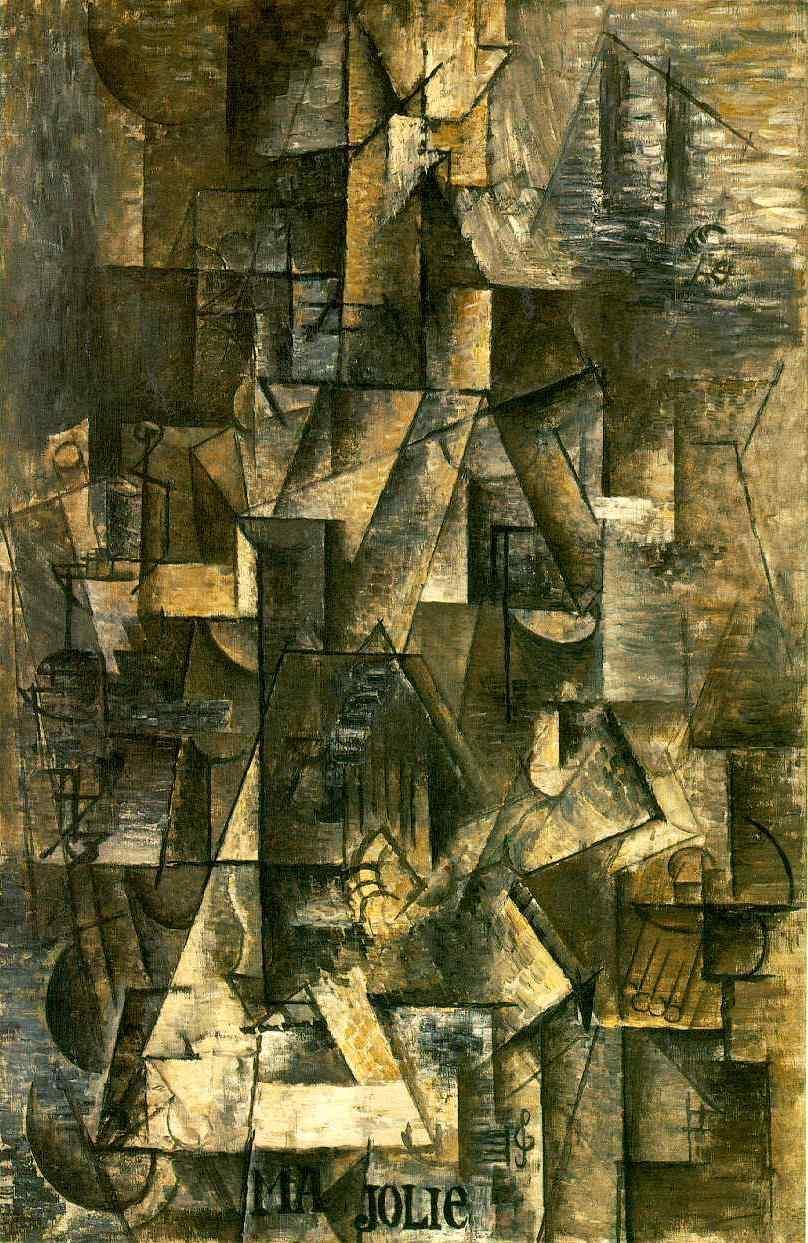
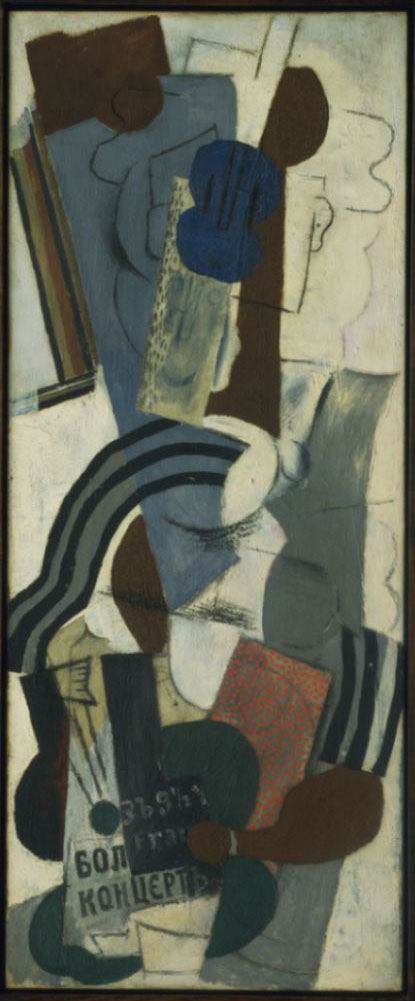
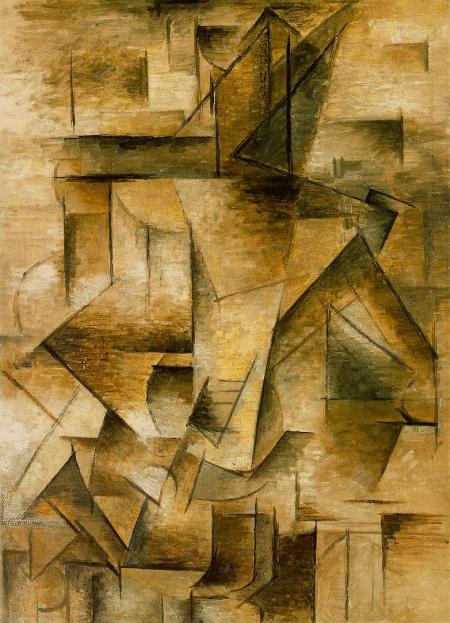
Picasso et la guitare

In Others on October 5, 2008 at 10:18 pm

picasso_guitarmajoliejpg1La guitare occupa une grande place pour Picasso. Ses tableaux les plus connus , pour le plaisir des yeux.


femme_a_la_guitarefactory_horta-picassojpg1guitar_picasso3jpg1pablo-picasso-violin-and-guitarjpgthe_guitar_player-picassogif

picasso-guitaredrawingjpg1picasso-guitar-womangifpicasso-man-with-guitarjpgstill-life-with-guitar-picassopng1

violin-and-guitar-1913-picassojpgpicasso-guitar-cubejpgguitaresculture-picassojpg2nu_couche_guitar_picassojpg3

They played the Gibson ES175 or ES335 or the Epiphone

In Gears on October 3, 2008 at 10:10 pm

Liste of guitar players who play the Gibson ES335, the ES175 or the Epiphone

  • Chuck Berry: ES-335 stereo
  • Larry Carlton: Gibson ES335
  • Christian Escoude: Gibson ES175 D
  • Green Freddy: Epiphone Emperor
  • Peter Green: Gibson ES335, Les Paul Standard,
  • John Lee Hooker: Epiphone ES335
  • Steve Howe: Gibson 175 t, Showburn Pedal Steel
  • Bb King: Gibson ES355 (Lucille)
  • Alvin Lee: Gibson ES335
  • Pat Metheny: Gibson ES 175
  • Wes Montgomery: Gibson ES 175
  • Joe Pass: Gibson ES175, D’Aquisto
  • Lou Reed: Gibson ES355
  • Lee Ritenour: Gibson ES335, Fender Strat
  • Otis Rush: Fender Strat, Gibson ES335
  • T-Bone Walker: Gibson ES5, ES335
  • Izzy Stradlin: Gibson ES175, Les Paul

Gibson ES-335

In Gears on September 16, 2008 at 7:46 pm


Gibson ES335

Gibson ES335

Radio Jazz international

In Media on September 10, 2008 at 9:38 pm

Cette RADIO-JAZZ-International diffuse en non-stop, soit 24h. sur 24h. de la musique ayant exclusivement un rapport avec le jazz et originaire de tous les pays du monde. Soit: suisse, européen, américain et même asiatique.

Pat Martino & John Scofield – “Sunny”

In Live, Others on September 8, 2008 at 9:37 pm

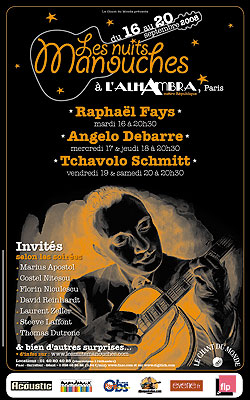
Les Nuits manouches, Paris

In Events on September 8, 2008 at 1:32 pm

Les Nuits manouches 2008
A L’Alhambra du 16 au 20 septembre 2008 publié le 29 juillet 2008 par cristof 

MARDI 16 SEPTEMBRE 
- Raphaël Faÿs 
Ramon Galan (guitare) / Laurent Zeller (violon) / Jean-Claude Beneteau (contrebasse) José Pazoro Tacaso (guitare) / Danseuse : info à venir 
Raphael Fays poursuit son travail de création autour de la guitare dans trois domaines distincts. 
Le swing manouche avec son trio deux guitares une contrebasse, la guitare classique en solo (ses compositions sont désormais enseignées au même titre que celles des grands maîtres de l’instrument), le flamenco dont il est un ardent et original acteur.

MARDI 16 SEPTEMBRE 
- Raphaël Faÿs 
Ramon Galan (guitare) / Laurent Zeller (violon) / Jean-Claude Beneteau (contrebasse) José Pazoro Tacaso (guitare) / Danseuse : info à venir 
Raphael Fays poursuit son travail de création autour de la guitare dans trois domaines distincts. 
Le swing manouche avec son trio deux guitares une contrebasse, la guitare classique en solo (ses compositions sont désormais enseignées au même titre que celles des grands maîtres de l’instrument), le flamenco dont il est un ardent et original acteur.

MERCREDI 17 SEPTEMBRE & JEUDI 18 SEPTEMBRE 
- Angelo Debarre 
Antonio Licusati (contrebasse) /Tchavolo Hassan (guitare) Après s’être longtemps produit en quartet et en quintet, il présente aujourd’hui un trio deux guitares une contrebasse dans un répertoire constitué intégralement de compositions originales. 
En seconde partie le trio d’Angelo Debarre sera rejoint par la crème des violonistes actuels (Costel NitescuFlorin Niculescu et Marius Apostol).

VENDREDI 19 SEPTEMBRE / SAMEDI 20 SEPTEMBRE 
- Tchavolo Schmitt 
Costel Nitescu (violon) / Sammy Daussat (guitare) / Claudius Dupont (contrebasse) Un phénomène, une légende… Blier aurait dit « une épée »… « Le » guitariste manouche par excellence. Autour de son nouveau quartet, on fera la fête pendant deux jours avec de nombreux invités : Costel NitescuDavid ReinhardtYorgui Loeffler, Steve Laffont et bien d’autres et pourquoi pas Thomas Dutronc

CONCERT A 20 H 30 
Prix des places : 29 euros

Lieu : 
L’Alhambra – 21 rue Yves Toudic – 75010 Paris – Tel : 01.40.20.40.25 – Métro : République 
Site : www.alhambra-paris.com

Plus d’information sur :http://www.lesnuitsmanouches.com/

Eddie Harris – Bio

In Bio, Listen Here on September 8, 2008 at 12:36 pm

Eddie Harris was born on October 20th, 1934 in Chicago, Illinois. He began his career as a singer in various Baptist churches around Chicago, and started appearing at these churches from the age of five.

Eddie started playing the piano and began playing very well by ear. He was mainly playing just church songs at the time. A few years later, Eddie’s cousin began teaching him how to read musical notation. Eddie Harris went to John Farren Elementary School and to Burke Elementary. He went to Du Sable High School and Hyde Park High School. He continued his education at Illinois University Navy Pier, Roosevelt University and the Paris Conservatoire, where he studied classical saxophone. Eddie first started playing the vibraphone while attending Du Sable High School, under the guidance of the formidable Capt. Walter Dyette, the music teacher who was mentor to many future jazz greats. “Chafing under the strict discipline of Capt. Dyette,” (writes Lloyd Sachs) Eddie transferred to Hyde Park High School. Eddie turned down an athletic scholarship to study music at Roosevelt College, where he met jazz promoter Joe Segal, who hired him to sit in with such immortals as Charlie Parker and Lester Young. Eddie was drafted into the Army, at which time they put him into electronics. He later joined an Airborne unit and soon became disgusted with seeing many of the soldiers being injured, so he auditioned for, and made, the talent-laden 7th Army Jazz Band, which performed and toured extensively. After leaving the Army, Eddie lived in New York, where he worked all the time, from pit bands to jazz bands, to small combos and playing piano in the late afternoon at a dance studio.

Due to an illness in the family, Eddie returned to Chicago in 1960. He married Sarah Elizabeth Turner, and they had two daughters, Lolita Maria and Yvonne Marie. Eddie was signed as a pianist by Vee-Jay Records, but he got to play tenor on his own arrangement of the theme from the movie “Exodus.” The album was called Exodus to Jazz , and the single cut Exodus was released as a 45 RPM. It was the first jazz record to score a “Gold Record” certification, and made the Billboard Top 40 as a pop single. The record sold more than 2 million copies — unheard of from a jazz artiste at that time. “Wounded by accusations of selling out, Eddie didn’t perform ‘Exodus’ for years,” writes Lloyd Sachs.

After two years, Eddie left Vee-Jay Records and began recording for Columbia. In 1965 he released an album called The In Sound which included the song Freedom Jazz Dance, which has been recorded by many other artistes including Miles Davis. In 1967, his album The Electrifying Eddie Harris featured the song Listen Here which also became a hit. In June 1969, Eddie recorded an album at the Montreux Jazz Festival with Les McCann’s group, which included Leroy Vinnegar on bass. It was called Swiss Movement , went to #29 on the Billboard pop album chart, and included the song Compared To What.  

Eddie’s December 1969 album Free Speech is “considered by many jazz aficionados as one of the first, if not THE first, jazz fusion album,” writes Stephen K. Peeples. “He further demonstrated his willingness to stretch the boundaries of jazz” (writes Peter Watrous) when he recorded Eddie Harris in the U.K. which included rock musicians Stevie Winwood and Jeff Beck. From 1969 to 1971, Eddie also wrote the music for “The Bill Cosby Show.” He also invented several unique hybrid instruments, such as the “saxobone,” which was essentially a tenor fitted with a trombone mouthpiece.

He also frequently sang and worked comedy routines into his performances. Eddie even released a comedy album called Why Does This Always Happen To Me? and another one called The Reason Why I’m Talking Shit . Good luck trying to find a copy! Eddie was a tireless performer, composer and innovator.

He published numerous books of interest to jazz students and musicians, including The Eddie Harris Fake Book; Jazz Licks; Skips; Fusionary Jazz Duets and several others. He recorded albums on numerous labels large and small, including MCA, Virgin, Blue Note, Atlantic, Flying Heart, Moonwalker, Enja, Steeplechase, RCA and more. He continued to practice daily and placed great value on it. He held musicians to a rigorous standard, and continued performing until he was disabled by disease. In his obit in the Chicago Tribune, Howard Reich writes: “Though medical treatments in the last year left him thin and weak, Harris played a weeklong engagement in May (1996) at the Jazz Showcase in Chicago. Short on wind and barely able to stand, he nevertheless summoned the strength to produce an extremely moving performance. What he had lost in technical facility he counterbalanced with the urgency and melodic appeal of his work.” Eddie Harris died on November 5th, 1996 at USC/University Hospital in Los Angeles, California. He was 62