funics

Archive for the ‘Bio’ Category

Mulatu Astatké

In Bio on October 26, 2009 at 11:40 am

Mulatu Playlist sur Deezerdeez


mulatu

Mulatu Astatke (ou Astatqé) est un musicien et arrangeur éthiopien, né en 1943 à Jimma en Éthiopie. Il est connu comme étant le père de l’Éthio-jazz.

Percussioniste de formation, Mulatu Astatke joue notamment du vibraphone et des congas. Après de courtes études scientifiques à Birmingham en Angleterre, il intégre à la fin des années 1950 le Trinity College of Music de Londres pour étudier la clarinette et la composition, puis part à New York, et Boston, où il a été le premier étudiant africain au Collège de musique de Berklee. Il en a ramené des influences jazz et musique latine pour les mélanger à la musique traditionnelle éthiopienne. Dans les années 1970, il joue avec de nombreux artistes de jazz américain dont Duke Ellington. En Éthiopie, il produit des chansons pour d’autres artistes, notamment Mahmoud Ahmed.

Après le succès de la collection Éthiopiques éditée par Buda Musique à partir de 1999, et celui du film Broken Flowers de Jim Jarmusch en2005, dont il signe une partie de la musique, il entame une importante seconde carrière internationale. Mulatu Astatke enseigne également auMassachusetts Institute of Technology de Cambridge près de Boston dans le Massachusetts .


Depuis quelques années Mulatu Astatke se produit régulièrement avec deux groupes : l’américain Either/Orchestra et l’européen The Heliocentrics.


Le MySpace de Malatu

Leon Russell Bio

In Bio, This Masquerade on September 26, 2009 at 9:54 pm

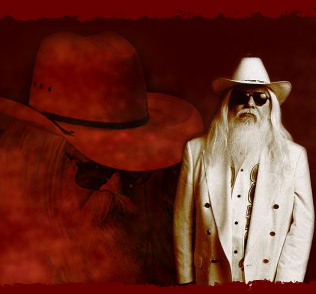
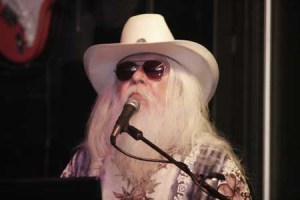
Leon RussellIl est l’un des plus grands artistes cultes de l’histoire de la musique. Excellent musicien de studio et ami intime, entre autres, de J.J. Cale et de George Harrison, il partagea en 1970 avec plus de 40 musiciens et choristes sur scéne la tournée americaine de Joe Cocker [MAD DOGS AND ENGLISHMEN ]; il participa en1971 au célèbre Concert for Bangladesh et sollicita l’aide de George pour ses chansons “Hummingbird” et “Shoot Out The Plantation” pour son disque “Leon Russell”, sorti le 24 avril 1970.

Il a fondé à Tulsa son propre studio d’enregistrement baptisé “the Church Recording Studio” repris depuis par Steve Ripley, son ancien ingénieur du son et fondateur du groupe country

LeonRussell2

Leon Russell

“the Tractors”.

Kenny Burrell Biographie

In Bio, Chitlins Con Carne on June 3, 2009 at 8:44 am

burrellNé à Detroit (Michigan), dans une famille de musiciens, Kenny Burrell apprend à jouer de la guitare sur l’instrument d’un de ses trois frères. Dès la fin des années quarante, le jeune autodidacte, qui écoute les disques de Charlie Christian et de Django Reinhardt, se produit dans les clubs locaux avec des vedettes de passage, avant de rejoindre l’orchestre de Dizzy Gillespie en 1951, puis de former son propre groupe. Parallèlement à ces activités, il se met à étudier la guitare classique et, en 1955, remplace Herb Ellis au sein du trio d’Oscar Peterson.

Excellent technicien et pur styliste dont l’art est fortement ancré dans le blues, Kenny Burrell, lorsqu’il s’installe à New York l’année suivante, est aussitôt sollicité pour de nombreuses séances d’enregistrements, notamment aux côtés du trompettiste Kenny Dorham, de l’organiste Jimmy Smith, des saxophonistes John Coltrane et Coleman Hawkins, ou du clarinettiste Benny Goodman, entre autres.

Sa connaissance de toutes les formes et de tous les styles de guitare l’autorise à participer à de nombreux spectacles new-yorkais ; il se produit ainsi à plusieurs reprises en trio au Village Vanguard (célèbre club de jazz de la ville), ainsi que dans la plupart des grands festivals mondiaux, où il revient régulièrement. Il est également professeur d’histoire du jazz à l’université de Los Angeles.

Des collaborations prestigieuses au service d’une guitare polymorphe

En dehors des albums sous son propre nom publiés par le label Blue Note (voir jazz, labels de), se détachent de son importante discographie ses collaborations avec Jimmy Smith — Back at the Chicken Shack (1960) et Midnight Special (1960) — et avec l’arrangeur Gil Evans — Guitar Forms (1965) —, sa participation au quintette de Bill Evans— Quintessence (1976) — et un hommage à Duke Ellington — Ellington Is For Ever (1975 pour le premier volume, 1977 pour le second).

Prodige de la mise en place rythmique, Kenny Burrell se distingue également par la finesse et la précision avec lesquelles il exécute de somptueuses lignes mélodiques, par la relative sagesse de ses improvisations d’où surgissent parfois d’intenses fulgurances et par un son plein et chaleureux. Il est incontestablement l’un des meilleurs guitaristes de cette génération formée à l’école du hard bop. (Extrait MSN Encarta)

Discographie (Rollingstone)


Charles Mingus – Bio

In Bio on April 4, 2009 at 1:26 pm

One of the most important figures in twentieth century American music, Charles Mingus was a virtuoso bass player, accomplished pianist, bandleader and composer. Born on a military base in Nogales, Arizona in 1922 and raised in Watts, California, his earliest musical influences came from the church– choir and group singing– and from “hearing Duke Ellington over the radio when [he] was eight years old.” He studied double bass and composition in a formal way (five years with H. Rheinshagen, principal bassist of the New York Philharmonic, and compositional techniques with the legendary Lloyd Reese) while absorbing vernacular music from the great jazz masters, first-hand. His early professional experience, in the 40’s, found him touring with bands like Louis Armstrong, Kid Ory and Lionel Hampton.

Eventually he settled in New York where he played and recorded with the leading musicians of the 1950’s– Charlie Parker, Miles Davis, Bud Powell, Art Tatum and Duke Ellington himself. One of the few bassists to do so, Mingus quickly developed as a leader of musicians. He was also an accomplished pianist who could have made a career playing that instrument. By the mid-50’s he had formed his own publishing and recording companies to protect and document his growing repertoire of original music. He also founded the “Jazz Workshop,” a group which enabled young composers to have their new works performed in concert and on recordings.

Mingus soon found himself at the forefront of the avant-garde. His recordings bear witness to the extraordinarily creative body of work that followed. They include: Pithecanthropus Erectus, The Clown, Tijuana Moods, Mingus Dynasty, Mingus Ah Um, The Black Saint and the Sinner Lady, Cumbia and Jazz Fusion, Let My Children Hear Music. He recorded over a hundred albums and wrote over three hundred scores.
Although he wrote his first concert piece, “Half-Mast Inhibition,” when he was seventeen years old, it was not recorded until twenty years later by a 22-piece orchestra with Gunther Schuller conducting. It was the presentation of “Revelations” which combined jazz and classical idioms, at the 1955 Brandeis Festival of the Creative Arts, that established him as one of the foremost jazz composers of his day.

In 1971 Mingus was awarded the Slee Chair of Music and spent a semester teaching composition at the State University of New York at Buffalo. In the same year his autobiography, Beneath the Underdog, was published by Knopf. In 1972 it appeared in a Bantam paperback and was reissued after his death, in 1980, by Viking/Penguin and again by Pantheon Books, in 1991. In 1972 he also re-signed with Columbia Records. His music was performed frequently by ballet companies, and Alvin Ailey choreographed an hour program called “The Mingus Dances” during a 1972 collaboration with the Robert Joffrey Ballet Company.

He toured extensively throughout Europe, Japan, Canada, South America and the United States until the end of 1977 when he was diagnosed as having a rare nerve disease, Amyotropic Lateral Sclerosis. He was confined to a wheelchair, and although he was no longer able to write music on paper or compose at the piano, his last works were sung into a tape recorder.

From the 1960’s until his death in 1979 at age 56, Mingus remained in the forefront of American music. When asked to comment on his accomplishments, Mingus said that his abilities as a bassist were the result of hard work but that his talent for composition came from God.

Mingus received grants from the National Endowment for the Arts, The Smithsonian Institute, and the Guggenheim Foundation (two grants). He also received an honorary degree from Brandeis and an award from Yale University. At a memorial following Mingus’ death, Steve Schlesinger of the Guggenheim Foundation commented that Mingus was one of the few artists who received two grants and added: “I look forward to the day when we can transcend labels like jazz and acknowledge Charles Mingus as the major American composer that he is.” The New Yorker wrote: “For sheer melodic and rhythmic and structural originality, his compositions may equal anything written in western music in the twentieth century.”

He died in Mexico on January 5, 1979, and his ashes were scattered in the Ganges River in India. Both New York City and Washington, D.C. honored him posthumously with a “Charles Mingus Day.”

After his death, the National Endowment for the Arts provided grants for a Mingus foundation called “Let My Children Hear Music” which catalogued all of Mingus’ works. The microfilms of these works were then given to the Music Division of the New York Public Library where they are currently available for study and scholarship – a first for jazz. Repertory bands called the Mingus Dynasty, Mingus Orchestra and the Mingus Big Band continue to perform his music. Biographies of Charles Mingus include Mingus by Brian Priestley; Mingus/Mingus by Janet Coleman and Al Young and Myself When I Am Real, by Gene Santoro.

Mingus’ masterwork, “Epitaph,” a composition which is more than 4000 measures long and which requires two hours to perform, was discovered during the cataloguing process. With the help of a grant from the Ford Foundation, the score and instrumental parts were copied, and the piece itself was premiered by a 30-piece orchestra, conducted by Gunther Schuller, in a concert produced by Sue Mingus at Alice Tully Hall on June 3, 1989, ten years after Mingus’ death.

The New Yorker wrote that “Epitaph” represents the first advance in jazz composition since Duke Ellington’s “Black, Brown, and Beige,” which was written in 1943. The New York Times said it ranked with the “most memorable jazz events of the decade.” Convinced that it would never be performed in his lifetime, Mingus called his work “Epitaph,” declaring that he wrote it “for my tombstone.”

The Library of Congress was presented with the Charles Mingus Collection in 1993, including autographed manuscripts, photographs, literary manuscripts, correspondence, and tape recordings of interviews, broadcasts, recording sessions, and Mingus composing at the piano.

Reprinted from More than a Fake Book © 1991 Jazz Workshop, Inc.

Wikipedia entry

The Jody Grind (Horace Silver)

In Bio, The Jody Grind on April 2, 2009 at 12:33 pm

Silver’s bands, like Art Blakey’s, served — and is still serving — as one of the great training grounds for young jazz musicians in the ’60s. “The Jody Grind” features a youthful Woody Shaw joining his brash trumpet sound with the fiery James Spaulding on alto and flute and the forgotten (unfortunately) Tyrone Washington, who contributes a hard-edged tenor. Silver, as usual, composed all the tunes, and nearly all of them are memorable.

Silver is a master at stripping melodies and rhythms down to their essentials. But that doesn’t mean that his tunes are simplistic. For example, the great “Mexican Hat Dance,” as the title suggests, cooks up a spicy Latin beat that is very hummable. After you listen to it a few times, though, you realize that the infectious melody is composed of some tricky twists and turns that the horn players negotiate flawlessly.

Jacques de Lignières – Bio

In Bio, Nostalgia in Funky Time on March 26, 2009 at 12:22 am

A propos de Jacques de Lignières
JdL Quartet se produit dans plusieurs clubs parisiens (le Petit Journaljdl Montparnasse, le Franc Pinot, Autour de Midi …) et dans quelques festivals (Jazz à St Piat, May Jazz, Jazz au Confluent…) avec Claudine François au piano, actuellement Olivier Léger, Stéphane Benveniste à la contrebasse, puis Xavier Barloy, actuellement Hervé Czak , Bertrand Perrin à la batterie, actuellement Serge Lamboley, et toujours JdL ! Mais également avec des guest stars : Bobby Few, Frédéric Delestré…

JdL Quartet en concert à Conflans…
…Le sax alto se vit dans le jazz à l’ombre de l’oiseau Parker, dont la pyrotechnie aérienne est devenue la référence absolue et incontournable des altistes. Or, il existe au moins une autre voie, celle tracée par le moins connu Art Pepper, musicien californien dont la vie tourmentée se reflète dans un timbre fragile, voire écorché mais dynamique, qui le rapprocherait d’une forme expressioniste. C’est plutôt dans cette direction que se pencherait Jacques de Lignières, un musicien dont le style, de prime abord détendu à la limite de la nonchalance, révèle vite un goût pour les tensions, et une envie de la note et de la phrase qui en dit plus sur la vie intérieure… On y entend pousser jusqu’à la plainte, celle qui puise dans le langage du blues. Sa composition Temps incertain est exemplaire de cette dualité. Sur un rythme à la légèreté façon habañera se déploie un thème sur fond de canevas harmonique aux changements déstabilisants comme le suggère le titre.
La référence à Pepper, on la retrouve explicitement dans la reprise d’un lancinant blues en 5 temps, Las Cuevas de Mario (Pepper’s Caves). Déjouant la difficulté du métrique, la solide assise rythmique fournie par Hervé Czak à la contrebasse permet au pianiste Olivier Léger de développer son jeu puissant au son perlé dans de belles envolées.
JdL est un arpenteur de la culture musicale, bien au-delà des confins des grands standards : il n’hésite pas à s’inspirer, par exemple, d’un Prélude de Chopin pour en extraire une “jazz waltz”: Lost Prelude, chargée d’émotion ; ou encore à nous convier à partager un bon couscous modal et « caravanesque » à souhait dans l’ambiance d’un bon petit resto nord africain : l’écriture d’Hotel de la Gare vient d’un temps où JdL s’y produisait souvent à Paris… On y met le cap plein sud, darbouka à l’appui, pour un voyage où Serge Lamboley peut donner libre court à son imagination et sa maitrîse des polyrhythmies.
Enfin, JdL est un musicien généreux et ouvert, comme en témoigne l’énergie qu’il consacre depuis deux ans maintenant à l’initiative Jazz au Confluent, une association de bénévoles qui organise tous les ans une quinzaine de concerts de qualité à entrée libre.
Alan Fell

Vous avez dit “Hard Bop”?

In Bio, History on March 25, 2009 at 12:37 am

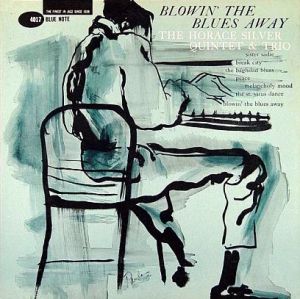
bluesawayLe hard bop prend source dans un mouvement de reconnaissance par les noirs américains de leurs origines, appelé Black is beautiful (« Le Noir est beau ») : un retour aux sources de la musique, à l’Afrique et, en même temps, une réaction agressive (musicalement parlant) au cool jazz (d’où le terme « hard ») surtout dominé par les blancs. L’auteur américain David Rosenthal nota aussi que le hard bop était un développement naturel pendant une époque où des musiciens d’envergure (Tadd Dameron, par exemple) travaillaient et dans le jazz et dans le rhythm and blues.

Même si la plupart des acteurs de ce courant ont fait leur apprentissage dans le style bebop (d’où le terme « bop »), ce genre musical incorpore les influences du rhythm and blues, du blues et du gospel, notamment dans les jeux du piano et du saxophone.

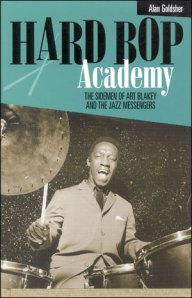
Les morceaux de hard bop ont généralement un tempo plus lent que le bebop, et si le hard bop en reprend les innovations harmoniques, la part du rythme y est nettement plus marquée, sans doute en raison de la contribution majeure des batteurs Max Roach et Art Blakey. On y découvre d’ailleurs pour la première fois des batteurs compositeurs.

Le hard bop est généralement pratiqué par un quintet composé d’une section rythmique (pianiste, batteur et bassiste) et de deux “soufflants” — communément un saxophoniste ténor et un trompettiste — qui interprètent ensemble un thème entourant une série de solos improvisés tour à tour par chacun des musiciens sur l’harmonie du morceau.


Évolution

hardb

Une première apparition des caractéristiques du hard bop se reconnaît dans le quintette fondé en 1954 par le batteur Max Roach et le trompettiste Clifford Brown, rejoints en 1955 par le saxophoniste ténor Sonny Rollins. Toutefois, on considère que le premier représentant de ce style fut le groupe des Jazz Messengers créé par le batteur Art Blakey et le pianiste Horace Silver en 1955. Ce dernier formera en 1956 son propre quintette.

En 1955 également, le trompettiste Miles Davis embaucha le saxophoniste John Coltrane (Sonny Rollins ayant décliné l’invitation) dans son quintet, au côté de Red Garland (piano), Paul Chambers (basse) et Philly Joe Jones (batterie). À cette époque, Coltrane était encore un musicien inconnu.

En 1957, c’est au tour de Sonny Rollins de créer son ensemble — dans lequel on retrouvait Silver, Monk, Chambers — et d’inaugurer l’apparition du trombone dans le hard bop avec Jay Jay Johnson.

Blue Note et Prestige sont les principaux labels qui produisirent des groupes de hard bop et, pendant cette période, le graphisme des pochettes d’albums évolua fortement.

Le soul jazz se développa à partir du hard bop. Le saxophoniste alto Jackie McLean réussit une fusion du hard bop et du jazz modal pendant les années 60 et celles qui suivirent.


Quelques Hard Bopers…

Pepper Adams • Cannonball Adderley • Nat Adderley • Gene Ammons  • Dave Bailey • Donald Bailey • Ray Barretto • Kenny Barron • George Benson • Art Blakey • Joanne Brackeen • Nick Brignola • Tina Brooks • Clifford Brown • Ray Brown • Ray Bryant • Rusty Bryant • Kenny Burrell • Frank Butler • Don Byas • Donald Byrd • Conte Candoli • Paul Chambers • Ray Charles • Sonny Clark • Kenny Clarke • Jimmy Cleveland • Jimmy Cobb • Ornette Coleman • John Coltrane • Junior Cook • Bob Cooper • Curtis Counce •  Sonny Criss • Miles Davis • Walter Davis, Jr. • Lou Donaldson • Kenny Dorham • Kenny Drew • Teddy Edwards • Booker Ervin • Art Farmer • Tommy Flanagan • Ricky Ford • Frank Foster • Curtis Fuller • John Gilmore • Benny Golson • Dexter Gordon • Wardell Gray • Benny Green • Grant Green • Johnny Griffin • Gigi Gryce • Herbie Hancock • Roy Hargrove • Barry Harris • Eddie Harris • Louis Hayes • Jimmy Heath • Joe Henderson • Billy Higgins • Elmo Hope • Freddy Hubbard • Bobby Hutcherson • Milt Jackson • The Jazz Crusaders • The Jazz Lab • The Jazztet •  J.J. Johnson • Elvin Jones • Hank Jones • Philly Joe Jones • Clifford Jordan • Duke Jordan • Wynton Kelly • Harold Land • Jake Langley • Victor Lewis • Lighthouse All-Stars • Erica Lindsay • Melba Liston Les McCann • Jackie McLean • Charles Mingus • Blue Mitchell • Hank Mobley • T.S. Monk • Thelonious Monk • J.R. Monterose • Wes Montgomery • Ralph Moore • Lee Morgan • David “Fathead” Newman • Horace Parlan • Duke Pearson • Houston Person • Bud Powell • Ike Quebec • Freddie Redd • Dizzy Reece • Jerome Richardson • Max Roach • Sonny Rollins • Frank Rosolino • Charlie Rouse • Tom Scott • Woody Shaw • Travis Shook • Wayne Shorter • Horace Silver • Jimmy Smith • Lonnie Smith • Marvin “Smitty” Smith • Mike Smith • Sonny Stitt • Art Taylor • Clark Terry • The Three Sounds • Bobby Timmons • Stanley Turrentine • Tommy Turrentine • Cedar Walton • Doug Watkins • Mark Whitfield • Richard Williams • Larry Young.

Spyro Gyra – Morning Dance

In Bio, Morning Dance on March 21, 2009 at 7:26 pm

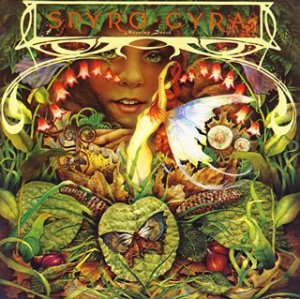
Spyro Gyra est un groupe américain de jazz-rock fusion formé au début des années 1970 dans la ville de Buffalo, dans l’état de New York. Il a connu de nombreuses versions différentes, les seuls membres actuels issus de la formation d’origine étant le saxophoniste alto Jay Beckenstein et le pianiste/claviériste Tom Schuman. Ils sont actuellement épaulés par le guitariste Julio Fernandez, le bassiste Scott Ambush et le

morning-dance batteur/percussionniste Bonny Bonaparte. Avec plus de 25 albums au compteur et 10 millions de copies vendues, ils forment l’un des groupes de jazz fusion les plus vendeurs aux États-Unis. Leur musique combinant jazz et éléments de funk, R&B ou pop (avec quelques influences caribéennes notables), ils sont de ce fait considérés comme l’un des groupes ayant forgé le son du smooth jazz, ce qui leur vaudra parfois les critiques de puristes qui leur reprocheront leur approche trop mélodique et donc leur manque d’improvisation, cas classique de tous les artistes ou groupes appartenant à ce genre. Toutefois, ils sont reconnus comme des musiciens de talent, notamment pour leurs prestations live et accumulent les récompenses aux Grammy Awards, aussi bien dans les catégories Jazz fusion, Pop instrumentale que R&B instrumental.

Joe Henderson – Bio

In Bio on March 4, 2009 at 11:15 pm
Joe Henderson

Joe Henderson


Joe Henderson

Tenor Saxophone
April 24, 1937 — June 30, 2001

“Joe Henderson is always in the middle of a great solo.”

–Richard Cook & Brian Morton

Joe Henderson was born in Lima, Ohio, on April 24, 1937. Lima is fifty miles south of Toledo, Ohio, sixty miles north of Dayton, Ohio, sixty miles east of Ft. Wayne, Indiana, and about a hundred and twenty miles from Detroit–which is probably the reason why Joe went to Detroit to live and study.

He finished high school in Lima, and gives credit to a home town drummer, John Jarette, who advised him to listen to Charlie Parker, among others. Getz was the one who got through to him first because of his sound, taste and simplicity; however, later, Charlie Parker became his great inspiration.

There were a couple of piano players around Lima who gave him a working knowledge of the piano, namely Richard Patterson and Don Hurless. They were older fellows who went to school with his older brothers and sisters. Incidentally, there were fifteen brothers and sisters, and there being no night baseball or T.V., this might have possibly accounted for such a large family.

Joe’s first saxophone teacher, Herbert Murphy, was responsible for his embryonic understanding of the instrument. Joe was still in high school, and he did quite a bit of writing for the school concert band and also for various “rock” groups that came through Lima.

“My older brother James T. encouraged me to go to college to cultivate the talent he thought I had. I went to Kentucky State College for one year, then to Wayne University in Detroit where I met Yusef Lateef, High Lawson, Donald Byrd and all the other motor city musicians.”

In Detroit, Joe studied with Larry Teal at the Teal School of Music, learning theory, harmony and the finer points of saxophone playing. He also studied flute and string bass at Wayne University. During the latter part of 1959, he formed his own group. Prior to his army induction, he was commissioned by “UNAC,” an organization similar to NAACP or the Urban League, to do a suite called “Swing and Strings” which showcased some originals arranged by him, played by an orchestra comprised of ten members from the Detroit Symphony Orchestra combined with the local dance band of Jimmy Wilkins, the brother of Ernie Wilkins.

1960 found Joe Henderson in the United States Army Band at Fort Benning, GA. He had competed in the army talent show and won first place with a 4 piece combo, which qualified him for the all army entertainment contest. Later he was chosen at Fort Belvoir, Virgina, to tour with a show around the world to entertain troops. This tour led him to Okinawa, Korea, Japan, Panama, Italy, Spain, Germany, France, England and other countries. While in Paris, he sat in with Kenny Clarke and Kenny Drew.

In the late summer of 1962, a bearded young 25 year old tenor saxophonist, slight of build, with might in his fingers, rolled into New York town in a sleek black Mercedes-Benz. He was just discharged from the United States Army in Maryland where he had concluded a two year hitch. The first stop was at a party at a friend’s place (saxophonist Junior Cook) where I was introduced to this bearded, goateed astronaut of the tenor sax. Later I suggested that we go down to see Dexter Gordon who was headlining the Birdland Monday night “Jazz Jamboree.” Boarding the “A” train, we were at 52nd Street and Broadway some twenty five minutes later. Once inside Birdland, Henderson was introduced to one of the “swingingest swingers” in jazzdom’s history, Dexter Gordon. “Long Tall Dexter” asked the young man if he’d like to play some.

Minutes afterward, the musical astronaut was on the launching pad, and the count down was in progress with a three man crew (rhythm section) behind him. There was a thunderous (Art Blakey type) roar from the battery man, and the saxophonist was off and soaring his (lyrical) way to new heights on a Charlie Parker blues line. At the end of the chorus (and I do mean 15 to 20), there was a warm and exhilarating applause for Joe, and as for Dex, sitting on the side, he looked “gassed.”

Here’s hoping that the young gentleman from Lima, Ohio, can cash in on all of his wonderful talents–his arranging, composing and tenor “saxophoning” extraordinary. Here’s hoping that his skies remain blue and his horizon clear, and that he receives his due, and that all who hear him will support the boy from “Soulsville.”

–KENNY DORHAM, from the liner notes,
Page One, Blue Note.


A selected discography of Joe Henderson albums.

  • Page One, 1963, Blue Note.
  • Our Thing, 1963, Blue Note.
  • In ‘n Out, 1964, Blue Note.
  • Inner Urge, 1964, Blue Note.
  • Mode For Joe, 1966, Blue Note.
  • Relaxin’ at Camarillo, 1979, Contemporary.
  • Lush Life, 1991, Verve.

from: http://hardbop.tripod.com/henderson.html

Charlie Mingus – Discography

In Bio on March 4, 2009 at 1:23 pm

As bandleader

  • Baron Mingus – West Coast 1945-49 (1949, Uptown)
  • Strings and Keys (duo with Spaulding Givens) (1951, Debut)
  • The Young Rebel (1952, Swingtime)
  • The Charles Mingus Duo and Trio (1953, Fantasy)
  • Charles Mingus Octet (1953, Debut)
  • The Moods of Mingus (1954, Savoy)
  • The Jazz Experiments of Charles Mingus (1954, Bethlehem)
  • Jazzical Moods (1954, Bethlehem)
  • Mingus at the Bohemia (1955, Debut)
  • The Charles Mingus Quintet & Max Roach (1955, Debut)
  • Pithecanthropus Erectus (1956, Atlantic)
  • The Clown (1957, Atlantic)
  • The Jazz Experiments of Charles Mingus (1957)
  • Mingus Three (1957, Jubilee)
  • East Coasting (1957, Bethlehem)
  • A Modern Jazz Symposium of Music and Poetry (1957, Bethlehem)
  • Blues & Roots (1959, Atlantic)
  • Mingus Ah Um (1959, Columbia)
  • Mingus Dynasty (1959, Columbia)
  • Jazz Portraits: Mingus in Wonderland (1959, United Artists)
  • Pre Bird (1960, Mercury)
  • Mingus at Antibes (1960, Atlantic)
  • Charles Mingus Presents Charles Mingus (1960, Candid)
  • Reincarnation of a Love Bird (1960, Candid)
  • Tonight at Noon (1961, Atlantic)
  • Vital Savage Horizons (1962, Alto)
  • Tempo di Jazz (1962, Tempo di Jazz)
  • Town Hall Concert (1962, Blue Note)
  • Oh Yeah (1962, Atlantic)
  • Tijuana Moods (1962, RCA)
  • The Black Saint and the Sinner Lady (1963, Impulse!)
  • Mingus Mingus Mingus Mingus Mingus (1963, Impulse!; sometimes referred to as Five Mingus)
  • Mingus Plays Piano (1963, Impulse!)
  • Soul Fusion (1963, Pickwick live)
  • Revenge! (live 1964 performance with Eric Dolphy, 32 Jazz; previously issued by Prestige as The Great Paris Concert)
  • Town Hall Concert (1964, Fantasy)
  • Concertgebouw Amsterdam, Vol. 1 (1964, Ulysse Musique)
  • Charles Mingus Live In Oslo 1964 Featuring Eric Dolphy (1964, Jazz Up)
  • Charles Mingus Sextet Live In Stockholm 1964 (1964, Royal Jazz)
  • Charles Mingus Sextet Live In Europe (1964, Unique Jazz)
  • The Great Concert Of Charles Mingus (1964, America)
  • Charles Mingus Sextet with Eric Dolphy CORNELL March 18 1964 (2007, Blue Note)
  • Mingus In Europe (1964, Enja)
  • Mingus In Stuttgart, April 28, 1964 Concert (1964, Unique Jazz)
  • Right Now: Live At The Jazz Workshop (1964, Fantasy)
  • Mingus At Monterey (1964, Mingus JWS)
  • Music Written For Monterey 1965. Not Heard… Played In Its Entirety At UCLA, Vol. 1&2 (1965, Mingus JWS)
  • Charles Mingus – Cecil Taylor (1966, Ozone)
  • Statements (1969, Joker)
  • Paris TNP (1970, Ulysse Musique)
  • Charles Mingus Sextet In Berlin (1970, Beppo)
  • Charles Mingus (1971, Columbia)
  • Charles Mingus And Friends In Concert (1972, Columbia)
  • Charles Mingus Quintet Featuring Dexter Gordon (1972, White Label)
  • Let My Children Hear Music (1972, Columbia)
  • Passions of a Man (1973, Atlantic)
  • Mingus At Carnegie Hall (1974, Atlantic)
  • Changes One (1974, Atlantic)
  • Changes Two (1974, Atlantic)
  • Mingus Moves (1974, Atlantic)
  • Village Vanguard 1975 (1975, Blue Mark Music)
  • The Music Of Charles Mingus (1977, Bayside)
  • Stormy & Funky Blues (1977)
  • Cumbia & Jazz Fusion (1977, Atlantic)
  • Three or Four Shades of Blues (1977)
  • His Final Work (1977)
  • Something Like a Bird (1979, Atlantic) (Mingus does not play on this session)
  • Me, Myself An Eye (1979, Atlantic) (Mingus does not play on this session)
  • Epitaph (1990, Columbia) (Mingus does not play on this session)
  • Mingus Mysterious Blues (1990, Candid) (Mingus does not play on this session)


As a sideman

  • Robbins’ Nest (with Illinois Jacquet) (1945, Toho)
  • Mellow Mama (with Dinah Washington) (1945, Delmark)
  • Hot Piano (with Wilbert Baranco) (1946, Tops)
  • Ivie Anderson and Her All Stars (with Ivie Anderson) (1946, Storyville)
  • Lionel Hampton and His Orchestra 1948 (with Lionel Hampton) ((1948, Weka)
  • Lionel Hampton in Concert (with Lionel Hampton) ((1948, Cicala Jazz)
  • The Red Norvo Trio (with Red Norvo) (1951, Savoy)
  • Move (with Red Norvo) (1951, Savoy)
  • Miles Davis at Birdland 1951 (with Miles Davis) (1951, Beppo)
  • Jazz in Storyville (with Billy Taylor) (1951, Roost)
  • The George Wallington Trios Featuring Charles Mingus, Oscar Pettiford, Max Roach (1952, Prestige)
  • Spring Broadcasts 1953 (with Bud Powell) (1953, ESP)
  • Inner Fires (with Bud Powell) (1953, Electra/Musician)
  • Jazz at Massey Hall (aka. The Greatest Jazz Concert Ever) (with Charlie Parker) (1953, Debut)
  • Introducing Paul Bley (with Paul Bley) (1953, Debut)
  • Explorations (with Teo Macero) (1953, Debut)
  • The New Oscar Pettiford Sextet (with Oscar Pettiford) (1953, Debut)
  • Ada Moore (with Ada Moore) (1954, Debut)
  • Mad Bebop (with J.J. Johnson) (1954, Savoy)
  • The Eminent J.J. Johnson (with J.J. Johnson) (1954, Blue Note)
  • Evolution (with Teddy Charles) (1955, Prestige)
  • Relaxed Piano Moods (with Hazel Scott) (1955, Debut)
  • The John Mehegan Trio/Quartet (with John Mehegan) (1955, Savoy)
  • Very Truly Yours (with Jimmy Scott) (1955, Savoy)
  • The Fabulous Thad Jones (with Thad Jones) (1955, Debut)
  • New Piano Expressions (with John Dennis) (1955, Debut)
  • Easy Jazz (with Ralph Sharon) (1955, London)
  • Blue Moods (with Miles Davis) (1955, Prestige)
  • The Word from Bird (with Teddy Charles) (1956, Atlantic)
  • New Faces (with Jimmy Knepper) (1957, Debut)
  • Money Jungle (with Duke Ellington and Max Roach) (1962, Blue Note)