funics

Archive for the ‘Partitions’ Category

Morning Dance (Spyro Gyra/Jay Beckenstein)

In Album, Morning Dance on February 21, 2009 at 3:44 pm

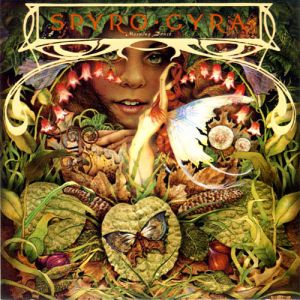
Morning Dance is the title of the second studio album by  Spyro Gyra, released in 1979. The album cover shows an intricate and detailed colour illustration of a woodland scene with dancing fairies and other insects, being spied upon by a young woman.

Morning Dance is Spyro Gyra’s most commercially successful album. The title cut became a major radio hit (Billboard #24 pop, #1 adult contemporary.)

Spyro Gyra is an American jazz fusion band that was originally formed in the mid-1970s in Buffalo, New York, USA. With over 25 albums released and 10 million copies sold, they are among the most prolific as well as commercially successful groups of the scene. Among their most successful hit singles are “Shaker Song” and “Morning Dance”, which received significant play on popular music radio stations, and are still frequently heard nearly 30 years later on jazz and easy listening stations.

Their music, which has been influential in the development of smooth jazz, combines jazz with elements of R&B, funk and pop music. Although generally considered to be more “jazz” than “smooth”, Spyro Gyra have been praised as skilled instrumentalists and for their live performances, which average nearly 100 per year.

With the exception of alto saxophonist, songwriter & founding bandleader Jay Beckenstein and keyboardist Tom Schuman the personnel has changed somewhat over time as well as between the studio and the live stage.


Morning Dance Spyro Gyra

Morning Dance Spyro Gyra


Track listing and personnel

1. “Morning Dance” (Jay Beckenstein) – 4:11

  • Jay Beckenstein: Alto Saxophone
  • Jeremy Wall: Electric Piano
  • John Tropea: Electric and Acoustic Guitar
  • Jim Kurzforder: Bass
  • Ted Reinhardt: Drums
  • Rubens Bassini: Congas and Percussion
  • Dave Samuels: Marimba and Steel Drum

2. “Jubilee” (Jeremy Wall) – 4:31

  • Jay Beckenstein: Alto Saxophone
  • Jeremy Wall: Electric Piano & Synthesizers
  • John Tropea: Electric Guitar
  • Will Lee: Bass
  • Steve Jordan: Drums
  • Rubens Bassini: Congas & Percussion
  • Randy Brecker: Trumpet Solo
  • Dave Samuels : Marimba

3. “Rasul” (Jeremy Wall) – 3:57

  • Jay Beckenstein: Soprano and Tenor Saxophone
  • Jeremy Wall: Acoustic and Electric Piano
  • Rick Strauss: Guitar
  • Jim Kurzdorfer: Bass
  • Ted Reinhardt: Drums
  • John Clark: French Horn

4. “Song for Lorraine” (Jay Beckenstein) – 3:59

  • Jay Beckenstein: Soprano Saxophones
  • Tom Schuman: Electric and Acoustic Pianos
  • Chet Catallo: Guitar
  • Jim Kurzdorfer: Bass
  • Eli Konikoff: Drums
  • Gerardo Velez: Congas, Bongos, and Percussion
  • Suzanne Ciani: Synthesizers
  • Lani Groves, Diva Grey, Gordon Grody: Vocalists

5. “Starburst” (Jeremy Wall) – 4:50

  • Jay Beckenstein: Tenor Saxophone (Intro)
  • Jeremy Wall: Electric Piano & Synthesizers
  • John Tropea: Guitar
  • Will Lee: Bass
  • Steve Jordan: Drums
  • Rubens Bassini: Congas, Timbales & Percussion
  • Michael Brecker: Tenor Saxophone Solo

6. “Heliopolis” (Jay Beckenstein) – 5:34

  • Jay Beckenstein: Tenor Saxophone (Intro)
  • Jeremy Wall: Electric Piano & Synthesizers
  • John Tropea: Guitar
  • Will Lee: Bass
  • Steve Jordan: Drums
  • Rubens Bassini: Congas, Timbales & Percussion
  • Dave Samuels: Marimba
  • Tom Schuman: Rhodes solo

7. “It Doesn’t Matter” (Chet Catallo) – 4:27

  • Jay Beckenstein: Soprano Saxophones
  • Tom Schuman: Electric and Acoustic Pianos
  • Chet Catallo: Guitar
  • Jim Kurzdorfer: Bass
  • Eli Konikoff: Drums
  • Suzanne Ciani: Synthesizer
  • Jeremy Wall: Synthesizer
  • Gerardo Velez: Congas
  • Lani Groves, Diva Grey, Gordon Grody: Vocalists

8. “Little Linda” (Jeremy Wall) – (4:27)

  • Jay Beckenstein: Alto Saxophone
  • Jeremy Wall: Electric Piano, Acoustic Piano and Percussion
  • Rick Strauss: Guitar
  • Jim Kurzdorfer: Bass
  • Ted Reinhardt: Drums
  • Rubens Bassini: Bongos and Percussion
  • Dave Samuels: Vibraphone

9. “End of Romanticism” (Rick Strauss) – 5:00

  • Jay Beckenstein: Soprano Saxophone
  • Jeremy Wall: Electric Piano
  • Rick Strauss: Electric & 12-String Guitar
  • Jim Kurzdorfer: Bass
  • Ted Reinhardt: Drums
  • David Samuels: Marimba
  • Tom Schuman: Synthesizers Solos
  • John Clark: French Horn


Caravan (Duke Ellington)

In Album, Caravan on February 21, 2009 at 11:35 am

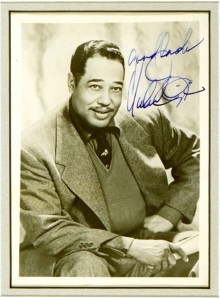
duke-ellington

Caravan” composed by Juan Tizol and first performed by Duke Ellington in 1937. Tizol also composed “Perdido” for the Ellington band. The lyrics were written by Irving Mills, but as many versions are instrumental he is sometimes not listed. The song is variously seen as the first Latin jazz song or as a Mideastern influenced jazz song. Its “exotic” sound made it of interest to Exotica musicians so it was covered by both Martin Denny and Arthur Lyman. It has appeared in two Woody Allen films, Alice and Sweet and Lowdown. Even rap musicians Redman and Busta Rhymes sampled the song heavily in their 1998 song “Da Goodness” (from Redman’s album Doc’s da Name 2000).


First version


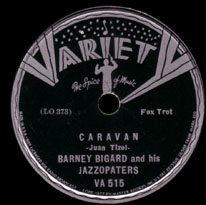
The first version of the song was recorded on December 19, 1936, performed by Barney Bigard And His Jazzopators in Hollywood. Two takes were recorded, of which the first (Variety VA-515-1) was published.

It is noteworthy that on the Barney Bigard 78 recording, the composer of the song is listed on the record label as “Juan Tizol”.

Performers:

  •  Cootie Williams (trumpet),
  •  Juan Tizol (trombone),caravan1
  • Barney Bigard (clarinet),
  • Harry Carney (baritone sax),
  • Duke Ellington (piano),
  • Billy Taylor (bass)
  • Sonny Greer (drums).


Canyon Lady (Joe Henderson)

In Album, Canyon Lady on February 21, 2009 at 9:52 am

joe-henderson

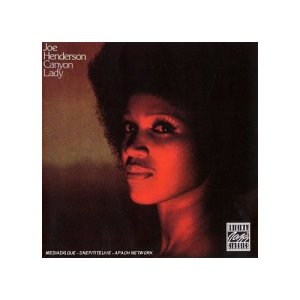
Speaking of charisma, Henderson brings a ton of it to 1973’s Canyon Lady. Many of the small, narrow minds who comprise the jazz media would have us believe that Henderson’s electric Milestone output of the 1970s was a waste, but in fact, the tenorist was a wealthy of creativity during that decade-and Canyon Lady is a fine example. Henderson brings Latin overtones to the haunting title song and his own “Las Palmas,” and his passionate playing on the ballad “Tres Palabras” has a rather Gato Barbieri-ish quality. Canyon Lady isn’t outright Latin jazz a la Cal Tjader or Tito Puente, but the Latin element is definitely there.

  • Audio CD (August 19, 1997)
  • Original Release Date: October 1973
  • Label: Ojc
  • ASIN: B000000Z3Y

Content:

  • Tres Palabras (10:09)
  • Las Palmas (9:56)
  • Canyon Lady (9:06)
  • All Things Considered (8:37)


Players:

  • Hadley Caliman – Flute, Sax (Tenor) 
  • George Duke – Bass, Percussion, Piano, Drums, Piano (Electric) 
  • Joe Henderson – Sax (Tenor), Remixing 
  • Mark Levine – Piano 
  • Julian Priester – Trombone 
  • Luis Gasca – Bass, Percussion, Piano, Trumpet, Arranger, Conductor, Drums, Flugelhorn 
  • John Heard – Bass 
  • Ray Pizzi – Flute 
  • Francisco Aguabella – Conga 
  • Oscar Brashear – Trumpet 
  • Nicholas Ten Broeck – Trombone 
  • Vince Denham – Flute 
  • Carmelo Garcia – Timbales 
  • Eric Gravatt – Drums 
  • John Heart – Bass 
  • John Hunt – Trumpet 
  • Victor Pantoja – Conga 
  • Jim Stern – Engineer

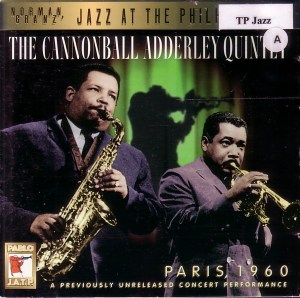
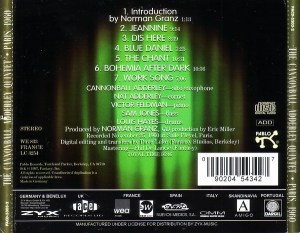
The Cannonball Adderley Quintet – Norman Granz’ Jazz At The Philharmonic: Paris, 1960l Adderley Quintet, The – Norman Granz’ Jazz At The Philharmonic: Paris, 1960 (Bohemia after Dark)

In Album, Bohemia After Dark on February 21, 2009 at 8:48 am
  • Label: Pablo Records

cannonb

  • Catalog#: PACD-5303-2
  • Format CD, Album
  • Country US
  • Released 1997

 Credits

  • Bass – Sam Jones 
  • Cornet – Nat Adderley 
  • Drums – Louis Hayes 
  • Piano – Victor Feldman 
  • Producer – Norman Granz 
  • Saxophone [Alto] – Cannonball Adderley

Notes : Recorded at Salle, Paris on Nov. 25, 1960. Previously unreleased. 
Total playing time: 56:46bohemia-back

Songs:


  • Introduction by Norman Granz
  • Jeannine
  • Dis Here
  • Blue Daniel
  • The Chant
  • Bohemia after Dark
  • Work Song

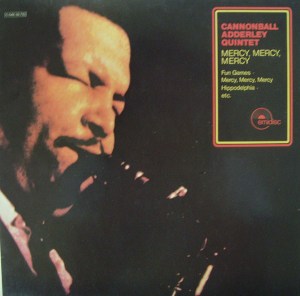
The Cannonball Adderley Quintet, – Mercy, Mercy, Mercy

In Album, Mercy Mercy Mercy on February 20, 2009 at 10:08 pm
  • Label: Emidisc (2), Capitol Recordsmercy
  • Catalog#: C 048-50 710, 1C 048-50 710
  • Format: Vinyl, LP, Album
  • Country: Germany
  • Style:  Soul-Jazz, Hard Bop

Credits:

Bass – Victor Gaskin 
Cornet – Nat Adderley 
Drums – Roy McCurdy 
Piano – Joe Zawinul 
Saxophone – Cannonball Adderley

Racklisting:

  • Introduction
  • Fun Written-By – Nat Adderley
  • Games   Written-By – Nat Adderley
  • Mercy, Mercy, Mercy   Written-By – Josef Zawinul*
  • Sticks Written-By – Julian Adderley*
  • Hippodelphia   Written-By – Josef Zawinul

  • Sack O´Woe  Written-By  Julian Adderley

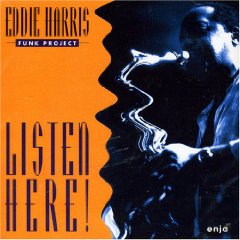
Listen Here – Eddie Harris

In Album, Bio, Listen Here on February 20, 2009 at 10:01 pm
  • Date de sortie d’origine: novembre 1992
  • Label: Enja
  • ASIN : B000025TZM

listenher1

Liste des titres

  • 1. Funkaroma
  • 2. I Need Some Money
  • 3. Listen Here Hi Life
  • 4. People Get Funny When They Get a Little Money
  • 5. Is It In?
  • 6. How Can I Find Some Way to Tell You
  • 7. Walkin’ the Walk
  • 8. Fusion Jazz Dance

Mercy Mercy Mercy

In Live, Mercy Mercy Mercy on February 10, 2009 at 10:10 pm

Guitare solo here


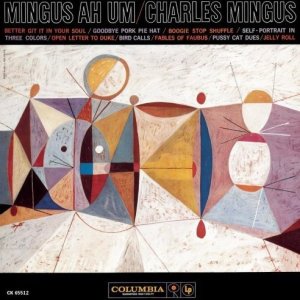
Charles Mingus – Ah Um – Goodbye Pork Pie Hat

In Album, Good Bye Pork Pie Hat on February 10, 2009 at 9:41 pm

Mingus Ah Um est un album de jazz signé Charles Mingus mis sur le marché en 1959. 

albumcovercharlesmingus-mingusahum

Il est le prolongement du mouvement

 d’évolution vers le bebop, puis le free-jazz, entammé avec Pithecanthropus Erectus 3 ans auparavant. Produit par Atlantic Records, cet album reste l’un des plus importants de Charles Mingus, et aura une influence majeure sur les artistes qui suivront.

Musiciens 

  • Contrebasse : Charles Mingus
  • Saxophone : Booker Ervin and John Handy
  • Trombone : Willie Dennis and Jimmy Knepper
  • Piano : Horace Parlan
  • Batterie : Dannie Richmond

Titres 

  • 1. Better git it in your soul
  • 2. Goodbye pork pie hat. (Hommage à Lester Young)
  • 3. Boogie stop shuffle
  • 4. Self-Portrait in three colors
  • 5. Open letter to duke
  • 6. Bird calls
  • 7. Fables of faubus
  • 8. Pussy cat dues
  • 9. Jelly roll
  • 10. Pedal point blues
  • 11. GG train
  • 12. Girl of my dreams

——————————————————————–

Autre label: Read the rest of this entry »

Thelonious Monk Blue Note Sessions (Well you Needn’t)

In Album, Well You Needn't on February 10, 2009 at 11:07 am

Jazz pianist Thelonious Monk’s first sessions as a bandleader were recorded between 1947 and 1952, and released on Blue Note records as a series of 78 RPM singles. These singles were then compiled in later years–with additional performances from the sessions–into long-playing album formats. As Monk’s reputation and fame grew, the sessions were recompiled again and again into more complete configurations. This article details various releases of these sessions.

monk_1967

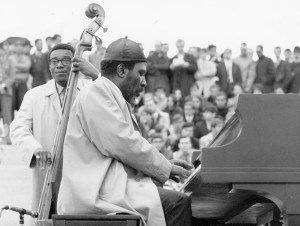
Thelonious Monk, foreground, performing at Expo 67in Montreal. (Credit: Library and Archives Canada)

The Sessions

The Blue Note recordings were made over the course of six different sessions. “Versions” refers only to the number of eventually-released performances; other takes may have been recorded.

All compositions by Thelonious Monk unless otherwise noted.

Session 1: October 15, 1947

1. Humph
2. Evonce (Idrees Sulieman – Ike Quebec) [2 versions]
3. Suburban Eyes (Ike Quebec) [2 versions]
4. Thelonious

Session 2: October 24, 1947

5. Nice Work If You Can Get It (G. Gershwin, I. Gershwin) [2 versions]
6. Ruby My Dear [2 versions]
7. Well You Needn’t [2 versions]
8. April In Paris (Vernon Duke – E. Y. Harburg) [2 versions]
9. Off Minor
10. Introspection

Session 3: November 21, 1947

11. In Walked Bud
12. Monk’s Mood
13. Who Knows? [2 versions]
14. ‘Round Midnight

Session 4: July 2, 1948

15. Evidence
16. Misterioso [2 versions]
17. Epistrophy (T. Monk – Kenny Clarke)
18. I Mean You
19. All The Things You Are (Jerome Kern – Oscar Hammerstein)
20. I Should Care (Cahn – Stordahl – Weston)[2 versions]

Session 5: July 23, 1951

21. Four in One [2 versions]
22. Criss Cross [2 versions]
23. Eronel (Monk – Sulieman – Hakim)
24. Straight, No Chaser
25. Ask Me Now [2 versions]
26. Willow Weep For Me (Ann Ronnell)


Session 6: May 30, 1952

27. Skippy [2 versions]
28. Hornin’ In [2 versions]
29. Sixteen [2 versions]
30. Carolina Moon (B. Davis – J. Burke)
31. Let’s Cool One
32. I’ll Follow You (R. Turk – F. Ahlert)

Personnel

  • Thelonious Monk – piano
  • Art Blakey – drums (sessions 1, 2, 3, 5)
  • Shadow Wilson – drums (session 4)
  • Max Roach – drums (session 6)
  • Gene Ramey – bass (session 1, 2)
  • Bob Paige – bass (session 3)
  • John Simmons – bass (session 4)
  • Al McKibbon – bass (session 5)
  • Nelson Boyd – bass (session 6)
  • Milt Jackson – vibraphone (4, 5)
  • Idrees Sulieman – trumpet (session 1)
  • George Taitt – trumpet (session 3)
  • Kenny Dorham – trumpet (session 6)
  • Danny Quebec West – alto saxophone (session 1)
  • Sahib Shihab – alto saxophone (sessions 3, 5)
  • Lou Donaldson – alto saxophone (session 6)
  • Billy Smith – tenor saxophone (session 1)
  • Lucky Thompson – tenor saxophone (session 6)
  • Kenny “Pancho” Hagood – vocal (session 4, songs 19 & 20)

Singles

Blue Note 78 rpm series (12 inch 78 rpm)

BN 543 Well, You Needn’t (BN314-0)/ ‘Round About Midnight (BN321-1) 


The Electrifying Eddie Harris (Album review) Listen Here

In Album, Listen Here on January 25, 2009 at 3:32 pm

harriselec

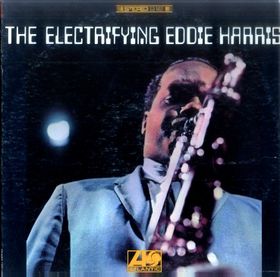
THE ELECTRIFYING EDDIE HARRIS:

Recorded in New York, New York on March 14-15, 1968.

Recorded at Atlantic Recording Studios, New York, New York on April 20, 1967. Includes original release liner notes by Ray Allen, this LP is one of tenor saxophonist Eddie Harris’s most significant albums. Rolling Stone called Eddie’s hit single Listen Here a space funk classic with it’s inventive use of electronic effects also features the groovy Sham Time and the incredible Theme In Search Of A Movie New exclusive liner notes by Mitch Myers audiophile Re mastering from the original master tapes 80 gram HQ vinyl & original artwork”


2 LPs
on 1 CD: THE ELECTRIFYING EDDIE HARRIS (1967)/PLUG ME IN.

Personnel:

Eddie Harris (tenor saxophone, electric saxophone); King Curtis, David Newman (tenor saxophone); Haywood Henry (baritone saxophone); Melvin Lastie, Joe Newman (trumpet); Jodie Christian (piano); Melvin Jackson (bass); Richard Smith (drums); Ray Barretto, Joe Wohletz (percussion).

Producer: Arif Mardin.
Engineer: Phil Iehle.

Personnel: Eddie Harris (electric tenor saxophone); Haywood Henry (baritone saxophone); Melvin Lastie, Jimmy Owens, Joe Newman, James Bossy (trumpet); Tom McIntosh, Garnet Brown (trombone); Jodie Christian (piano); Melvin Jackson, Ron Carter (bass); Chuck Rainey (electric bass); Richard Smith, Grady Tate (drums).

Producer: Joel Dorn.

Tracks:

  • Theme In Search Of A Movie
  • Listen Here
  • Judie’s Theme
  • Sham Time
  • Spanish Bull
  • I Don’t Want No One But You