The chords are: 4 x F- / 4 x Db7 / 4 x D- / 4 x F-
So, Cantaloupe island is only three chords, F- D- and Db7
For F- and D- , we can use the minor pentatonics or the dorian scales for each chord.
For Db7 , we can use Db mixolydian, or Ab minor pentatonic or Ab dorian.
For the solo, either use a straight Db7, or also a Db7+4 (lydian dominant) chord/scale (Db Eb F G Ab Bb Cb Db)
Or
Here’s a 1-scale approach derived from the melody:
The entire melody of this song is made of the f-blues scale (F-Ab-Bb-B-C-Eb). consequently you might stay with it while improvising. of course there are certain ‘clashes’ with some of the chords if you do this:
When it comes to Db7, we need to skip the C note (being the ^7 of Db7) or replacing it with Db note
When it comes to D-, there is a certain tension if you continue to play the f-blues scale – but it might work (alternatively you might switch to the d-blues scale for these 4 bars).
On stage: Jack DeJohnette, Pat Metheny, Dave Holland and Herbie Hancock
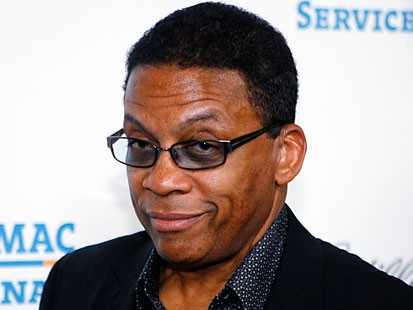
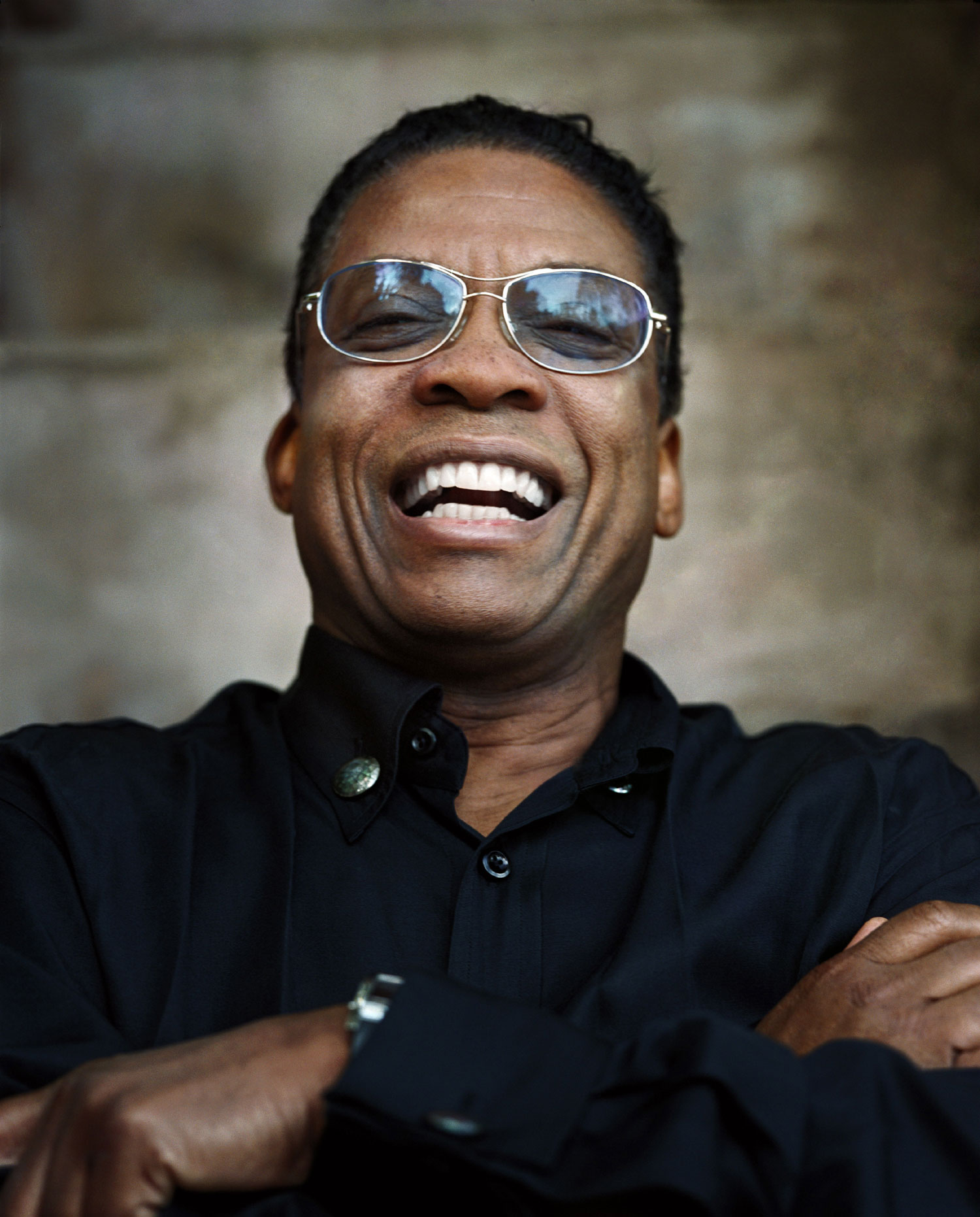
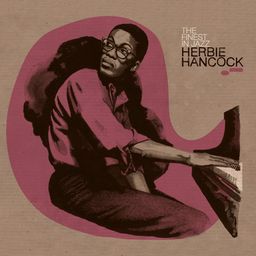
Herbert Jeffrey Hancock was born on April 12, 1940 in Chicago, Illinois and considered a prodigy as a child. When Herbie was eleven years old he performed a Mozart concerto with the Chicago Symphony Orchestra. Hancock began taking an interest in Jazz in his teens and transcribed records of Oscar Peterson and Bill Evans and also was into the vocal group the Hi-Lo’s. In his own words, “by the time I actually heard the Hi-Lo’s, I started picking that stuff out; my ear was happening. I could hear stuff and that’s when I really learned some much farther-out voicings -like the harmonies I used on ‘Speak Like a Child’ -just being able to do that. I really got that from Clare Fischer’s arrangements for the Hi-Lo’s. Clare Fischer was a major influence on my harmonic concept… He and Bill Evans, and Ravel and Gil Evans, finally. You know, that’s where it really came from. Almost all of the harmony that I play can be traced to one of those four people and whoever their influences were.” After high school Herbie attended Grinnell College where he double-majored in music and electrical engineering. Herbie quickly formed a reputation in Jazz in the 1960s performing with Donald Byrd, Coleman Hawkins, Oliver Nelson and Phil Woods and made his first album on Blue Note called ‘Takin’ Off’ in 1962.
Hancock’s first album caught the attention of Miles Davis and Herbie was asked to join his quintet in 1963 with Wayne Shorter, Ron Carter and Tony Williams. Some of the classic albums recorded by the quintet include ‘E.S.P.’, ‘Nefertiti’ and ‘Sorcerer’ and he also appeared on Davis’ albums ‘Bitches Brew’, ‘In a Silent Way’ and ‘Tribute to Jack Johnson’ among others. It was Miles who first introduced Herbie to the Fender Rhodes and began his interest in electronic keyboards. During the 1960s Hancock also made many albums under his own name including ‘Empyrean Isles’, ‘Maiden Voyage’, ‘Speak Like a Child’ and others. Herbie also began his career in film composing the score to the film Blow Up and in television by composing the soundtrack to the show Fat Albert and the Cosby Kids. In the 1970s Hancock began experimenting more with electronic instruments in Jazz and formed a group with Buster Williams, Billy Hart, Eddie Henderson, Julian Priester, Bennie Maupin, and Dr. Patrick Gleason. Albums this group made include ‘Mwandishi’, ‘Crossings’ and ‘Sextant’. These experimental albums led to the creation of one of Herbie’s most successful groups, The Headhunters, with Maupin, Bill Summers, Paul Jackson and Harvey Mason. The Headhunters were well received and their first album, ‘Head Hunters’, was the first Jazz album to go Platinum. By the mid 1970s Herbie was traveling around the world performing for stadium sized crowds. Hancock also continued with acoustic Jazz in the late ‘70s forming VSOP with the members of the Miles Davis Quintet minus Miles.
In the 1980s Herbie continued with VSOP II with Wynton and Branford Marsalis, Ron Carter and Tony Williams. In 1983 Hancock made an album with Bill Laswell called ‘Future Shock’ which went platinum and their hit song from that album “Rockit” won a Grammy for Best R&B Instrumental and the music video won five MTV awards. Their follow up album ‘Sound System’ also won a Grammy. In 1986 Herbie won an Oscar for his work scoring the film Round Midnight. Highlights for Herbie in 1990s include his Acid Jazz album ‘Dis Is Da Drum’ in 1994 followed by ‘The New Standard’ with an all star band that won a Grammy in 1996. In ’97 Hancock and Wayne Shorter recorded a duo album called ‘1+1’ and the following year The Headhunters reunited and went on tour with the Dave Matthews band. Herbie’s most celebrated achievement of this decade is by far his 2007 album ‘River: The Joni Letters’ with Joni Mitchell, Wayne Shorter, Lionel Loueke, Dave Holland and Vinnie Colauita. There many special guests on this album as well including Norah Jones, Tina Turner, Corrine Bailey Rae and Leonard Cohen. The album won a Grammy for Album of The Year and was the first Jazz album to do so in fifty years and only the second time ever a Jazz album has won the honors.
Herbie Hancock continues on making music and breaking barriers which only seem to exist for everyone except Herbie. The almost literally ageless Hancock has an unbelievable body of work and the thought that he is far from done is mind boggling. Herbie’s influence has reached nearly every genre of music in America and continues to simply make the music he wants to make in that moment without the rationalization that seems to hold back most others from reaching their potential. Herbie has won twelve Grammy Awards, an Oscar, NEA Jazz Masters Award, voted into the Down Beat Hall of Fame and so many others. I can’t wait to see what Herbie Hancock will do next.
“Practicing Buddhism has brought several revelations to me. One that has been extremely important to my own personal development and consequently my musical development — is the realization that I am not a musician. That’s not what I am. It’s what I do. What I am is a human being. Being a human being includes me being a musician. It includes my being a father, a husband, a neighbor, a citizen and an African-American. All of these relationships have to do with my existence on the planet.”
“Creativity and artistic endeavors have a mission that goes far beyond just making music for the sake of music.”
“Without wisdom, the future has no meaning, no valuable purpose.”
“Since time is a continuum, the moment is always different, so the music is always different.” – Herbie Hancock
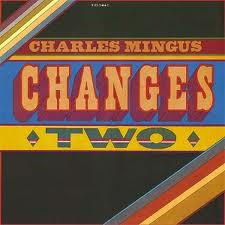
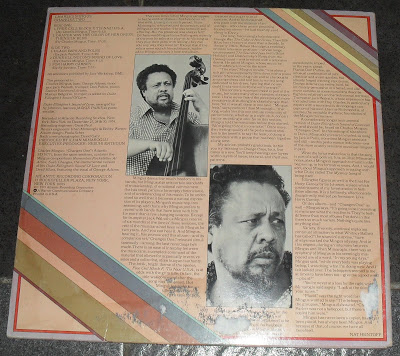
Charles Mingus. recorded Changes Two on 27, 28, and 30 December 1974 at Atlantic Studios in New York City — During the same sessions they recorded Mingus’ album Changes One. Accordingly, Atlantic Records initially released the record in 1975. Later in 1993, Rhino Records re-issued the album on CD.
“Duke Ellington’s Sound of Love” features vocals by Jackie Paris.
Tracks
All songs composed by Charles Mingus except where noted.
“Free Cell Block F, ‘Tis Nazi U.S.A.” – 6:56
“Orange Was the Color of Her Dress, Then Silk Blue” – 17:32
“Black Bats and Poles” (Jack Walrath) – 6:22
“Duke Ellington’s Sound of Love” – 4:15
“For Harry Carney” (Sy Johnson) – 7:59
Personnel
Charles Mingus – Bass
Jack Walrath – Trumpet
George Adams – Tenor saxophone
Don Pullen – Piano
Dannie Richmond – Drums
Marcus Belgrave – Trumpet on “Duke Ellington’s Sound of Love”
Jackie Paris – Vocals on “Duke Ellington’s Sound of Love”
Sy Johnson – Arranger on “Duke Ellington’s Sound of Love”
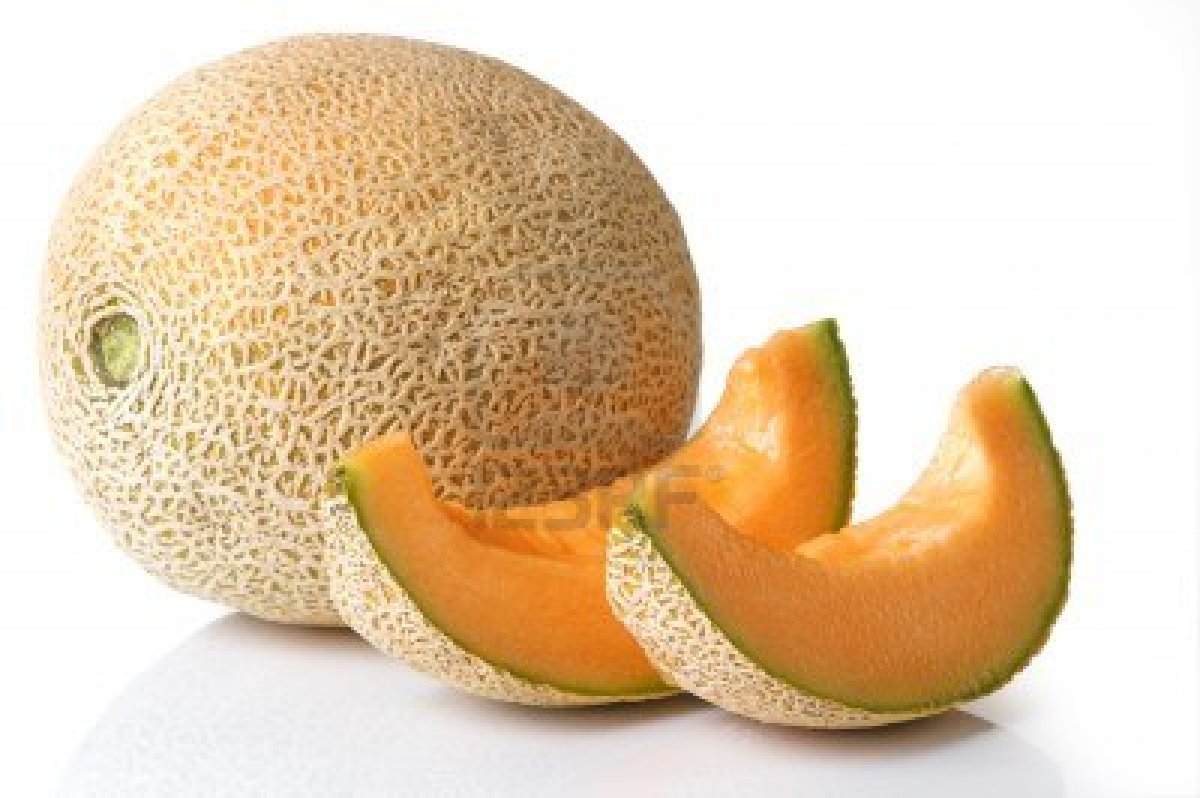
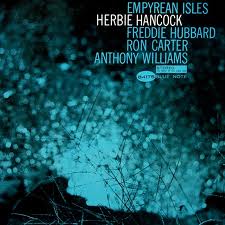
“Cantaloupe Island” is a jazz standard composed by Herbie Hancock and recorded for his 1964album Empyrean Isles during his early years as one of the members of Miles Davis’ 1960s quintet. It is one of the very first examples of a modal jazz composition set to funk style groove. The musicians for the original 1964 recording were: Hancock (piano), Freddie Hubbard (cornet), Ron Carter (bass) and Tony Williams (drums).
Empyrean Isles is the fourth album by American jazz pianist Herbie Hancock, recorded on June 17, 1964 for Blue Note Records. It features the debut of two of his most popular compositions, “One Finger Snap” and “Cantaloupe Island”.
From the original liner notes by Duke Pearson: “This is a quartet album for trumpet and rhythm section. In this circumstance, a problem was created for the composer-arranger, in that the lack of another instrument supporting the lower, richer register, such as a tenor saxophone, might result in a shallow sound. With this problem in mind, Herbie Hancock, who composed and arranged all the tunes, wrote them to sound more like improvisations than ensemble melodies, so that the warmth and fullness of a supporting melody would not be missed. Free sketches were written in such a way that each instrument is allowed great flexibility of interpretation. In many cases, no melodic line was laid out over the chords nor atonal clusters written, so that the trumpeter could supply any melody he wished.”
From the 1999 reissue liner notes by Bob Blumenthal: “If someone had ordered up a program that explored four distinct areas of jazz expression with equal brilliance, they could not have done better than Empyrean Isles. It is as if Hancock had set out to present ‘changes,’ modal, funk and free playing and delivered each at its apex.”
The album was recorded by Rudy Van Gelder.
One Finger Snap
This composition features a short melody played in unison (which is only used as an intro, an ending and to tie between solos), followed by a chord progression without a written melody, going straight to improvisation. The Real Book has the first chorus of Freddie Hubbard’s solo written as if it were the head.
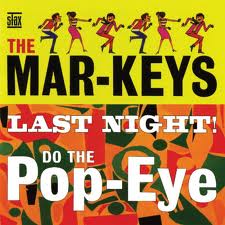
The Mar-Keys, formed in 1958, were an American studio session band for the Stax label from Memphis, Tennessee, in the 1960s. As the first house band for the label, their backing music formed the foundation for the early 1960s Stax sound.
The group began as The Royal Spades and had tried unsuccessfully to get a record made for the local Satellite Records even though tenor sax player Charles “Packy” Axton’s mother and uncle owned that label. When they were finally able to get a record made, Axton’s mother Estelle Axton convinced the group to change their name and they chose The Mar-Keys.
They also recorded organ and saxophone oriented singles of their own, scoring a number three hit nationally with “Last Night” in 1961. It sold over one million copies, earning gold disc recognition. Keyboards were played by Jerry Lee “Smoochy” Smith. Other singles of theirs from the early 1960s include “Philly Dog” and “Popeye Stroll.” Members of this rhythm section later formed other nationally prominent Memphis studio session groups, including the Memphis Horns, the Packers, and Booker T. & the M.G.’s. Each of these offshoot groups also recorded popular instrumental albums of their own, in addition to serving as the backing band on albums by dozens of rock, R&B, and soul music stars on Stax, Volt and other national labels. The legacy of the Mar-Keys and later groups was that of having been key players in the development of soul music styles like Southern soul and Memphis soul.
l’original
School’ band
Chris Anderson & Dj Robbie • Last Night (un peu plus récent)
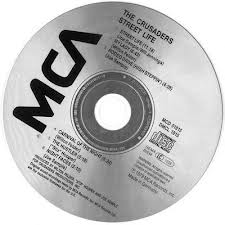
Released & recorded in 1979, Label: MCA,Genre: Jazz-funk
Producer Wilton Felder, Stix Hooper and Joe Sample
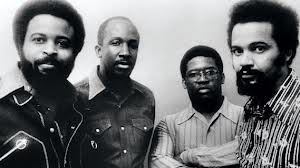
Street Life is a studio album by the American jazz band The Crusaders. It was a top 20 album on three Billboard charts and represents the peak of the band’s commercial popularity. The title track, featuring singer Randy Crawford, was a Top 40 pop single (#36) and became the group’s most successful entry on the soul chart (#17)”Street Life” also hit the disco chart, peaking at #7 and was featured in both Sharky’s Machine, directed by Burt Reynolds in 1981, and Quentin Tarantino’s Jackie Brown, released in 1997.
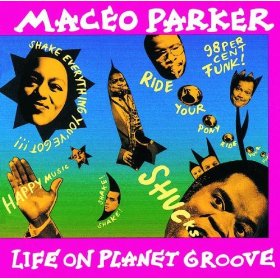
Life on Planet Groove est un album live de Maceo Parker sorti en 1992, enregistré les 5, 6 et 7 mars de la même année au restaurant Stadgarten de Cologne.
Titres
Shake Everything You’ve Got (Parker) [16:15]
Pass the Peas (Brown-Starks-Bobbit) [11:12]
I Got You (I Feel Good) (Brown) [3:38]
Got To Get U (Parker) [6:56]
Addictive Love (Thomas-Winans-Winans) [8:37]
Children’s World (Parker) [6:07]
Georgia on My Mind (Carmichael) [7:12]
Soul Power 92 (Collins-Parker-Byrd-Brown-Troutman) [14:13]
“Last Night” is an instrumental recorded by The Mar-Keys. It reached #3 on the US charts in 1961 and appeared on the first LP recorded by the Stax label.
Written by Charles Axton, Floyd Newman, Gilbert C. Caple, Jerry Lee Smith, and Chips Moman. The tune was covered by Georgie Fame on his 1966 Sweet Things album. It was also memorably covered by the jazz ensemble The Bum Notes for the closing credits of BBC sitcom Bottom in the early 1990s, and was used as the backing music to “viaduct”, a game played on the Chris Moyles radio show.
According to Steve Cropper, in an interview with Paul Nassari of the Sunday Mail newspaper (Adelaide, Australia), “Jerry Lee ‘Smoochy’ Smith came up with the piano riff that was played on organ. Since [producer Chips] Moman didn’t want a guitar on it for whatever reason, I wound up playing the hold-down on the organ on the root note. “It hurts me in the Mar-Keys history when people say I wasn’t in the Mar-Keys because there’s no guitar on Last Night but I have to differ with them.”
Usage in films, radio and television programs
During the sixties, Last Night became the title tune for the french radio show “Salut les Copains” on Europe 1.
Screamin’ Jay Hawkins released a risqué version entitled “Bite it” on his record, “Because is in your mind” in 1970.
This music was used during telecasts of the NBA on CBS in the ’70s (roughly around 1975-76) as the play-by-play announcer would give a preview to the game featured.
It featured in the 1988 Keanu Reeves film The Night Before.
In the early 1990s a cover version by Adrian Edmondson’s band The Bum Notes was used for the closing credits of the BBC sitcom Bottom, which starred Edmondson and Rik Mayall.
It appeared in the 1998 film Blues Brothers 2000, re-recorded by the Blues Brothers Band and during the closing credits of 2007 film Rush Hour 3.
The music was also used in the legal comedy-drama Ally McBeal (1999, episode “Sideshow”, second season).
1. Bohemia After Dark – Oscar Pettiford
2. Alfie – Burt Bacharach
3. Alfie’s Theme – Sonny Rollins
4. Well You Needn’t – Thelonious Monk
5. A Night In Tunisia – Dizzy Gillespie
6. Goodbye Pork Pie Hat – Charles Mingus
7. Song For My Father – Horace Silver
8. Blues In The Closet – Oscar Pettiford
9. So What – Miles Davis
10. Stolen Moments – Oliver Nelson
11. Mercy Mercy Mercy – Joe Zawinul
12. Road Song – Wes Montgomery
13. Caravan – Duke Ellington
14. The Jody Grind – Horace Silver
15. Take Five – Paul Desmond
16. Recado Bossa Nova – Djalma Ferreira
17. This Masquerade – Leon Russell
18. Put It Where You Want It – Joe Sample
19. Morning Dance – Jay Beckenstein
20. Cold Duck Time – Eddie Harris
21. Watermelon Man – Herbie Hancock
22. Moanin’ – Bobby Timmons
Pour ouvrir ce morceau/cette liste pressez ou cliquez le lien sur votre appareil iOS, Mac ou Android avec iRealb installé.




 :>)azZClefs#