Oups, merci Jacques . Quand ça vient d’un pro, c’est toujours exellent. A vos keyboards, keys et manches

Oups, merci Jacques . Quand ça vient d’un pro, c’est toujours exellent. A vos keyboards, keys et manches
Pro Reverb AA165 (blackface) serial number by year
A00100 to A02700 – 1965
A02700 to A09200 – 1966
A07000 to A10200 – 1967
Pro Reverb AA1265, AB668, AA1069, AA270 (silverface)
A10000 to A10500 – 1967
A10500 to A12000 – 1968
A12000 to A13300 – 1969
A13400 to A14500 – 1970
A14500 to A15000 – 1971
A15000 to A15600 – 1972
A15600 to A17200 – 1973
A17200 to A19700 – 1974
A19700 to A20000 – 1975
A20000 to A21500 – 1976
from Greg Galiano
More serial numbers and productions data at 20th Century Guitar Mag
(or here: Dating Fender Amps )
If you need to change your Tubes…You’ can find all Tube Amps Overhaul Kits at Torres Engineering
Blackface schematics:

Bonjour,
un nouveau lien vers Jazzy channel à gauche, toutes les versions et interprétations de nos standards hebdomadaires, sur Deezer; à ce jour:… Cold Duck time, Night in Tunisia, Cold Duck Time, Morning Dance, Ishmael….
Quelques examples de gammes allant avec D- sur Night in Tunisia
D minor Harmonique
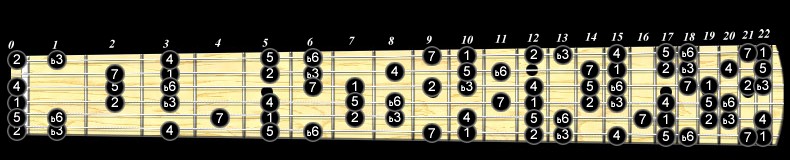
Dm Harmonique
Quelques autres scales allant avec Ré mineur, pour Night in Tunisia
D pentatonique mineur, A blues, C Majeur Ionien, Fa Majeur Ionien, Ré mineur harmonique, C Majeur Ionien, La mineur harmonique, B Pentatonique majeure
Fa Majeur Ionien

F Major Ionien

Obama guitar
Un grand jour pour les Etats-Unis, la victoire de Barak Obama. En l’honneur de son élection, et de la part des Guitar Collectors, le killer pin des supporteurs d’Obama.
Le badge Guitar Obama de democraticstuff.com
For the geeks……….. Others logos ….

Music 2.0
………… or the music or high techs aficionados … Others logos ….
Eddie Harris (b. Chicago, 1934 – 1996) was best known for playing tenor saxophone, though he was also fluent on the electric piano and organ. His most well-known composition was “Freedom Jazz Dance”, recorded and popularized by Miles Davis in the 1960s.
After college he was drafted into the United States Army. While serving in Europe he was accepted into the 7th Army Band, which also included Don Ellis, Leo Wright, and Cedar Walton.
After getting out of the army he worked in New York City before returning to Chicago, where he signed a contract with Vee Jay Records. His first album for Vee Jay, Exodus to Jazz included his own jazz arrangement of Ernest Gold’s theme from the movie Exodus. A shortened version of this track, which featured his masterful playing in the upper register of the tenor saxophone, was heavily played on radio and became the first jazz record ever to be certified gold.
Many jazz critics, however, regarded commercial success as a sign that a jazz artist had sold out, and Harris soon stopped playing “Exodus” in concert. He moved to Columbia Records in 1964 and to Atlantic Records in 1965. At Atlantic in 1965 he released The In Sound, a bop album which won back many of his detractors.
Over the next few years he began to perform on electric piano and the electric Varitone saxophone, and to perform a mixture of jazz and funk which sold well in both the jazz and rhythm and blues markets. In 1967 his album The Electrifying Eddie Harris reached second place on the R & B charts.
In 1969 he performed with Les McCann’s group at the Montreux Jazz Festival. Although they had been unable to rehearse, their session was so impressive that a recording of it was released as Swiss Movement, which became one of the best-selling jazz albums ever, also reaching second place on the R & B charts.
Harris also came up with the idea of the reed trumpet, playing one for the first time at The Newport Jazz Festival of 1970 to mostly negative critical feedback. From 1970 to 1975 he experimented with new instruments of his own invention (the reed trumpet was a trumpet with a saxophone mouthpiece, the saxobone was a saxophone with a trombone mouthpiece, and the guitorgan was a combination of guitar and organ), with singing the blues, with jazz-rock (he recorded an album with Steve Winwood, Jeff Beck, Albert Lee, Ric Grech, Zoot Money, and other rockers), and with comic R & B numbers such as “That is Why You’re Overweight.”
In 1975, however, he alienated much of his audience with his album The Reason Why I’m Talkin’ Shit, which consisted mainly of stand-up comedy, and public interest in his subsequent albums declined sharply. He continued to record into the 1990s, but his experimentation ended and he mainly recorded hard bop.
Discography
Trouvé sur un site blog sympa: Music Thoughts. L’ulilisation des gammes diminuées.
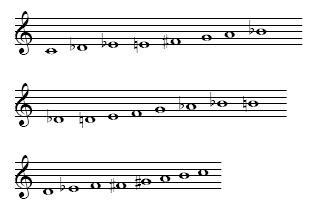
L’article complet night-in-tunisia-thoughts


 :>)azZClefs#