Quelques années passent depuis la sortie en 1962 de Watermelon, Herbie remet le couvert en 1973 avec Head Hunters, voici la nouvelle version de Watermelon Man, tout le funk y est. (Watermelon Man 1973 in the library)
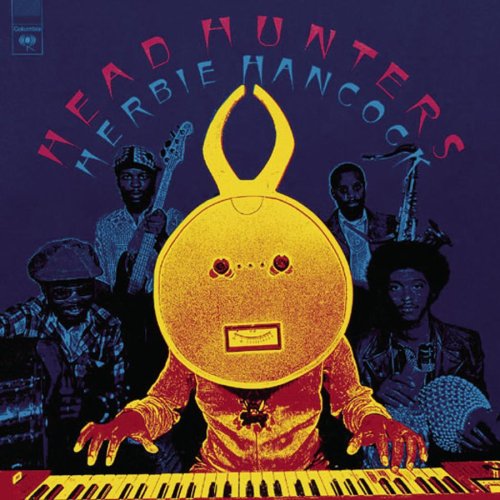
Watermelon - Head Hunters
Quelques années passent depuis la sortie en 1962 de Watermelon, Herbie remet le couvert en 1973 avec Head Hunters, voici la nouvelle version de Watermelon Man, tout le funk y est. (Watermelon Man 1973 in the library)
Watermelon - Head Hunters
Can you believe this?, they are all here:
The parts (Ut), (Eb), (Bb), Riffs…the backgrounds: in BIAB or in WikifakeBook, They’re all the in the libray, I tell You, True!
Unbelievable! Take Your Pieces.
Watermelon Man score, lead sheet, music sheet, partitions, accords,
Of Course tunes are in The Box! Watermelon (1973), Watermelon (1962)
accompagnements, background, herbie hancock, jazz, Band In A Box, Tabs, play Along ,Wikiakebook accompaniment
Written by Herbie Hancock, first released on his debut album, Takin’ Off (1962), in a grooving hard bop version that featured improvisations by Freddie Hubbard and Dexter Gordon. A single of the tune reached the Top 100 of the pop charts. Cuban percussionist Mongo Santamaría released the tune as a Latin pop single the next year on Battle Records, where it became a surprise hit, reaching #10 on the pop charts. Santamaría’s recording was inducted into the Grammy Hall of Fame in 1998. Hancock radically re-worked the tune, combining elements of funk, for the album Head Hunters (1973)
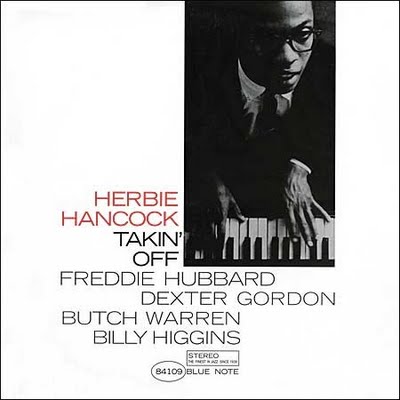
Herbie Hancock’s debut as a leader, Takin’ Off, revealed a composer and pianist able to balance sophistication and accessibility, somewhat in the vein of Blue Note’s prototype hard bopper Horace Silver. Yet while Hancock could be just as funky and blues-rooted as Silver, their overall styles diverged in several ways: Hancock was lighter and more cerebral, a bit more adventurous in his harmonies, and more apt to break his solos out of a groove (instead of using them to create one). So even if, in retrospect, Takin’ Off is among Hancock’s most conventional albums, it shows a young stylist already strikingly mature for his age, and one who can interpret established forms with spirit and imagination. Case in point: the simple, catchy “Watermelon Man,” which became a Hancock signature tune and a jazz standard in the wake of a hit cover by Latin jazz star Mongo Santamaria. Hancock’s original version is classic Blue Note hard bop: spare, funky piano riffing and tight, focused solo statements. The other compositions are memorable and well-constructed too (if not quite hit material); all have their moments, but particular highlights include the ruminative ballad “Alone and I,” the minor-key “The Maze” (which features a little bit of free improvisation in the rhythm section), and the bluesy “Empty Pockets.” The backing group includes then up-and-coming trumpeter Freddie Hubbard, tenor saxophonist Dexter Gordon, bassist Butch Warren, and drummer Billy Higgins. All in all, Takin’ Off is an exceptional first effort, laying the groundwork for Hancock to begin pushing the boundaries of hard bop on his next several records. (AMG)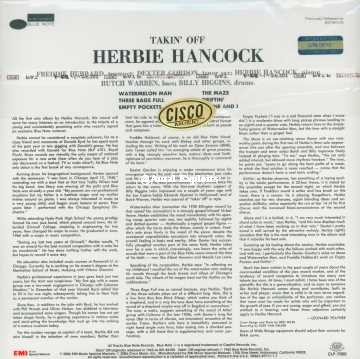
Takin’ Off Track list:
Trouvée sur eBay par notre ami Tofie, voici la partition de Recado Bossa Nova, chantée par Caterina Valente, et publiée en 1959.
score, lead sheet, music sheet recado bossa nova
We’re sponsoring the project, in favor of the Hamer Bena culture and people from South Ethiopia, Visit the :
Hamer Project association
Donate or even better go and visit them! This is going to be YOUR valuable Aid for the sustainable development of wonderful people and culture. Thank You
Bobby Few (piano), Serge Lamboley (batterie),
Hervé Czak (Contrebasse), Jacques De Lignières (Saxophones)
Samedi 21 Novembre, Jazz au Confluent, Conservatoire de musique, 74 rue Désiré Clément, 78700 Conflans Ste Honorine
JdL Quartet en concert à Conflans… …Le sax alto se vit dans le jazz à l’ombre de l’oiseau Parker, dont la pyrotechnie aérienne est devenue la référence absolue et incontournable des altistes. Or, il existe au moins une autre voie, celle tracée par le moins connu Art Pepper, musicien californien dont la vie tourmentée se reflète dans un timbre fragile, voire écorché mais dynamique, qui le rapprocherait d’une forme expressioniste. C’est plutôt dans cette direction que se pencherait Jacques de Lignières, un musicien dont le style, de prime abord détendu à la limite de la nonchalance, révèle vite un goût pour les tensions, et une envie de la note et de la phrase qui en dit plus sur la vie intérieure… On y entend pousser jusqu’à la plainte, celle qui puise dans le langage du blues. Sa composition Temps incertain est exemplaire de cette dualité. Sur un rythme à la légèreté façon habañera se déploie un thème sur fond de canevas harmonique aux changements déstabilisants comme le suggère le titre. La référence à Pepper, on la retrouve explicitement dans la reprise d’un lancinant blues en 5 temps, Las Cuevas de Mario (Pepper’s Caves). Déjouant la difficulté du métrique, la solide assise rythmique fournie par Hervé Czak à la contrebasse permet au pianiste Olivier Léger de développer son jeu puissant au son perlé dans de belles envolées. JdL est un arpenteur de la culture musicale, bien au-delà des confins des grands standards : il n’hésite pas à s’inspirer, par exemple, d’un Prélude de Chopin pour en extraire une “jazz waltz”: Lost Prelude, chargée d’émotion ; ou encore à nous convier à partager un bon couscous modal et « caravanesque » à souhait dans l’ambiance d’un bon petit resto nord africain : l’écriture d’Hotel de la Gare vient d’un temps où JdL s’y produisait souvent à Paris… On y met le cap plein sud, darbouka à l’appui, pour un voyage où Serge Lamboley peut donner libre court à son imagination et sa maitrîse des polyrhythmies. Enfin, JdL est un musicien généreux et ouvert, comme en témoigne l’énergie qu’il consacre depuis deux ans maintenant à l’initiative Jazz au Confluent, une association de bénévoles qui organise tous les ans une quinzaine de concerts de qualité à entrée libre. Alan Fell


Cinq Compositions de Mulatu Astatké, trois venant de l’album Ethio Jazz Vol.1, puis deux venant de l’album Ethiopiques Volume 4.
Ethio Jazz Volume 1
1) Mulatu
2) Tsome Diguwa
3) Yekermo Sew
Puis sur un second album:
Ethiopiques Volume 4
4) Sabyé (My Saba)
5) Yékèrmo Sèw ( A Man of Experience and Wisdom)
Ils sont dans la Box et/ou dans la librairie


Mulatu Astatke (ou Astatqé) est un musicien et arrangeur éthiopien, né en 1943 à Jimma en Éthiopie. Il est connu comme étant le père de l’Éthio-jazz.
Percussioniste de formation, Mulatu Astatke joue notamment du vibraphone et des congas. Après de courtes études scientifiques à Birmingham en Angleterre, il intégre à la fin des années 1950 le Trinity College of Music de Londres pour étudier la clarinette et la composition, puis part à New York, et Boston, où il a été le premier étudiant africain au Collège de musique de Berklee. Il en a ramené des influences jazz et musique latine pour les mélanger à la musique traditionnelle éthiopienne. Dans les années 1970, il joue avec de nombreux artistes de jazz américain dont Duke Ellington. En Éthiopie, il produit des chansons pour d’autres artistes, notamment Mahmoud Ahmed.
Après le succès de la collection Éthiopiques éditée par Buda Musique à partir de 1999, et celui du film Broken Flowers de Jim Jarmusch en2005, dont il signe une partie de la musique, il entame une importante seconde carrière internationale. Mulatu Astatke enseigne également auMassachusetts Institute of Technology de Cambridge près de Boston dans le Massachusetts .
Depuis quelques années Mulatu Astatke se produit régulièrement avec deux groupes : l’américain Either/Orchestra et l’européen The Heliocentrics.
 Pour notre prochain Projet…. la Gamme Ethiopienne:
1, 2, b3, 4, 5, b6, b7,
The Ethiopian scale consists of 7 different notes. Notice how that when you ascend the scale Bb, Eb, and F natural notes are played, and when you descend the scale F#, E natural, and B natural notes are played. This concept is also seen in the Melodic Minor Scale.
Formula: WS, HS, WS, WS, HS, WS, WS
HS = half step (one fret)
WS = whole step (two frets)
This is Djalma Ferreira, Com Orgao e Orquestra – Baile de Formatura (no date), for Discos Drink, featuring the organ of Djalma Ferreira, his orchestra and the always above the average arrangements of Maestro Nelsinho. Baile de Formatura is how we call the graduate balls, which is the album theme. Reading the back cover, I could also learn that Djalma Ferreira is the owner of Discos Drink and probably Drink nightclub. Tracks include Recado ! This is one of the very first recording of Recado, but no date on the album. (fm Loronix)






 :>)azZClefs#