funics

Author Archive

The Jody Grind (Horace Silver)

In Bio, The Jody Grind on April 2, 2009 at 12:33 pm

Silver’s bands, like Art Blakey’s, served — and is still serving — as one of the great training grounds for young jazz musicians in the ’60s. “The Jody Grind” features a youthful Woody Shaw joining his brash trumpet sound with the fiery James Spaulding on alto and flute and the forgotten (unfortunately) Tyrone Washington, who contributes a hard-edged tenor. Silver, as usual, composed all the tunes, and nearly all of them are memorable.

Silver is a master at stripping melodies and rhythms down to their essentials. But that doesn’t mean that his tunes are simplistic. For example, the great “Mexican Hat Dance,” as the title suggests, cooks up a spicy Latin beat that is very hummable. After you listen to it a few times, though, you realize that the infectious melody is composed of some tricky twists and turns that the horn players negotiate flawlessly.

Good Bye Pork Pie Hat (Charlie Mingus)

In Good Bye Pork Pie Hat, Scales, Technics on April 2, 2009 at 12:13 pm

Analysis: Goodbye Pork Pie Hat

Goodbye Pork Pie hat is a 12-bar form consisting of three four-bar phrases, in the key of F minor. The melody tends to outline an F blues scale. when viewed as four-bar phrases, the first and second phrases of the melody are not as similar to each other as you’d expect in a traditional blues.

I think it’s open to interpretation, but you would probably not be wrong to look at this as a basic blues form with unusual turnarounds. The first chord of the first phrase is the i (minor). The first chord of the second phrase is the iv (minor). Where we go wrong is on the third phrase–instead of arriving solidly at the V on beat on of bar 9, we detour through two other chords to arrive there at the top of bar 10. But that does set up the return to i in bar 11, which is quite blues-like. I think that in spite of the chord complexity, the phrasing of the melody argues in favor of blues.

So let’s take this apart one phrase at a time…

| F7 Db7 | Gb B7 | Eb7 Db7 | Eb7 F7 |

The usual turnaround for a minor key would be i – III7 – ii – V or possibly some tritone substitutions for some of those chords. The turnaround in the first two bars is similar, but different. The motion is still circle-of-fifths (Db Gb B), but the B chord is a tritone sub for i rather than for V, which is what makes this odd. The motion from B7 to Eb7 probably can’t really be called a cadence–up a third is just about the weakest possible root motion. I think it’s right to look at the second turnaround as setting up the iv chord in bar 5. The first chord (Eb7) is problematic to analyze. The melody in the third bar is extremely close to the first bar. Eb7 as a sub for F7 is unconventional, but one possible interpretation. So, to place these two turnarounds above each other, we have

| F7 Db7 | Gb B7 |

| Eb7 Db7 | Eb7 F7 |

They are similar, but the second one subs Eb7 for F7, and Eb for Gb (a minor third sub for a dominant chord is more familiar, Coltrane did it a lot). The F7 sets up the iv chord in bar 5 very strongly.

| Bbmi7 Db7 | Gmi C7alt | D7b5 G7 | Db7 Gb |

Standard blues would have two bars of iv followed by two of i here. Mingus gives us the iv, and sets us up to expect the i, not just with the C7, but the melody also really sets up a cadence that we get denied. What we do get in bars 7 and 8 is circle of fifths root motion, and some parallelism (bar 8 echoes bar 7 down one half-step, very familiar in Charlie Parker’s blues changes).

| B7 Bb7 | C7 Eb7 | F7 Db7 | Gb B7 ||

This is truly the difficult one to justify in traditional theory terms. What a traditional blues progression would have here is V, iv, then two bars of i. Mingus delays the appearance of the dominant one bar (that’s one way to look at it). He does deliver us a “cadence” sort of by having Gb in bar 8 resolve to B7 at the top of bar 9. But I sure don’t “hear” that as a cadence. What I think is going on instead is a reversal of the iv and V chord. To me the last four bars function like

| iv | V | i | i ||

Viewed this way, the B7 is a dominant sub for the Bb (iv). Eb is a legitimate sub for C7 (Coltrane-style), and we do land at the i in the right spot, and additionally revisit the first turnaround from the first phrase. What I don’t have a great deal of comfort for is the B7 -> F7 “cadence” from the bottom of the form to the top. That would be weak in most cases. It seems to work out okay here though.

Bobby Few et Jacques de Lignières

In Events, Live, Media on March 26, 2009 at 10:38 am


autour de midi, jazz club à paris, montmartre, hardbop, bebop

Jacques de Lignières – Bio

In Bio, Nostalgia in Funky Time on March 26, 2009 at 12:22 am

A propos de Jacques de Lignières
JdL Quartet se produit dans plusieurs clubs parisiens (le Petit Journaljdl Montparnasse, le Franc Pinot, Autour de Midi …) et dans quelques festivals (Jazz à St Piat, May Jazz, Jazz au Confluent…) avec Claudine François au piano, actuellement Olivier Léger, Stéphane Benveniste à la contrebasse, puis Xavier Barloy, actuellement Hervé Czak , Bertrand Perrin à la batterie, actuellement Serge Lamboley, et toujours JdL ! Mais également avec des guest stars : Bobby Few, Frédéric Delestré…

JdL Quartet en concert à Conflans…
…Le sax alto se vit dans le jazz à l’ombre de l’oiseau Parker, dont la pyrotechnie aérienne est devenue la référence absolue et incontournable des altistes. Or, il existe au moins une autre voie, celle tracée par le moins connu Art Pepper, musicien californien dont la vie tourmentée se reflète dans un timbre fragile, voire écorché mais dynamique, qui le rapprocherait d’une forme expressioniste. C’est plutôt dans cette direction que se pencherait Jacques de Lignières, un musicien dont le style, de prime abord détendu à la limite de la nonchalance, révèle vite un goût pour les tensions, et une envie de la note et de la phrase qui en dit plus sur la vie intérieure… On y entend pousser jusqu’à la plainte, celle qui puise dans le langage du blues. Sa composition Temps incertain est exemplaire de cette dualité. Sur un rythme à la légèreté façon habañera se déploie un thème sur fond de canevas harmonique aux changements déstabilisants comme le suggère le titre.
La référence à Pepper, on la retrouve explicitement dans la reprise d’un lancinant blues en 5 temps, Las Cuevas de Mario (Pepper’s Caves). Déjouant la difficulté du métrique, la solide assise rythmique fournie par Hervé Czak à la contrebasse permet au pianiste Olivier Léger de développer son jeu puissant au son perlé dans de belles envolées.
JdL est un arpenteur de la culture musicale, bien au-delà des confins des grands standards : il n’hésite pas à s’inspirer, par exemple, d’un Prélude de Chopin pour en extraire une “jazz waltz”: Lost Prelude, chargée d’émotion ; ou encore à nous convier à partager un bon couscous modal et « caravanesque » à souhait dans l’ambiance d’un bon petit resto nord africain : l’écriture d’Hotel de la Gare vient d’un temps où JdL s’y produisait souvent à Paris… On y met le cap plein sud, darbouka à l’appui, pour un voyage où Serge Lamboley peut donner libre court à son imagination et sa maitrîse des polyrhythmies.
Enfin, JdL est un musicien généreux et ouvert, comme en témoigne l’énergie qu’il consacre depuis deux ans maintenant à l’initiative Jazz au Confluent, une association de bénévoles qui organise tous les ans une quinzaine de concerts de qualité à entrée libre.
Alan Fell

Vous avez dit “Hard Bop”?

In Bio, History on March 25, 2009 at 12:37 am

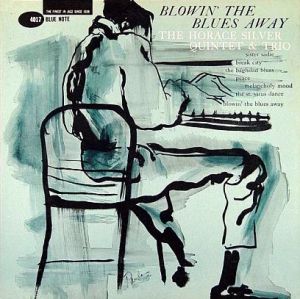
bluesawayLe hard bop prend source dans un mouvement de reconnaissance par les noirs américains de leurs origines, appelé Black is beautiful (« Le Noir est beau ») : un retour aux sources de la musique, à l’Afrique et, en même temps, une réaction agressive (musicalement parlant) au cool jazz (d’où le terme « hard ») surtout dominé par les blancs. L’auteur américain David Rosenthal nota aussi que le hard bop était un développement naturel pendant une époque où des musiciens d’envergure (Tadd Dameron, par exemple) travaillaient et dans le jazz et dans le rhythm and blues.

Même si la plupart des acteurs de ce courant ont fait leur apprentissage dans le style bebop (d’où le terme « bop »), ce genre musical incorpore les influences du rhythm and blues, du blues et du gospel, notamment dans les jeux du piano et du saxophone.

Les morceaux de hard bop ont généralement un tempo plus lent que le bebop, et si le hard bop en reprend les innovations harmoniques, la part du rythme y est nettement plus marquée, sans doute en raison de la contribution majeure des batteurs Max Roach et Art Blakey. On y découvre d’ailleurs pour la première fois des batteurs compositeurs.

Le hard bop est généralement pratiqué par un quintet composé d’une section rythmique (pianiste, batteur et bassiste) et de deux “soufflants” — communément un saxophoniste ténor et un trompettiste — qui interprètent ensemble un thème entourant une série de solos improvisés tour à tour par chacun des musiciens sur l’harmonie du morceau.


Évolution
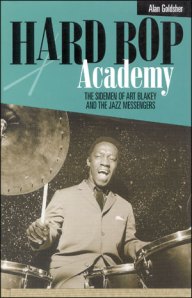
hardb

Une première apparition des caractéristiques du hard bop se reconnaît dans le quintette fondé en 1954 par le batteur Max Roach et le trompettiste Clifford Brown, rejoints en 1955 par le saxophoniste ténor Sonny Rollins. Toutefois, on considère que le premier représentant de ce style fut le groupe des Jazz Messengers créé par le batteur Art Blakey et le pianiste Horace Silver en 1955. Ce dernier formera en 1956 son propre quintette.

En 1955 également, le trompettiste Miles Davis embaucha le saxophoniste John Coltrane (Sonny Rollins ayant décliné l’invitation) dans son quintet, au côté de Red Garland (piano), Paul Chambers (basse) et Philly Joe Jones (batterie). À cette époque, Coltrane était encore un musicien inconnu.

En 1957, c’est au tour de Sonny Rollins de créer son ensemble — dans lequel on retrouvait Silver, Monk, Chambers — et d’inaugurer l’apparition du trombone dans le hard bop avec Jay Jay Johnson.

Blue Note et Prestige sont les principaux labels qui produisirent des groupes de hard bop et, pendant cette période, le graphisme des pochettes d’albums évolua fortement.

Le soul jazz se développa à partir du hard bop. Le saxophoniste alto Jackie McLean réussit une fusion du hard bop et du jazz modal pendant les années 60 et celles qui suivirent.


Quelques Hard Bopers…

Pepper Adams • Cannonball Adderley • Nat Adderley • Gene Ammons  • Dave Bailey • Donald Bailey • Ray Barretto • Kenny Barron • George Benson • Art Blakey • Joanne Brackeen • Nick Brignola • Tina Brooks • Clifford Brown • Ray Brown • Ray Bryant • Rusty Bryant • Kenny Burrell • Frank Butler • Don Byas • Donald Byrd • Conte Candoli • Paul Chambers • Ray Charles • Sonny Clark • Kenny Clarke • Jimmy Cleveland • Jimmy Cobb • Ornette Coleman • John Coltrane • Junior Cook • Bob Cooper • Curtis Counce •  Sonny Criss • Miles Davis • Walter Davis, Jr. • Lou Donaldson • Kenny Dorham • Kenny Drew • Teddy Edwards • Booker Ervin • Art Farmer • Tommy Flanagan • Ricky Ford • Frank Foster • Curtis Fuller • John Gilmore • Benny Golson • Dexter Gordon • Wardell Gray • Benny Green • Grant Green • Johnny Griffin • Gigi Gryce • Herbie Hancock • Roy Hargrove • Barry Harris • Eddie Harris • Louis Hayes • Jimmy Heath • Joe Henderson • Billy Higgins • Elmo Hope • Freddy Hubbard • Bobby Hutcherson • Milt Jackson • The Jazz Crusaders • The Jazz Lab • The Jazztet •  J.J. Johnson • Elvin Jones • Hank Jones • Philly Joe Jones • Clifford Jordan • Duke Jordan • Wynton Kelly • Harold Land • Jake Langley • Victor Lewis • Lighthouse All-Stars • Erica Lindsay • Melba Liston Les McCann • Jackie McLean • Charles Mingus • Blue Mitchell • Hank Mobley • T.S. Monk • Thelonious Monk • J.R. Monterose • Wes Montgomery • Ralph Moore • Lee Morgan • David “Fathead” Newman • Horace Parlan • Duke Pearson • Houston Person • Bud Powell • Ike Quebec • Freddie Redd • Dizzy Reece • Jerome Richardson • Max Roach • Sonny Rollins • Frank Rosolino • Charlie Rouse • Tom Scott • Woody Shaw • Travis Shook • Wayne Shorter • Horace Silver • Jimmy Smith • Lonnie Smith • Marvin “Smitty” Smith • Mike Smith • Sonny Stitt • Art Taylor • Clark Terry • The Three Sounds • Bobby Timmons • Stanley Turrentine • Tommy Turrentine • Cedar Walton • Doug Watkins • Mark Whitfield • Richard Williams • Larry Young.

Horace Silver – The Jody Grind (Album Review) 1966

In Album, The Jody Grind on March 24, 2009 at 3:54 pm

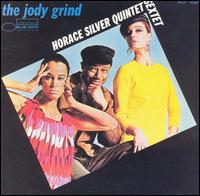
Horace Silverthe_jody_grind_cover

Jody Grind

  • Release Date: 1966 11 01+1966 11 23
  • Running Time: 40:40
  • Label: Blue Note

Following the subtly modern bent of much of The Cape Verdean Blues, Horace Silver recommitted himself to his trademark “funky jazz” sound on The Jody Grind. Yet he also consciously chose to keep a superbly advanced front line, with players like trumpeter Woody Shaw (retained from the Cape Verdean session), altoist/flutist James Spaulding, and tenor saxophonist Tyrone Washington. Thus, of all Silver’s groove-centered records, The Jody Grind winds up as possibly the most challenging. It’s also one of the most underappreciated; Silver’s piano playing is at its rhythmic, funky best throughout, brimming over with confidence and good cheer, and evoking memories of the classic feel of his early-’60s quintet. His compositions have a similarly bright overtone, which (as the liner notes allude to) was becoming increasingly rare in mid-’60s jazz as the fury of the avant-garde and the Civil Rights upheaval began to seep into jazz’s wider consciousness. The title cut is a playful, overlooked classic on the funky side of hard bop; Silver kicks it with a tasty groove, giving the rest of the musicians plenty to play off of. The whole group absolutely burns through “Grease Piece,” a terrific hard swinger full of smoking solo statements from just about everyone on down to drum whiz Roger Humphries. Really, the whole album is packed with great grooves and tight solos, epitomizing the best virtues of Silver’s music. For those who have digested classics like Song for My Father, Blowin’ the Blues Away, and Finger Poppin’, The Jody Grind is one of the best places to go next. Steve Huey, All Music Guide

Tracks:

Title Composer Time

1 Jody Grind Silver 5:53
2 Mary Lou Silver 7:12
3 Mexican Hip Dance Silver 5:56
4 Blue Silver Silver 6:00
5 Grease Piece Silver 7:34
6 Dimples Silver 7:18

via Horace Silver Jody Grind Album Review, Songs, Rating .

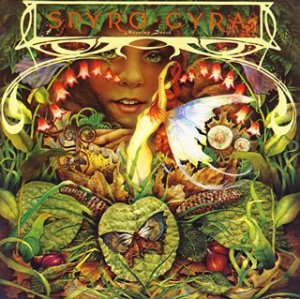
Spyro Gyra – Morning Dance

In Bio, Morning Dance on March 21, 2009 at 7:26 pm

Spyro Gyra est un groupe américain de jazz-rock fusion formé au début des années 1970 dans la ville de Buffalo, dans l’état de New York. Il a connu de nombreuses versions différentes, les seuls membres actuels issus de la formation d’origine étant le saxophoniste alto Jay Beckenstein et le pianiste/claviériste Tom Schuman. Ils sont actuellement épaulés par le guitariste Julio Fernandez, le bassiste Scott Ambush et le

morning-dance batteur/percussionniste Bonny Bonaparte. Avec plus de 25 albums au compteur et 10 millions de copies vendues, ils forment l’un des groupes de jazz fusion les plus vendeurs aux États-Unis. Leur musique combinant jazz et éléments de funk, R&B ou pop (avec quelques influences caribéennes notables), ils sont de ce fait considérés comme l’un des groupes ayant forgé le son du smooth jazz, ce qui leur vaudra parfois les critiques de puristes qui leur reprocheront leur approche trop mélodique et donc leur manque d’improvisation, cas classique de tous les artistes ou groupes appartenant à ce genre. Toutefois, ils sont reconnus comme des musiciens de talent, notamment pour leurs prestations live et accumulent les récompenses aux Grammy Awards, aussi bien dans les catégories Jazz fusion, Pop instrumentale que R&B instrumental.

The Jody Grind

In Album, The Jody Grind on March 20, 2009 at 5:10 pm

The Jody Grind  is a 1966 album by the Horace Silver Quintet, led by jazz pianist Horace Silver.the_jody_grind_cover

Jazz Giant Marton Esquie once spoke concerning this album.”I really love many aspects in the Experimental Constructionist’ view of this album and its entire contents.”

Track listing 

  1.  “The Jody Grind” – 5:53
  2.  “Mary Lou” – 7:12
  3.  “Mexican Hip Dance” – 5:56
  4. “Blue Silver” – 6:00
  5.  “Grease Piece” – 7:34
  6.  “Dimples” – 7:18

    Personnel

    Label:  Blue Note

    Pork Pie Hat

    In Good Bye Pork Pie Hat on March 20, 2009 at 4:49 pm


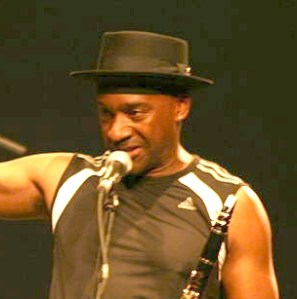
    marcusmillerhat

    Jazz musician Marcus Miller wearing a pork pie

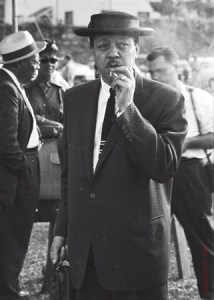
    lester_young_hat

    Lester Young and his Pork Pie Hat

    The pork pie hat  originated in the mid 19th century. Originally referring to a type of woman’s hat, it gets its name from its resemblance to a pork pie.

    The pork pie hat was a staple of the British man-about-town style for many years. Pork pie hats are often associated with Jazz, Blues and Ska musicians and fans. Charlie Mingus wrote an elegy for jazz saxophone great Lester Young  called “Goodbye Pork Pie Hat” and the story said i wrote this tune during the night just after Lester’s death. Many artists have performed this tune, including Jeff Beck and Joni Mitchell.

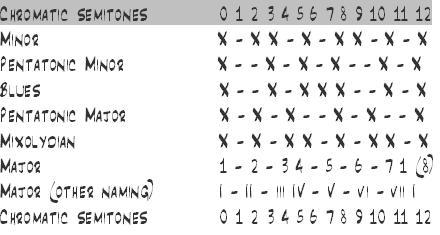
    Chromatic semitones table

    In Scales, Technics on March 19, 2009 at 5:20 pm
    Chromatic Semitones table

    Chromatic Semitones table