Leon Russell
from http://www.internetwritingjournal.com/jun06/dawson57.htm
Leon who?Well, actually, his real name is Claude Russell Bridges and if you are a long time resident of Tulsa, you may have known him or his family. Nothing ringing a bell yet? Well, let’s go back to his lyrics above. I’ll bet that as soon as you hear the first notes of his beautiful composition, “A Song for You,” you will recognize it immediately. You have your choice of artists because it has been recorded by vocalists as diverse as Willie Nelson, Ray Charles, Andy Williams, Aretha Franklin, Simply Red, Christina Aguilera and Michael Buble (just to name a few). Recently, it was impeccably performed again by American Idol, Elliott Yamin, in the 2006 American Idol Finals.One reviewer has described Leon Russell as “pop music’s most anonymous big shot.” Always just below the radar, Leon has written and worked with some of the greatest names in music. Beginning a study of classical piano at age three, he soon became proficient on several instruments. At age fourteen, he began playing backup for Jerry Lee Lewis in a Tulsa nightclub (he had to fib about his age to land the job). A couple years later he moved to Los Angeles where he continued his career as a session player for artists and producers as varied as Glen Campbell, the Byrds, Herb Alpert, Phil Spector and Snuff Garrett.
Leon’s first major songwriting hit came in 1970 when legendary artist, Joe Cocker recorded his song, “Delta Lady,” and Leon became the organizer of Cocker’s Mad Dogs and Englishmen Tour. Also in 1970, Leon released a self-titled solo album that included his haunting number, “A Song for You.” One fan who heard Leon’s album was a young arranger named Richard Carpenter. “A Song for You” became the title cut of the Carpenters 1972 recording — one of the strongest albums of their star-studded career. Richard later commented:
I heard this song on Leon Russell’s debut album and thought immediately it would be a good vehicle not only for Karen’s lead, but for our overdubbed “choral” sound as well.1
But how, you might wonder, did Richard Carpenter even know enough about Leon Russell to seek out and listen to his debut album? The answer is that this was not the first time the Carpenters had struck gold with a Leon Russell song. Their self-titled third album released in 1971, had also included a unique and mystical Russell masterpiece called “Superstar.” Richard recalls:
Karen and I came home from the studio relatively early one evening in early ’71. She went to bed, but I tuned in The Tonight Show. The host, Johnny Carson, was championing a then relatively unknown performer named Bette Midler. One of the songs she sang was “Superstar.” It was quite a bit different than what my arrangement turned out to be, but I knew it could be a hit. As the lyric never mentions the word “Superstar,” I had to quiz a few people about it to find out its name in order to get a lead sheet or recording. It turned out that Leon Russell and Bonnie Blamlett had written it for Rita Coolidge and the Joe Cocker Mad Dogs and Englishmen recording and tour. The album was on A&M and I owned a copy of it, but never got around to playing it. I opened the album, familiarized myself with the piece and constructed my arrangement; a perfect song for Karen and the Carpenters’ sound.2
The rest — as they say — is history! The Carpenters’ version of “Superstar” went to #2 on the Billboard Charts and propelled the brother-sister duo into Grammy history as Best Pop Vocal Group in 1971. “Superstar” has since been covered by a plethora of artists including Luther Vandross, Joe Cocker and Ruben Studdard. (It is, incidentally, one of the only successful songs in history that does not contain the title anywhere in the song!)
The vulnerable lyrics and delicately crafted melodic structure of Leon’s songs make them an arranger’s dream — adaptable to any genre and timeless in their musical and lyrical impact. Let’s look at one more Russell masterpiece…the song entitled, “This Masquerade” which also, by the way, became a Carpenters hit in 1973. (Did Richard know a great songwriter when he found one, or what?)
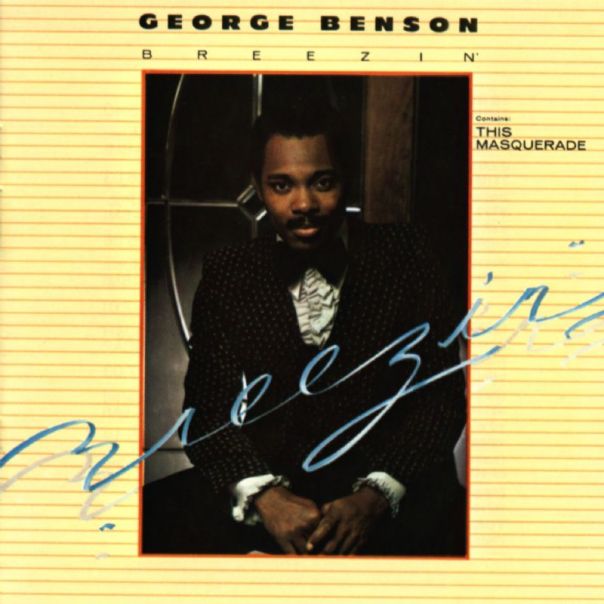
“This Masquerade” is another intricate tapestry of words, melody, harmony and rhythm that has been recorded by artists of every genre. The Carpenters were not the only ones to score with this song. George Benson won Record of the Year at the 1976 Grammys with his version. Artists as varied as Vic Damone, Robert Goulet, David Sanborn, Doc Severnsen — and even Cybill Shepherd — have recorded their own renditions.
 The musical depth and craftsmanship of “This Masquerade” is stunning! If you visit a digital Internet download site like iTunes, you will even find classical arrangements of this song. Music theorists have Internet discussions about musicality employed by the composer. Like a ten-carat diamond, it is exquisite from every facet.
If you are an aspiring songwriter who has never studied the work of Leon Russell, you are definitely missing out! Take time to discover and examine the panorama of styles and techniques in his amazing songs. Leon has set the bar very high for all who come after him and his songs remind us why we wanted to become songwriters in the first place.
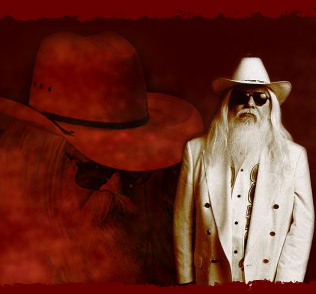
Now in his sixties with a flowing mane of white hair, Leon still travels the country with his incredible band. Check out his website at leonrussell.com and make note of his tour schedule. If he comes within a hundred miles of you, don’t miss the chance to hear this genius musician live. His like will not pass this way again.

 Il est l’un des plus grands artistes cultes de l’histoire de la musique. Excellent musicien de studio et ami intime, entre autres, de J.J. Cale et de George Harrison, il partagea en 1970 avec plus de 40 musiciens et choristes sur scéne la tournée americaine de Joe Cocker [MAD DOGS AND ENGLISHMEN ]; il participa en1971 au célèbre Concert for Bangladesh et sollicita l’aide de George pour ses chansons “Hummingbird” et “Shoot Out The Plantation” pour son disque “Leon Russell”, sorti le 24 avril 1970.


 :>)azZClefs#